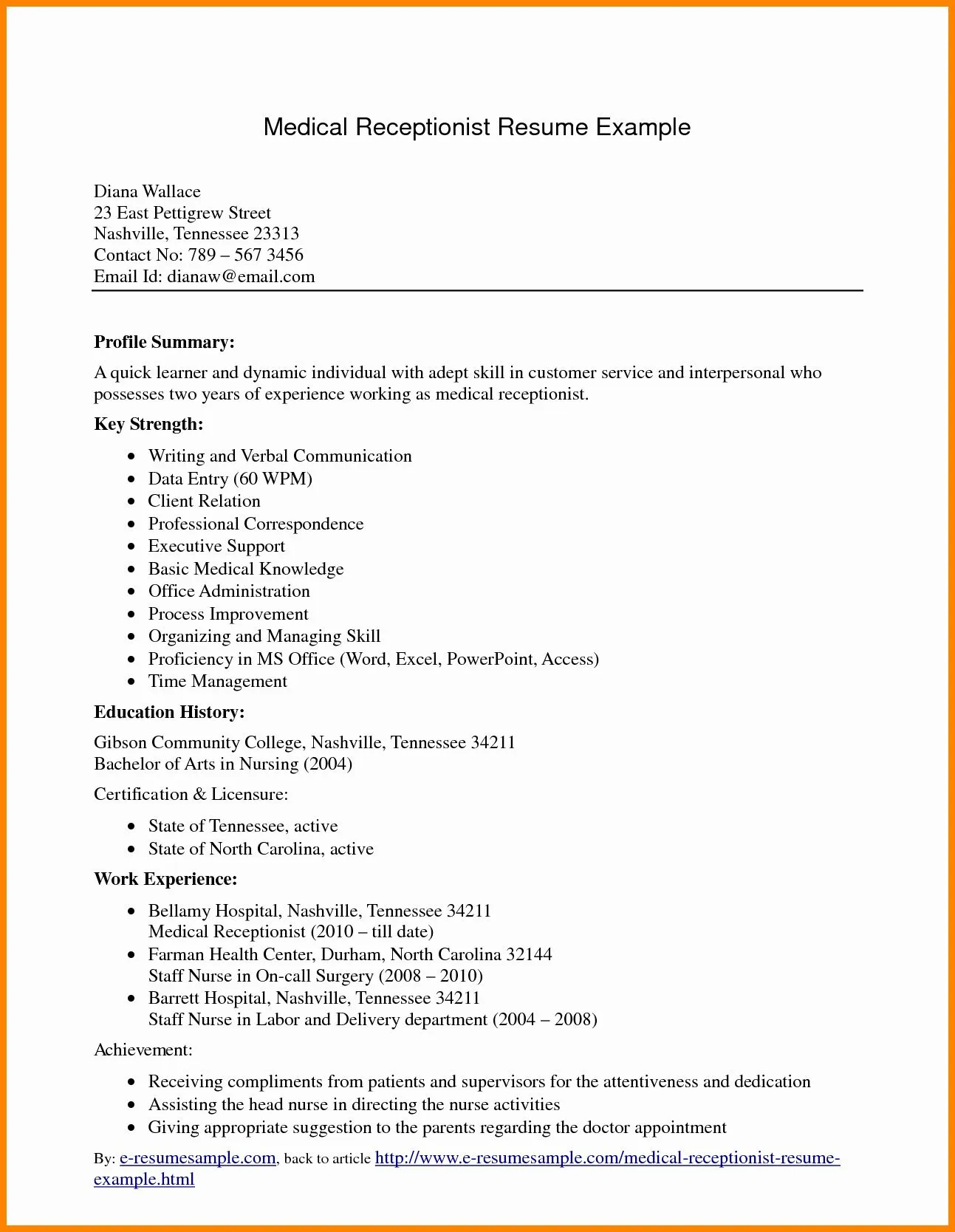
Why You Need a Medical Reception Cover Letter
A medical reception cover letter is your first chance to make a positive impression on a potential employer. Unlike your resume, which lists your qualifications, a cover letter provides you with the opportunity to express your personality, enthusiasm, and specifically connect your skills to the job requirements. It’s a vital tool in the job application process, as it allows you to elaborate on your qualifications, showcase your relevant experience, and demonstrate your interest in the specific medical practice or clinic. A well-crafted cover letter can significantly increase your chances of securing an interview, as it highlights your understanding of the role and your commitment to the healthcare industry. A compelling cover letter shows that you’ve put thought and effort into your application and that you are genuinely interested in the position and the organization. It is your chance to stand out from other applicants and get noticed.
The Structure of a Medical Reception Cover Letter
A well-structured cover letter follows a logical format, making it easy for the hiring manager to quickly grasp your qualifications and interest. Each section plays a crucial role in conveying your suitability for the medical receptionist position. A clear and concise structure not only demonstrates your professionalism but also helps you organize your thoughts and ensure you address all the essential aspects of your application. By adhering to a standard format, you create a document that is both informative and engaging. This ensures the hiring manager can quickly assess your skills and determine if you are a good fit for the role. Structuring your cover letter appropriately is a key step toward a successful job application.
Contact Information

Your Name and Contact Details
Begin by placing your full name, address, phone number, and email address at the top of the cover letter. This is essential for the hiring manager to contact you easily. Make sure your email address is professional. Avoid using nicknames or unprofessional usernames. Verify that the phone number you provide is current and that you regularly check the voicemail. Providing accurate and easily accessible contact information demonstrates your attention to detail and professionalism, making it easier for the employer to reach out to you if they are interested in your application. Correct contact information is a crucial first step in any cover letter.
The Hiring Manager’s Information
If possible, address the cover letter to a specific person, such as the hiring manager or the practice administrator. This shows that you’ve done your research and are paying attention to detail. If you can’t find a specific name, use a professional salutation, such as ‘Dear Hiring Manager.’ Include the hiring manager’s name, title, the medical practice name, and address below your contact information. Addressing your cover letter to a specific individual is more personal and shows initiative. It demonstrates that you are serious about the role. Researching the contact information is a good start to show that you are prepared.
The Opening Paragraph

State Your Purpose
Start your cover letter by clearly stating the position you’re applying for. Mention where you saw the job posting (e.g., online, referral). Briefly state your interest in the role and the medical practice. For example, “I am writing to express my interest in the Medical Receptionist position advertised on [website name].” This immediately tells the reader the purpose of your letter and shows your understanding of the job you are applying for. Make sure the role you are writing matches the job. Including a clear statement helps the reader quickly understand why you are writing and what you hope to achieve with your application.
Express Enthusiasm
Show your enthusiasm for the role and the medical practice. Mention what interests you about the practice’s mission, values, or services. Express your excitement about the opportunity to contribute to their team. For instance, “I am particularly drawn to [Medical Practice Name]’s commitment to providing excellent patient care and I am eager to contribute my skills to your team.” Demonstrating genuine enthusiasm and interest will make your application more appealing to the hiring manager and helps to set you apart from other candidates. Highlighting the positive aspects of the job and the medical practice creates a positive tone.
Highlighting Your Skills and Experience

The body of your cover letter should showcase your relevant skills and experience, aligning them with the job requirements. This section is where you sell yourself, connecting your qualifications to what the employer is looking for. Provide specific examples of how your skills match the job description. Use this opportunity to demonstrate your value and how you would contribute to the medical practice. Focus on what you can bring to the role, highlighting your achievements, and showing how you would be an asset to the team. This section is critical for convincing the hiring manager you’re the right person for the job.
Relevant Skills to Showcase
Communication and Interpersonal Skills
Medical receptionists need excellent communication and interpersonal skills to interact with patients and other healthcare professionals. Highlight your ability to communicate clearly, empathetically, and effectively. Mention your experience in handling patient inquiries, resolving conflicts, and providing excellent customer service. Provide specific examples. “In my previous role, I consistently received positive feedback for my ability to handle difficult patient interactions with empathy and professionalism, ensuring patient satisfaction.” Explain your abilities with examples. Strong communication skills are crucial for creating a positive patient experience and ensure effective communication with the healthcare team.
Organizational and Administrative Abilities

Medical receptionists must be organized and detail-oriented to manage appointments, records, and other administrative tasks. Highlight your skills in scheduling appointments, managing patient records, handling phone calls, and maintaining an organized workspace. Mention any experience you have with electronic health records (EHR) systems. For example, “I am proficient in using [EHR system name] to manage patient records and schedule appointments, ensuring accuracy and efficiency.” Attention to detail and organizational skills are essential in medical settings for smooth operations and maintaining accurate records. These skills help keep things efficient and organized.
Technical Skills
In addition to communication and organizational skills, proficiency with computer software and office equipment is essential. Mention your experience with relevant software, such as Microsoft Office, email systems, and EHR systems. Highlight your typing speed, data entry skills, and any other relevant technical abilities. For example, “I have excellent typing skills and am proficient in using Microsoft Office, including Word, Excel, and Outlook, to create and manage patient documents.” Technical abilities make for efficient operations and make you an asset to the practice. List all the software systems and equipment you have used.
Quantifiable Achievements
Providing Specific Examples

Instead of simply listing your skills, provide specific examples and quantify your achievements whenever possible. Use numbers to showcase your accomplishments. For instance, “Reduced patient wait times by 15% by implementing a new appointment scheduling system.” Show your achievements with specific results and data. Provide details about your accomplishments to show the impact you made in your previous roles. This helps the hiring manager visualize your skills and see the value you can bring to their practice. By quantifying your achievements, you demonstrate your ability to make a tangible impact and contribute to the success of the practice.
The Closing of Your Cover Letter
The closing of your cover letter should leave a lasting positive impression, reiterating your interest in the position and prompting the hiring manager to take action. A strong closing reinforces your qualifications and ensures the employer remembers your application. It’s the final opportunity to persuade the employer to call you for an interview. Ensure your closing paragraph is both professional and enthusiastic, leaving a positive impact.
Express Gratitude and Reiterate Interest
Thank the hiring manager for their time and consideration. Reiterate your interest in the medical receptionist position and express your excitement about the possibility of an interview. For example, “Thank you for considering my application. I am very enthusiastic about the opportunity to contribute to [Medical Practice Name] and would welcome the opportunity to discuss my qualifications further in an interview.” Expressing gratitude and reiterating your interest reinforces your enthusiasm and demonstrates your professionalism.
Call to Action

Include a call to action by encouraging the hiring manager to contact you. Provide your phone number and email address again, making it easy for them to reach out. For example, “I am available for an interview at your earliest convenience and can be reached at [phone number] or [email address].” A clear call to action encourages the employer to take the next step and gives you a chance to be interviewed. Make it easy for the hiring manager to contact you by providing all the necessary contact information.
Formatting Your Medical Reception Cover Letter
Formatting plays a key role in the readability and professionalism of your cover letter. Ensure your cover letter is easy to read and visually appealing. Proper formatting reflects your attention to detail and professionalism, which is crucial for a medical receptionist. It also ensures the hiring manager can easily scan the document and quickly grasp your qualifications. Correct formatting helps you look prepared and makes it easier for the reader to understand what you are saying.
Font and Size
Choose a professional and readable font, such as Times New Roman, Arial, or Calibri, with a size of 11 or 12 points. Avoid using overly fancy fonts or fonts that are too small, as they can be difficult to read. Maintain consistency with the font throughout your cover letter. A well-chosen font and size make your cover letter easy to read and demonstrates professionalism. Make sure you choose a readable font that’s easy on the eyes. This will help the hiring manager read your cover letter with ease. A good choice of font helps set a professional tone.
Margins and Spacing
Use standard one-inch margins on all sides of the page. Use single spacing for the body of the letter, with a double space between paragraphs. Proper spacing helps the reader scan your letter quickly. Correct margins and spacing create a clean and organized appearance, making your cover letter look more professional. A well-formatted cover letter reflects your attention to detail, which is a very important skill for a medical receptionist. Good formatting adds to your credibility.
Proofreading and Editing
Thoroughly proofread and edit your cover letter to eliminate any grammatical errors, spelling mistakes, and typos. Errors can create a negative impression and detract from your qualifications. Always proofread your work several times and ask a friend or family member to review it as well. Checking your cover letter for errors demonstrates your attention to detail and your commitment to presenting a professional image. Ensure your writing is clear, concise, and error-free. A polished cover letter shows that you’ve paid attention to detail and are prepared to do your best in the job.
Common Mistakes to Avoid
Avoid making common mistakes that can undermine your cover letter. These can include generic content, typos, a lack of enthusiasm, or not tailoring your letter to the specific job. Ensure your cover letter is tailored to the specific role and medical practice. Research the practice and address the letter to the hiring manager. Proofread your cover letter carefully to eliminate any errors, and showcase your relevant skills and experience. Customizing your cover letter will increase your chances of success. Be sure you write a unique cover letter for each job.
In conclusion, a well-crafted medical reception cover letter is an essential part of your job application. By following these guidelines, you can create a cover letter that highlights your skills and experience and makes a strong first impression on potential employers. Remember to tailor your cover letter to each job application, showcasing your enthusiasm, and demonstrating your value to the medical practice. With a well-written cover letter, you will greatly improve your chances of securing an interview and landing your desired medical receptionist position.