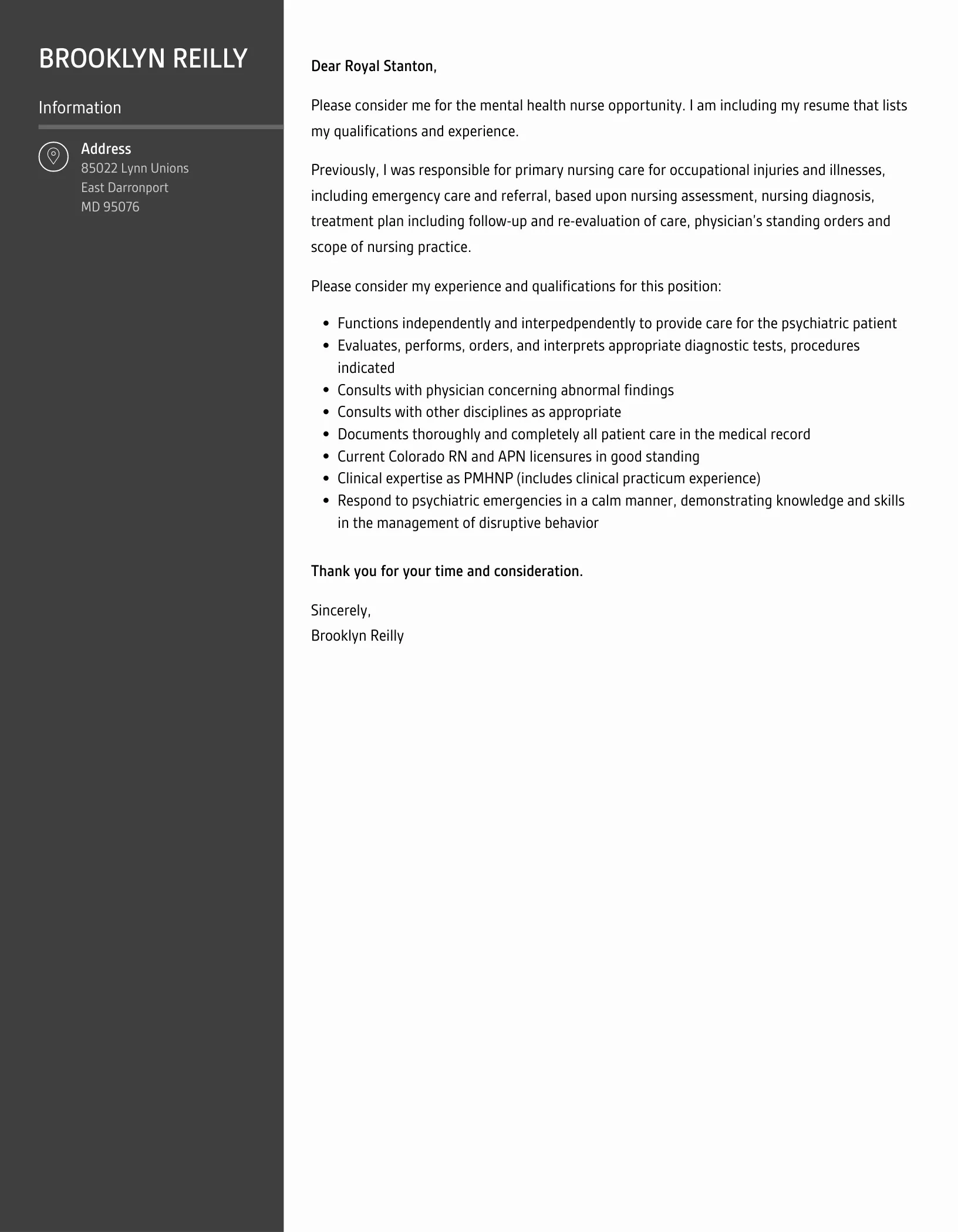
Crafting a compelling mental health nursing cover letter is crucial for securing your dream job. It’s your first impression, a chance to showcase your skills, experience, and passion for helping others. With competition fierce, a well-written cover letter can be the deciding factor in whether you land an interview. This guide reveals the secrets to writing a cover letter that stands out, highlighting key elements and offering actionable advice. From showcasing your unique skills to tailoring your letter for each specific role, we will provide all the necessary information to help you shine. Let’s delve into the essential components of a standout cover letter, ensuring you make a memorable impact on potential employers.
Highlighting Your Mental Health Nursing Skills
Your cover letter is where you demonstrate your expertise. Start by clearly stating your core skills. Mental health nursing demands a unique skill set including therapeutic communication, crisis intervention, patient assessment, and the ability to build rapport with individuals experiencing mental health challenges. Make sure to emphasize these, and also mention any specializations you possess, such as experience with specific patient populations (adolescents, geriatric patients, etc.) or therapeutic modalities (cognitive behavioral therapy, dialectical behavior therapy). Use action verbs to describe your abilities and responsibilities. For example, instead of saying ‘Responsible for patient care,’ say ‘Provided comprehensive patient care, including medication management, therapeutic interventions, and crisis stabilization.’ Remember to show, don’t just tell. Back up your claims with examples.
Showcasing Your Experience
Detail your previous roles and the responsibilities you held. Focus on experiences that align with the job you’re applying for. Include the name of the institution or healthcare setting, your job title, and the duration of your employment. Describe the specific tasks you performed and the patient populations you served. Highlighting the environment helps the hiring manager to understand the scope of your experience. Consider mentioning your involvement in treatment planning, patient education, and collaboration with interdisciplinary teams. If you have worked in diverse settings like inpatient, outpatient, or community health, make sure to explain how this has enriched your abilities. Be specific, providing examples that demonstrate your ability to effectively manage and support patients with various mental health conditions. Detail any leadership roles or mentoring experiences you’ve had, emphasizing your ability to guide and support colleagues.
Quantifying Your Achievements

Showcase your achievements with quantifiable data to provide concrete evidence of your impact. Use numbers and metrics to illustrate your successes. For example, if you improved patient outcomes, state the percentage reduction in readmission rates or the increase in patient satisfaction scores. If you implemented a new program, mention the number of patients served or the positive feedback received. If you have been recognized for excellence, mention any awards or commendations you received. Achievements could also include improvements in patient safety or successful implementation of new protocols. By quantifying your accomplishments, you provide concrete evidence of your value and demonstrate your ability to contribute meaningfully to the organization. This is crucial as it provides objective proof of your skills and capabilities, making you a more attractive candidate.
Tailoring to the Job Description
Customize each cover letter to match the specific job description. Review the job posting carefully and identify the key requirements and qualifications. Then, adjust your cover letter to highlight the skills and experiences that are most relevant to the role. Don’t just send out a generic letter; demonstrate that you have taken the time to understand the employer’s needs. If the job description emphasizes teamwork, provide examples of your collaborative efforts. If it highlights specific patient populations, address your experience with them. By doing so, you show that you are a strong fit for the position. This also signifies your interest and commitment to the specific opportunity. Tailoring the cover letter proves that you are not just a qualified applicant, but also a candidate who understands the specific needs of the organization.
Keywords Optimization
Incorporate keywords from the job description throughout your cover letter. This is important as many employers use Applicant Tracking Systems (ATS) to screen applications. ATS look for specific keywords to filter candidates. Integrate relevant keywords naturally within your sentences. For example, if the job description mentions ‘crisis intervention,’ make sure this phrase appears in your letter, particularly when you are describing your experience and skills. However, avoid keyword stuffing, which can make your letter sound unnatural and be easily detected. The goal is to make your letter readable and compelling while ensuring it passes the ATS. Review the job posting thoroughly, identify the most critical keywords, and seamlessly integrate them into your cover letter. This will help your application to get noticed and increase your chances of advancing to the next stage.
Matching Skills and Requirements

Carefully align your skills and experience with the requirements listed in the job description. Create a clear connection between your qualifications and the needs of the role. For each requirement, provide specific examples of how you have demonstrated that skill in past roles. If the job requires experience in a particular therapeutic modality, provide examples of how you have used that modality in your work. If the job requires specific certifications, make sure to include them in your letter. Be explicit and clear in your explanation, so the hiring manager can easily see that you meet the criteria. If there are any skill gaps, consider briefly addressing them by highlighting how you are committed to professional development and willing to learn. The aim is to convince the employer that you possess the necessary skills to excel in the role.
Demonstrating Your Passion
Express your enthusiasm for mental health nursing and your commitment to helping patients. Show the hiring manager why you are passionate about this field, and how you make a difference in the life of others. Share why you are drawn to mental health nursing. This could be a personal experience or an inspirational story. Explain how you approach patient care, emphasizing empathy, respect, and a patient-centered approach. Mention your professional goals and how this job aligns with your long-term career aspirations. Highlighting your passion sets you apart from other candidates, and it demonstrates that you are not just looking for a job but a meaningful opportunity. The objective is to convey your dedication to providing excellent patient care, which is a critical attribute in mental health nursing.
Expressing Empathy and Compassion
Empathy and compassion are essential qualities in mental health nursing. In your cover letter, demonstrate your ability to understand and connect with patients. Provide specific examples of how you have shown compassion and empathy in past roles. This could include providing emotional support, actively listening to patients, or advocating for their needs. Highlight situations where you went above and beyond to help a patient. This could involve providing comfort during a crisis or assisting a patient in achieving their goals. By showcasing your ability to empathize with and support patients, you demonstrate that you possess the necessary interpersonal skills to succeed in this field. Explain how you foster a safe and supportive environment for patients, and how you promote their overall well-being through your interactions.
Mentioning Professional Development

Show that you are dedicated to your professional growth. Mention any relevant training courses, certifications, or workshops you have completed. Highlight any continuing education you’ve undertaken to stay current with best practices. If you have participated in any conferences, seminars, or online courses, include them. Indicate your interest in learning new skills and expanding your knowledge base. Include specific examples of how you have applied the information gained from these professional development activities. Mention membership in professional organizations, such as the American Psychiatric Nurses Association (APNA). It demonstrates your commitment to excellence and ongoing learning, and assures the employer that you are up-to-date with the latest developments in mental health nursing.
Formatting and Presentation
Ensure your cover letter is easy to read and visually appealing. Use a professional font, such as Arial or Times New Roman, in a standard size (11 or 12 points). Maintain consistent formatting throughout, including consistent margins and spacing. Use headings and bullet points to break up large blocks of text and make the information more accessible. Proofread your cover letter carefully for grammar and spelling errors. Consider using a template, but customize it to reflect your personality and experience. Use a clear and concise structure with an introduction, body, and conclusion. Address the hiring manager by name, if possible, as it shows that you have taken the time to research the company. By paying attention to formatting and presentation, you will demonstrate your professionalism and attention to detail.
Choosing the Right Tone
Use a professional yet enthusiastic tone. Convey your professionalism and respect for the organization. Avoid sounding overly casual or informal. Your tone should reflect your personality and commitment to mental health nursing. Highlight your confidence and your ability to excel in the role. Use positive language and focus on your strengths and accomplishments. If you have a warm and compassionate demeanor, let that come through in your writing. Be authentic and genuine in your tone. Your cover letter is an opportunity to show your personality while maintaining a professional standard. Remember to always tailor your tone to match the culture of the healthcare setting, and adapt to their values.
Proofreading and Editing

Proofread your cover letter meticulously before submitting it. Errors can undermine your credibility and make it look like you are not detail-oriented. Double-check your grammar, spelling, punctuation, and sentence structure. Have someone else review your cover letter. Ask a friend, mentor, or career counselor to read your letter and provide feedback. Take the time to revise and edit your letter based on the feedback you receive. Read your cover letter aloud, as this can help you identify awkward phrasing or grammatical errors. Check the content to ensure it aligns with the job description. Proofreading and editing are crucial steps to ensure that your cover letter is polished and professional. A flawless cover letter will make a strong impression and increase your chances of getting an interview.
In conclusion, a well-crafted mental health nursing cover letter is your key to unlocking job opportunities. By highlighting your skills, tailoring the letter, demonstrating passion and following all the essential guidelines, you can make a compelling case for yourself. Remember to always proofread and edit meticulously to make a strong impression. Good luck!