Why a New Career Cover Letter Matters
A new career cover letter is your first chance to make a positive impression on a potential employer. Unlike a resume, which provides a summary of your experience, the cover letter allows you to tell your story, explain your career transition, and highlight why you’re a great fit for the role. When applying for a new career, a well-crafted cover letter becomes even more crucial. It’s your opportunity to address the elephant in the room – the career shift itself – and demonstrate how your skills and experiences translate to the new field. This document should not be a mere repetition of your resume; instead, it should provide context, show your enthusiasm, and convince the hiring manager that you’re worth a closer look. A compelling cover letter sets the stage for a successful application, increasing your chances of landing an interview and ultimately, the job. This is your initial impression, and the effort you invest here can make a real difference in the hiring process. Remember, a new career requires a narrative that connects your past to your future, and the cover letter is where you build that bridge.
Highlighting Transferable Skills
One of the most important strategies for a successful new career cover letter is highlighting your transferable skills. These are the skills you’ve acquired in previous roles or experiences that are applicable to the new career you’re pursuing. Identifying these skills helps bridge the gap between your past and your desired future. Skills such as communication, problem-solving, leadership, project management, and customer service are valuable across various industries and roles. In your cover letter, provide concrete examples of how you’ve used these skills in the past. Don’t just list the skills; instead, describe situations where you applied them and achieved positive outcomes. For instance, if you’re transitioning from a teaching career to project management, you can highlight your organizational skills by detailing how you managed classroom projects, met deadlines, and coordinated resources. This approach proves to the hiring manager that your capabilities are relevant to the new role, even if your prior experience doesn’t directly align with it. Focus on what you can do, not what you haven’t done, and demonstrate how you will bring value from day one.
Identify Your Key Skills

To effectively highlight transferable skills, start by identifying your key skills. Begin by creating a list of all your skills, both hard and soft. Hard skills are specific, teachable abilities like data analysis or software proficiency, while soft skills include interpersonal abilities such as teamwork and adaptability. Analyze the job description of the role you’re applying for. Identify the skills that the employer is seeking. Match your skills with the job requirements. Look for overlaps and pinpoint those skills you possess that align with the job’s needs. Prioritize the most relevant skills to showcase in your cover letter. This targeted approach ensures you’re speaking directly to the employer’s needs. Tailor your skills list for each application. Make sure that you highlight how you’ve used these skills successfully in the past. This direct link between your skills and the job requirements proves you understand what the role entails and are ready to perform from the start. By taking this methodical approach, you can ensure that your cover letter effectively highlights the skills most critical for your new career. This preparation significantly increases your chances of success.
Showcase Accomplishments
Showcasing your accomplishments is critical in a new career cover letter. Accomplishments provide concrete evidence of your abilities. Instead of just listing your duties, describe the results you achieved in previous roles. Consider the positive outcomes you created in your past positions. For instance, instead of saying you were responsible for managing social media, state that you increased social media engagement by 30% within six months by implementing a new content strategy. This level of detail provides a clear picture of your capabilities. Focus on the key achievements that demonstrate your abilities and align with the requirements of the new role. Even seemingly unrelated experiences can be relevant if you highlight transferable skills. For example, if you’re transitioning to a marketing role from a non-profit background, showcase how you successfully managed fundraising campaigns. This demonstrates your skills in communication, project management, and achieving specific goals. This also highlights your commitment to success. Always quantify your achievements whenever possible, using numbers and data to highlight your impact. By focusing on what you have achieved, you build a compelling case for your suitability for the new career, increasing your chances of getting hired.
Quantify Your Achievements
Quantifying your achievements is one of the most powerful ways to make your cover letter stand out. Numbers provide concrete evidence of your impact. Instead of simply stating that you improved efficiency, specify the percentage of improvement. For example, you might write, ‘Reduced project completion time by 15% by implementing a new workflow.’ Quantifying your accomplishments adds credibility. It shows the hiring manager the tangible results you’ve delivered in the past. Use metrics whenever possible to demonstrate your skills. Consider areas like increased revenue, reduced costs, improved customer satisfaction, or increased productivity. The more specific and measurable your accomplishments are, the more compelling your cover letter will be. If you’re transitioning careers and don’t have directly relevant metrics, consider how you’ve used quantifiable results in different contexts. For example, if you were a teacher, you could highlight improved student test scores or a higher rate of parent participation in school activities. Always provide context for the numbers you present. This will help the hiring manager quickly understand their significance and the positive impact you made. This approach is key when targeting a new career.
Tailoring Your Cover Letter

One of the most common mistakes job seekers make is using a generic cover letter for every application. Tailoring your cover letter is essential for making a strong impression. Each job you apply for has unique requirements, and a tailored letter demonstrates that you’ve put in the effort to understand the role and the company. Tailoring involves customizing your letter to fit the specific job description. Carefully read the job posting and identify the key requirements. Highlight the skills and experiences that match those requirements. Use the same keywords and phrases from the job description. This helps your application pass through applicant tracking systems (ATS). Additionally, tailor your letter to the company’s culture and values. Research the company and understand its mission, vision, and values. Show how your skills and experiences align with their culture. Show that you’ve done your research. By demonstrating a genuine interest in the company and the role, you increase your chances of getting hired. This personalized approach will make your application stand out. It conveys that you are seriously interested and invested in the opportunity.
Researching the Company
Researching the company is a crucial step in tailoring your cover letter. The more you know about the company, the better you can align your application. Begin by visiting the company’s website. Look for information about their mission, values, and recent news. Explore their ‘About Us’ page and learn about their culture and goals. Visit their social media profiles. This will allow you to understand their brand and communication style. Use this information to tailor your cover letter. Show that you have a genuine interest in the company. Mention specific aspects that appeal to you and how your skills and experiences can contribute to their success. Researching the company also gives you insights to make a more informed decision. You can evaluate whether the company aligns with your career goals. This will help you to ensure it is a good fit for you. Showing you’ve done your research demonstrates your attention to detail and your commitment to the opportunity. It shows the hiring manager that you’re serious about the job and that you’re willing to go the extra mile to learn about the organization. It is a must for your cover letter.
Addressing the Hiring Manager
Addressing the hiring manager by name is a small detail that can make a big difference. It adds a personal touch. It shows you’ve taken the time to research the company and find the right person to contact. Finding the hiring manager’s name can be achieved through various channels. Check the job posting. Sometimes, the hiring manager’s name is included. You can also visit the company’s website. Search for the ‘About Us’ or ‘Contact Us’ pages. You can also use LinkedIn. Search for the hiring manager by looking for the name of the company and the job title. If you cannot find a specific name, use a general salutation. Using ‘Dear Hiring Manager’ or ‘Dear [Department Name] Team’ is better than a generic ‘To Whom It May Concern.’ Double-check the spelling of the hiring manager’s name. Proofread your cover letter carefully to avoid any errors. If you can’t find a name, the general approach will still demonstrate your attention to detail. Always ensure the salutation is appropriate for the company’s culture and values. By personalizing your greeting, you create an immediate connection with the reader, making your cover letter more engaging and memorable. It will help you stand out from other applicants.
Formatting and Tone

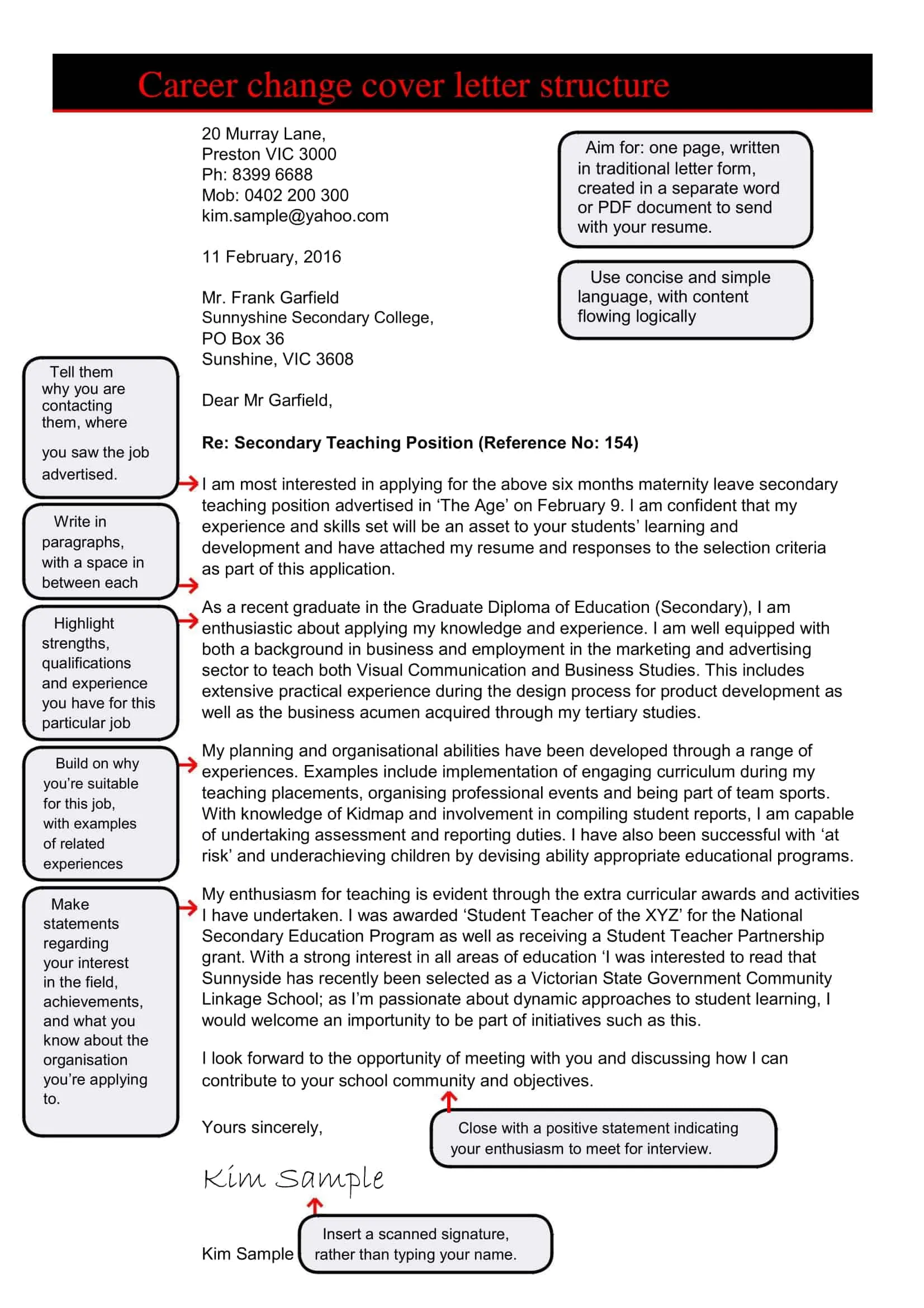
Formatting and tone are critical elements of an effective cover letter. A well-formatted cover letter is easy to read. A professional tone is essential for making a good impression. Keep the formatting simple and clean. Use a standard font like Arial or Times New Roman. Use a font size between 11 and 12 points. Maintain consistent spacing. Use single or 1.15 line spacing. Use a professional tone. Write in a clear, concise, and confident manner. Be positive and enthusiastic. Be formal and respectful. Avoid jargon. Tailor the tone to the company culture. If the company culture is more relaxed, you can adopt a slightly more casual tone, but still maintain professionalism. Proofread your cover letter carefully for any typos or grammatical errors. A well-formatted and professionally written cover letter shows attention to detail. A professional tone shows your ability to communicate effectively. When transitioning to a new career, your writing can demonstrate how you adapt to different environments. This will strengthen your application and increase your chances of getting an interview. A well-formatted and professional tone is essential for making a good impression on a potential employer.
Crafting a Strong Opening
The opening of your cover letter is the first impression. It needs to grab the reader’s attention and make them want to continue reading. Start with a strong hook. State the position you’re applying for. Mention where you saw the job posting. Highlight a key skill or accomplishment. You can also express your enthusiasm for the role and the company. Briefly mention how your previous experience aligns with the job requirements. For a new career, address the career transition in a confident manner. Explain why you’re making the change. Emphasize your transferable skills and how they’ll benefit the company. Clearly state your career goals. Show that you’re enthusiastic. Create an immediate connection with the reader. Make the reader want to learn more about you. A strong opening sets the tone for the rest of your cover letter. It will increase your chances of capturing the hiring manager’s interest. Focus on getting their attention from the start. A strong opening is critical to a successful job application.
Creating a Compelling Body
The body of your cover letter is where you provide the details that support your application. The body should expand on the points made in your opening. Focus on how your skills and experiences match the job requirements. Provide specific examples of your accomplishments. Quantify your achievements whenever possible. Address any career gaps or explain your career transition in a positive way. Show how your transferable skills will benefit the new role. Demonstrate your understanding of the company’s needs. Tailor the content to the specific job description. The body of your cover letter provides the substance of your application. It needs to be organized. Use clear and concise language. Avoid jargon and overly complex sentences. Structure the body with well-defined paragraphs. Use headings or bullet points to break up the text. This makes it easy for the hiring manager to scan and understand. Make sure the body highlights your qualifications. The body should create a compelling case for why the hiring manager should interview you. With the right information, you have a better chance of success.
Writing a Powerful Closing

The closing of your cover letter is your final opportunity to make a strong impression. The closing should summarize your key qualifications. Restate your enthusiasm for the role and the company. Include a call to action. Clearly state that you would like an interview. Express your willingness to discuss your qualifications in more detail. Make it easy for the hiring manager to contact you. Provide your phone number and email address. Thank the hiring manager for their time and consideration. Proofread the closing carefully for any typos or errors. The closing should be concise and to the point. Use a professional tone. Avoid overly casual language. Make the reader feel positive. A well-written closing reinforces your interest in the role. It prompts the hiring manager to take the next step. A powerful closing will significantly increase your chances of securing an interview and moving forward in the hiring process. Make sure it reflects your professionalism and eagerness for the job.
Addressing Career Gaps
Career gaps can be a concern. Addressing them in your cover letter will help you demonstrate your professionalism. Briefly and honestly acknowledge the gap. State what you did during that time. Frame your activities positively. If you took time off for personal reasons, briefly explain. Highlight how you used the time productively. If you took courses, list them. If you volunteered, mention it. Explain the skills you developed during the gap. Focus on what you learned and how it relates to the new role. Avoid making excuses or dwelling on the negative aspects. Frame your explanation as a way of demonstrating your commitment to personal and professional development. Show that you are proactive. If the gap was due to layoffs or other circumstances, explain the situation. Focus on how you took steps to improve your skills. This will show your resilience and adaptability. In addressing career gaps, maintain a positive and proactive tone. This will increase your chances of overcoming this challenge and showing your suitability for the new career. By addressing this early, you are demonstrating transparency and proactivity.
Emphasizing Your Enthusiasm
Emphasizing your enthusiasm is critical for making a positive impression. Enthusiasm is contagious. It shows that you are motivated and genuinely interested in the role and the company. Express your enthusiasm throughout your cover letter. Mention the specific aspects of the role that excite you. Show your understanding of the company’s mission. Highlight the company culture that appeals to you. When you write your cover letter, use enthusiastic language. Use strong verbs and positive adjectives. Avoid sounding indifferent or detached. Show how the new role aligns with your career goals. Make it clear why you are passionate about the opportunity. Show how your skills and experiences will contribute to the company’s success. Demonstrate your commitment to the company. A cover letter is your opportunity to display passion. It makes your application more memorable and engaging. Emphasizing your enthusiasm will help you make a lasting impression and increase your chances of securing an interview. Show that you want the job.
Including a Call to Action

Including a call to action is a vital part of a cover letter. It tells the hiring manager what you want them to do next. Be clear. State that you would like an interview. Specifically request an opportunity to discuss your qualifications in more detail. Make it easy for the hiring manager to take the next step. Provide your contact information. Include your phone number and email address. Ensure your contact information is up-to-date. Reiterate your interest in the role and the company. A call to action should be concise. The call to action should be direct. It should make it clear what you expect from the hiring manager. It signals your eagerness to proceed. It should reinforce your enthusiasm for the role. A strong call to action increases your chances of getting an interview. Ensure your cover letter ends with a clear call to action. It will leave a lasting positive impression.
Proofreading and Editing
Proofreading and editing are critical steps in the cover letter writing process. Errors can undermine your credibility. They suggest a lack of attention to detail. Read your cover letter multiple times. Look for any typos, grammatical errors, or punctuation mistakes. Use a spell-checker and grammar-checker. These tools can help you catch common errors, but they are not foolproof. Read your cover letter aloud. This will help you identify awkward phrasing or unclear sentences. Have someone else proofread your cover letter. A fresh pair of eyes can often catch errors that you might miss. Ensure your cover letter is clear. Ensure your cover letter is concise. Ensure your cover letter is well-organized. Proofread your cover letter before submitting it. Editing improves your chances of getting an interview. It demonstrates your professionalism and attention to detail. A well-edited cover letter will leave a positive impression. It will showcase your writing skills, and it will demonstrate your ability to create a compelling application. The final step is to submit it.
Reviewing for Clarity and Impact
Reviewing your cover letter for clarity and impact ensures that it effectively communicates your message. Clarity means that your writing is easy to understand. Ensure that your ideas are expressed clearly. Ensure that your sentences are concise. Impact refers to the overall effect of your cover letter. It should be designed to grab the reader’s attention. Ensure that your cover letter aligns with the job description. Focus on the key requirements. Highlight how your skills and experiences match those needs. Use strong verbs and action words. This will create a more engaging and impactful narrative. Remove any unnecessary words or phrases. Make every sentence count. Make sure your cover letter has a strong opening and closing. A strong opening grabs the reader’s attention. A strong closing prompts action. Review your cover letter from the perspective of the hiring manager. Ask yourself if your application makes a compelling case. Ensure your application shows why you are the right fit for the job. A clear and impactful cover letter will significantly increase your chances of getting hired.
Seeking Feedback

Seeking feedback is a valuable step in the cover letter writing process. It allows you to improve your application. Ask trusted individuals to read your cover letter. Provide your resume. Ask them to provide constructive feedback on the content, format, and tone. When asking for feedback, provide specific questions. Ask them if your letter is clear. Ask them if it is compelling. Ask them if it effectively communicates your message. Be open to receiving criticism. View feedback as an opportunity to learn. Listen carefully to any comments and suggestions. Revise your cover letter based on the feedback you receive. Don’t take feedback personally. Use feedback to refine your cover letter. Proofread your revised cover letter carefully. Ensure your cover letter addresses the feedback you received. Seek feedback from career counselors or professionals. Professionals will provide targeted advice. They provide insights into industry standards. Seeking feedback from multiple sources can provide a more comprehensive assessment. Getting feedback will lead to a stronger cover letter. A strong cover letter increases your chances of landing an interview. Embrace feedback, and improve your application.
Following Up After Submission
Following up after submitting your cover letter shows your interest in the position. It also shows your professionalism. Wait a reasonable amount of time. Give the hiring manager time to review your application. Send a follow-up email within one to two weeks. Briefly restate your interest in the role. Reference your application. Remind the hiring manager of your qualifications. Thank them for their time. If you have not heard back after a reasonable time, you may send another follow-up. Keep your follow-up concise and professional. Be polite and respectful. Avoid being too pushy or demanding. Consider the company culture and industry standards when deciding on a follow-up strategy. Following up demonstrates your proactive approach. It can increase your chances of getting noticed. Even if you are not successful in getting an interview, it can leave a positive impression. Following up is a final step. It demonstrates your commitment.