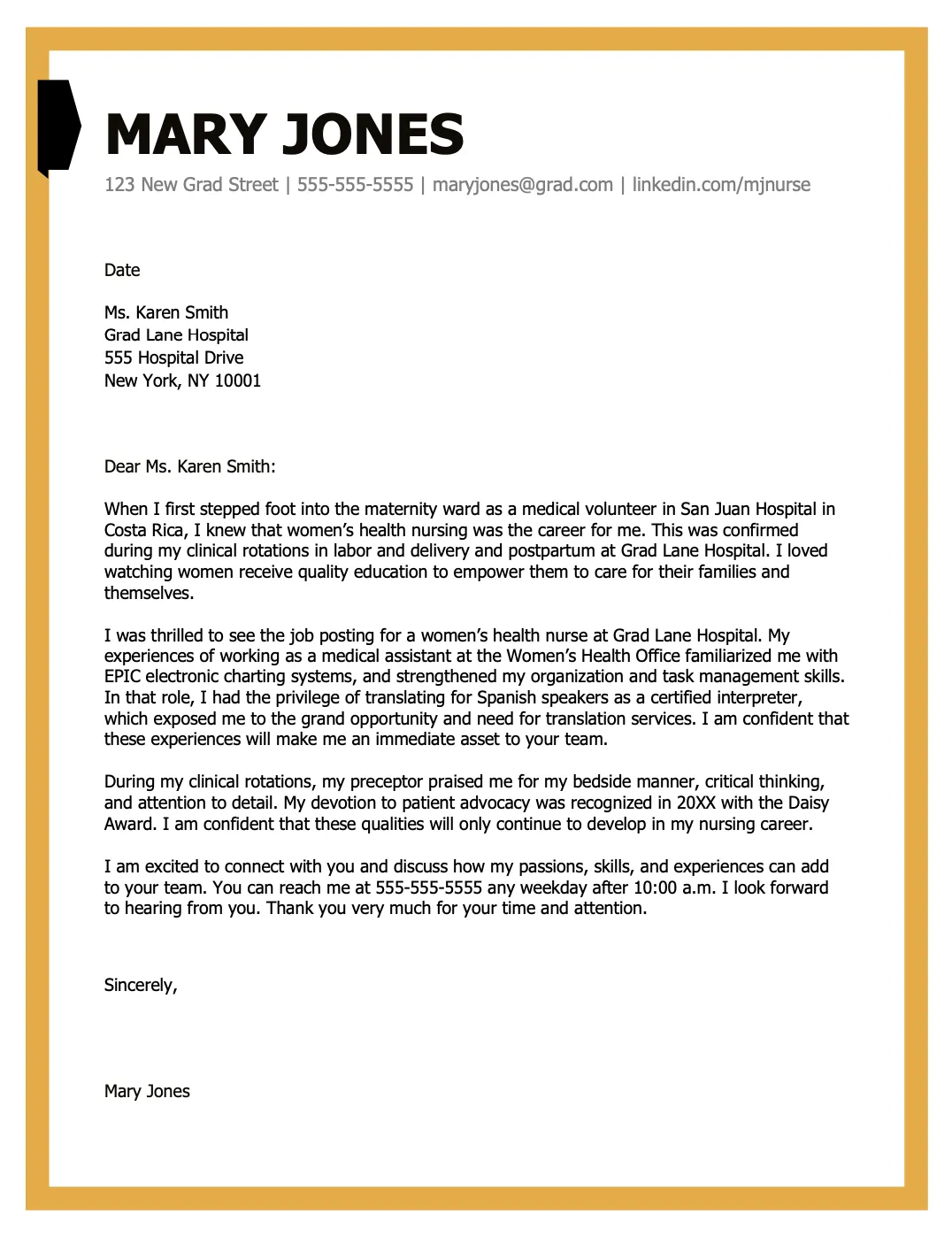
Understanding the Importance of a Nursing Cover Letter for New Grads
As a new graduate nurse, the job market can feel overwhelming. Many positions require experience, but how do you gain experience without a job? This is where a well-crafted nursing cover letter becomes your secret weapon. It’s your first impression, your chance to shine, and a crucial element in securing your dream nursing position. A compelling cover letter allows you to showcase your skills, passion, and potential, setting you apart from other applicants. It’s not just a formality; it’s a strategic tool to demonstrate your suitability for the role, highlighting your unique qualifications and career aspirations. Remember, a generic resume is often overlooked, but a personalized cover letter can capture the attention of hiring managers and lead to an interview.
Key Components of a New Grad Nursing Cover Letter
Contact Information and Salutation

Start with your contact information: full name, phone number, email address, and optionally, your LinkedIn profile URL. Following this, address the hiring manager directly. If you know their name, use it. ‘Dear Ms./Mr. [Last Name]’ is professional and shows you’ve done your research. If the name isn’t available, use a general salutation like ‘Dear Hiring Manager’. Ensure your email address is professional and appropriate for job applications. Avoid nicknames or unprofessional addresses. This is the first step in creating a positive impression, so take the time to get it right.
Writing a Compelling Introduction
Your introduction is your hook. It should immediately grab the reader’s attention and make them want to learn more. State the position you are applying for and where you found the job posting. Then, briefly introduce yourself. Highlight your most relevant qualification, like your recent graduation or your area of specialization. Consider mentioning a specific skill or experience that aligns with the job description. For example, if the job description emphasizes teamwork, you might mention your experience collaborating with a multidisciplinary team during your clinical rotations. Keep it concise, enthusiastic, and focused on what you can bring to the organization, rather than just stating the obvious.
Highlighting Your Education and Skills
As a new grad, your education and skills are your primary assets. Briefly mention your nursing degree, the name of your school, and the date of your graduation. Highlight any academic achievements, such as honors, Dean’s List, or relevant coursework. Focus on skills that are relevant to the job description. These might include patient assessment, medication administration, critical thinking, electronic health record proficiency, and communication skills. Provide specific examples of how you’ve demonstrated these skills during your clinical rotations or other experiences. Use action verbs to describe your accomplishments and skills. For example, instead of saying ‘Assisted with patient care’, say ‘Administered medications and provided direct patient care, resulting in positive patient outcomes’.
Showcasing Clinical Experience

Clinical experience is crucial, even for new grads. Detail your clinical rotations, specifying the units or specialties you rotated through. Describe your responsibilities and accomplishments during these rotations. Quantify your achievements whenever possible. For instance, you might say, ‘Cared for an average of five patients per shift in the Medical-Surgical unit’ or ‘Assisted in the successful implementation of a new patient education program, resulting in a 15% increase in patient understanding’. Showcase your ability to apply your knowledge and skills in a practical setting. Mention any experiences with specific patient populations or medical procedures. Emphasize any leadership roles you took on during rotations.
Demonstrating Your Passion and Fit
Hiring managers want to know why you’re passionate about nursing and why you want to work at their organization. Express your genuine interest in the specific role and the healthcare facility. Research the organization’s mission, values, and patient care philosophy. Tailor your cover letter to align with these aspects. Explain why you chose nursing as a profession and what motivates you. Mention any specific areas of nursing that interest you, and connect them to the job requirements. Share any personal experiences or insights that demonstrate your commitment to patient care and your desire to contribute to a positive work environment. Show that you’re not just looking for a job, but a career.
Including Relevant Certifications and Licenses
Clearly state your nursing license status, including the state in which you are licensed or if you are awaiting results. List any certifications you hold, such as BLS, ACLS, or any specialty certifications relevant to the position. If you are preparing for the NCLEX-RN exam, mention the date you are scheduled to take it. Ensure your certifications are current and valid. If a particular certification is preferred or required for the job, make sure you prominently highlight it. Organize this information in a clear and concise manner, making it easy for the hiring manager to verify your credentials.
Writing a Strong Closing

Your closing paragraph should reiterate your interest in the position and the organization. Thank the hiring manager for their time and consideration. Reiterate your contact information one more time. Express your eagerness to discuss your qualifications further and to interview for the position. Use a professional closing, such as ‘Sincerely,’ or ‘Respectfully,’ followed by your full name. Make sure your tone is confident and enthusiastic, leaving a lasting positive impression.
Proofreading and Formatting Your Cover Letter
Proofreading is essential. Carefully review your cover letter for any typos, grammatical errors, or punctuation mistakes. Read it aloud to catch any awkward phrasing. Ask a trusted friend, mentor, or career advisor to review it as well. Ensure your letter is free of errors. Formatting also matters. Maintain a professional appearance with a clear and easy-to-read format. The layout should be consistent, with proper spacing and indentation. A polished cover letter demonstrates attention to detail and professionalism, both crucial qualities in a nurse.
Formatting your New Grad Nursing Cover Letter
Font Selection and Size

Choose a professional font like Times New Roman, Arial, or Calibri. Use a font size between 10 and 12 points for readability. Ensure the font is consistent throughout the entire letter. Avoid overly decorative or unusual fonts that might distract the reader. The goal is to present a clean, easy-to-read document that emphasizes your content, not your font choice.
Margins and Spacing
Use standard one-inch margins on all sides of the document. This creates a balanced and visually appealing layout. Use single-spacing within paragraphs and double-spacing between paragraphs. This spacing makes the letter easier to scan and read. Proper spacing prevents the letter from appearing cluttered and allows the hiring manager to focus on your content. Maintain consistent spacing throughout the document.
File Format and Submission
Save your cover letter as a PDF file. PDFs preserve the formatting, ensuring that your letter appears exactly as you intended, regardless of the recipient’s software or device. When submitting your application online, carefully follow the instructions provided by the employer. If they request a specific file name, use it. Always double-check that you are submitting the correct version of your cover letter and resume.
Cover Letter Samples for New Grad Nurses

Sample Cover Letter 1 Pediatric Nursing
Here are some sample cover letters that you can use as a template. Customize each one to your specific situation and the job you’re applying for. Tailor the content to showcase your skills and experiences related to pediatric nursing. Mention any relevant coursework or clinical experiences in pediatrics, highlighting your ability to provide compassionate care to children and their families. Include examples of how you have handled difficult situations or worked with children of different ages and backgrounds. Remember to adjust the language and details to match your own experiences and the specific requirements of the job posting. Ensure it reflects your personality and enthusiasm for pediatric nursing.
Sample Cover Letter 2 Medical-Surgical Nursing
Adapt the sample cover letter for medical-surgical nursing. Focus on experiences related to this specialty. Emphasize your familiarity with patient assessment, medication administration, and the care of patients with various medical conditions. Include instances of teamwork and collaboration with other healthcare professionals. Mention any skills you’ve developed during clinical rotations in a medical-surgical unit. Highlight your ability to handle a fast-paced environment and manage multiple patients simultaneously. Tailor the language to reflect your personality and enthusiasm for med-surg nursing. Consider any certifications or special skills relevant to medical-surgical nursing. Use the samples to highlight your skills and create an impactful impression.
Sample Cover Letter 3 Emergency Room Nursing

Use the sample cover letter to make a compelling case for your candidacy in emergency room nursing. Emphasize your skills, such as rapid assessment, critical thinking, and ability to remain calm under pressure. Showcase your experience in handling emergency situations, including trauma, cardiac arrest, and other critical conditions. Demonstrate your ability to work effectively in a fast-paced and demanding environment. Highlight any experience or training relevant to emergency care, such as ACLS, PALS, or experience in an emergency room setting. Remember to customize each section to match your unique experiences.
Common Mistakes to Avoid in Your Cover Letter
Generic or Unenthusiastic Language
Avoid using generic or overly formal language that doesn’t reflect your personality. Don’t use a cover letter template. Refrain from using phrases that sound impersonal or insincere. Show your enthusiasm for the position and the organization. Use action verbs and specific examples to highlight your skills and accomplishments. Tailor your cover letter to the specific job and the organization’s mission and values. Demonstrate your passion for nursing through your words.
Typos and Grammatical Errors
Typos and grammatical errors can undermine your credibility. Proofread your cover letter carefully. Use spell-check and grammar-check tools, but don’t rely on them completely. Read your cover letter aloud to catch any awkward phrasing. Ask a friend, mentor, or career advisor to review your cover letter for errors. A polished and error-free cover letter reflects attention to detail, a critical skill for a nurse. It’s an easy way to avoid an avoidable mistake. Always check, and then double-check.
Focusing Too Much on Yourself
While you should highlight your skills and experience, avoid making your cover letter all about you. Shift the focus to what you can offer the employer and how you can contribute to their team. Show how your skills and experiences align with the job requirements and the organization’s goals. Demonstrate your understanding of the organization’s mission and values. Highlight how you can help them achieve their goals. Show enthusiasm for the specific role and the healthcare facility to make a lasting impression.
Not Tailoring the Letter to the Job
Avoid sending the same cover letter for every job. Always tailor your cover letter to the specific job and the organization. Carefully review the job description and identify the key skills and qualifications they are seeking. Highlight the skills and experiences that align with those requirements. Research the organization’s mission, values, and patient care philosophy. Customize your cover letter to reflect your interest in their specific work. This shows that you have taken the time to understand the role and the organization. A tailored cover letter demonstrates your genuine interest and increases your chances of securing an interview.