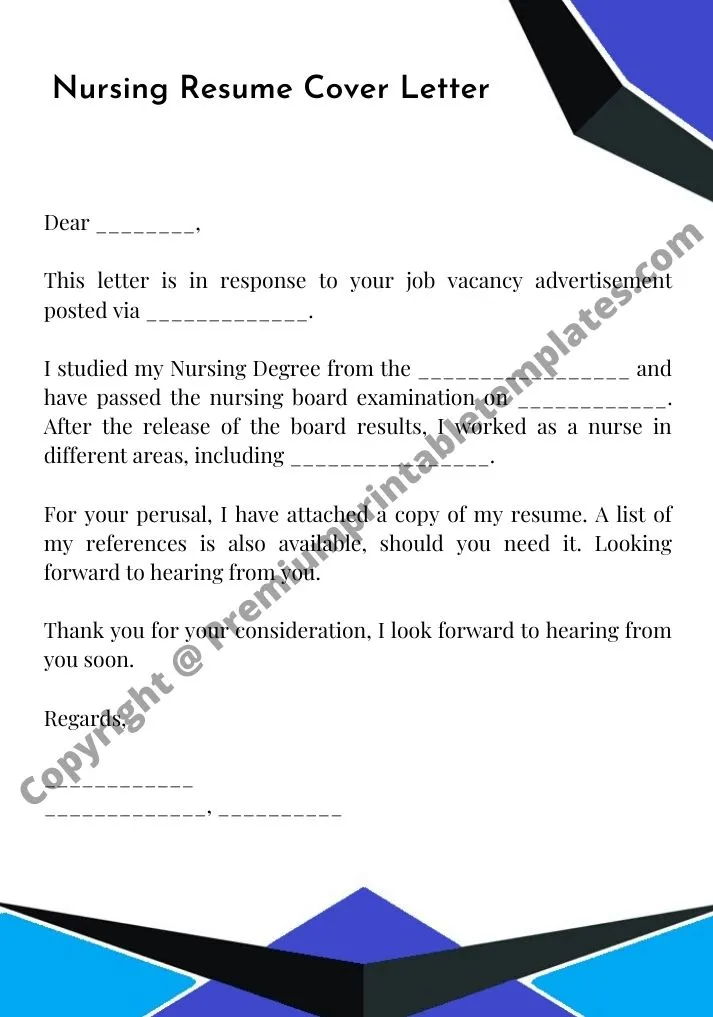
Crafting a Powerful Nursing Cover Letter
A nursing cover letter is your first opportunity to make a strong impression on a potential employer. It’s a crucial document that complements your resume, providing a personalized introduction and highlighting your relevant skills and experience. When written effectively, a cover letter can significantly increase your chances of landing an interview and securing your dream nursing job. To make your nursing cover letter perfect, it is essential to understand its core purpose, key elements, and how to tailor it to each specific job application.
Understanding the Purpose of a Nursing Cover Letter
The primary purpose of a nursing cover letter is to introduce yourself to the hiring manager and express your interest in the specific nursing position. It allows you to showcase your personality, enthusiasm, and unique qualifications, which are not always fully captured in your resume. A well-written cover letter should also explain why you are the ideal candidate for the role, highlighting your relevant skills, experience, and achievements in a way that resonates with the employer’s needs. Furthermore, it demonstrates your written communication skills, attention to detail, and your commitment to pursuing the job opportunity.
Highlighting Your Skills and Experience

In your nursing cover letter, it is important to emphasize your skills and experience that align with the job requirements. Carefully review the job description and identify the key skills and qualifications the employer is seeking. Then, provide specific examples from your professional history where you have demonstrated these skills. Use action verbs to describe your accomplishments and quantify your achievements whenever possible. For instance, instead of saying “Provided patient care,” you could say “Administered medications to over 20 patients daily, ensuring accurate dosages and timely delivery.” This specificity will make your cover letter more compelling and help the employer see your value.
Formatting Your Nursing Cover Letter
Proper formatting is crucial for making your nursing cover letter easy to read and visually appealing. Start with a professional header that includes your contact information, such as your name, phone number, email address, and LinkedIn profile URL. Use a standard business letter format, including the date, the hiring manager’s name (if known), and the employer’s address. Choose a clear and readable font, such as Times New Roman, Arial, or Calibri, in a size between 11 and 12 points. Maintain consistent spacing throughout the letter, with single spacing within paragraphs and double spacing between paragraphs. Keep the letter concise, ideally within one page, and proofread carefully for any grammatical errors or typos.
Essential Elements to Include in Your Nursing Cover Letter
Contact Information and Date

Begin your cover letter with your contact information at the top, including your full name, address, phone number, and professional email address. This allows the hiring manager to quickly reach you if they are interested in scheduling an interview. Following your contact information, include the date you are sending the cover letter. Make sure to use the correct format for the date (e.g., Month Day, Year) to maintain a professional appearance. This initial section sets the tone for the entire letter and ensures easy communication.
Professional Salutation
Use a professional salutation to address the hiring manager. If you know the name of the person who will be reviewing your application, use “Dear Mr./Ms./Dr. [Last Name]”. This shows that you have taken the time to research the company and personalize your letter. If you are unsure of the hiring manager’s name, it’s acceptable to use a general salutation like “Dear Hiring Manager” or “Dear [Department Name] Team”. Avoid generic salutations such as “To Whom It May Concern” or “Dear Sir/Madam”, as they can make your letter seem impersonal.
Opening Paragraph: Grabbing Attention
The opening paragraph of your cover letter is your opportunity to grab the reader’s attention and make a positive first impression. Start by stating the position you are applying for and where you saw the job posting. Then, briefly highlight your key qualifications or experiences that make you a strong candidate for the role. Consider using a compelling statement that showcases your passion for nursing or your commitment to patient care. For instance, you could mention a specific achievement or a personal connection to the healthcare field to create an immediate impact. Keep the opening concise and focused, setting the stage for the rest of the letter.
Body Paragraphs: Showcasing Your Qualifications

The body paragraphs are where you demonstrate your qualifications and skills in detail. Use these paragraphs to expand on your relevant experience, education, and achievements. Structure your paragraphs logically, using the job description as a guide to highlight the key requirements the employer is looking for. Provide specific examples of how you have successfully performed tasks related to the position. Whenever possible, quantify your achievements with numbers or statistics to demonstrate your impact. For example, you might mention that you reduced patient readmission rates by a certain percentage or improved patient satisfaction scores through your care. Always tailor these sections to highlight the key qualifications of the job.
Closing Paragraph: Call to Action
Your closing paragraph should summarize your interest in the position and reiterate your enthusiasm for the opportunity. Thank the hiring manager for their time and consideration. Include a clear call to action, such as stating that you are available for an interview at their earliest convenience. You can also mention that you have attached your resume for their review and provide any additional information, such as your availability for an interview. End with a professional closing, such as “Sincerely” or “Best regards”, followed by your typed name. This final section reinforces your interest and encourages the employer to take the next step.
Proofreading and Editing Your Cover Letter
Proofreading and editing are essential steps in creating a perfect nursing cover letter. Carefully review your letter for any grammatical errors, typos, or formatting inconsistencies. Pay close attention to sentence structure, punctuation, and spelling. It’s often helpful to have someone else read your cover letter to provide feedback. A fresh pair of eyes can often catch mistakes that you might have missed. Ensure that your letter is clear, concise, and professional. Remove any unnecessary jargon or repetitive phrases. Ensure your language is active, and it clearly conveys your skills and passion for the role.
Resume Integration

Your cover letter and resume should work together to create a cohesive and compelling application package. While the cover letter provides a personalized introduction and highlights your key qualifications, your resume offers a comprehensive overview of your experience and skills. Ensure that the information in your cover letter complements your resume, but avoid simply repeating the same information. The cover letter should expand on specific achievements and tailor the content to the job requirements, while the resume should provide detailed information about your work history, education, and certifications. By strategically integrating the two documents, you can present a well-rounded picture of your qualifications.
Tailoring Your Cover Letter to the Job
One of the most important strategies for making your nursing cover letter perfect is to tailor it to each job application. Customize your letter by carefully reviewing the job description and highlighting the skills and experiences that align with the employer’s needs. Use the job description as a guide to identify the key requirements and modify your letter to showcase your relevant qualifications. Research the healthcare organization or hospital to understand their values, mission, and any recent developments. Mention how your skills and experiences align with the organization’s goals and culture. Tailoring your cover letter demonstrates your genuine interest in the role and increases your chances of getting noticed by the hiring manager.
Examples of Successful Nursing Cover Letters
Reviewing examples of successful nursing cover letters can provide valuable insights and inspiration. Search online for examples of cover letters for nursing positions, focusing on different specialties and levels of experience. Pay attention to how the authors structure their letters, highlight their skills, and express their enthusiasm for the role. Analyze the language used, the tone, and the specific examples provided. Consider using these examples as a starting point to create your own nursing cover letter, adapting the content to your specific qualifications and the job requirements. Remember, the most effective cover letters are those that are authentic, personalized, and showcase your unique strengths.
In conclusion, crafting a perfect nursing cover letter requires careful attention to detail, strategic tailoring, and a clear understanding of your skills and qualifications. By following these guidelines, you can create a cover letter that effectively introduces yourself to potential employers, showcases your strengths, and increases your chances of securing your dream nursing job. Remember to always proofread your letter, tailor it to each application, and express your genuine passion for nursing. Good luck with your job search!