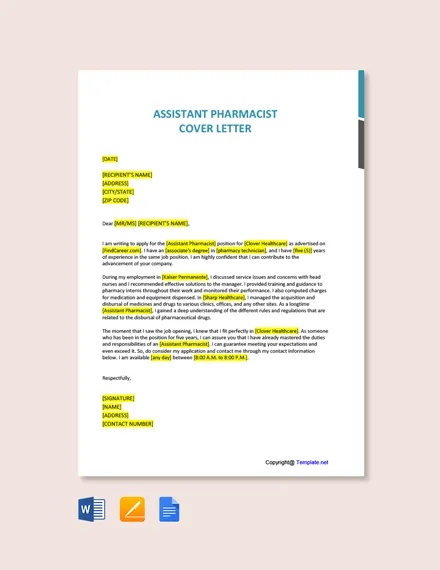
Crafting a Compelling Pharmacist Cover Letter
A pharmacist cover letter is more than just a formality; it’s your opportunity to make a strong first impression and showcase why you’re the ideal candidate for a pharmacy position. In a competitive job market, a well-crafted cover letter can set you apart from other applicants and significantly increase your chances of landing an interview. This guide provides comprehensive insights into creating a standout cover letter that highlights your skills, experience, and passion for pharmacy, ultimately helping you achieve your career goals. By following these guidelines, you can confidently present yourself as a qualified and enthusiastic pharmacist, ready to contribute to a healthcare team and improve patient outcomes. A well-written cover letter demonstrates your professionalism and attention to detail, essential qualities in the pharmacy field. Ensure your cover letter not only lists your qualifications but also tells a compelling narrative of your career journey and aspirations.
Understanding the Importance of a Cover Letter
A cover letter serves as a personal introduction, allowing you to elaborate on your resume and provide context to your qualifications. It’s your chance to tell a story, explain your career motivations, and demonstrate your understanding of the specific job and the employer’s needs. A well-written cover letter highlights your achievements, skills, and how they align with the job requirements, effectively demonstrating your value to the potential employer. Think of it as a bridge between your resume, which presents factual information, and the interview, where you can engage in a more personal conversation. The cover letter helps the hiring manager understand your personality, communication style, and genuine interest in the position. It’s an opportunity to express your enthusiasm for pharmacy and explain why you are the best fit for the role. Remember, many hiring managers use cover letters as a screening tool, so a poor or generic cover letter can lead to immediate rejection.
Highlighting Relevant Skills and Experience
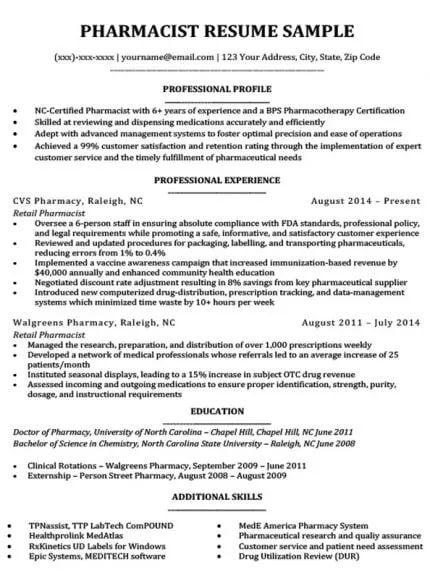
Your cover letter should prominently feature the skills and experiences that are most relevant to the pharmacist position you are applying for. Begin by reviewing the job description carefully, noting the key requirements and qualifications. Then, select examples from your experience that directly address these needs. For example, if the job requires experience with medication therapy management (MTM), provide a specific instance where you successfully implemented MTM and the positive outcomes. Similarly, if the role requires knowledge of specific software or pharmacy systems, be sure to mention your proficiency. Use action verbs to describe your accomplishments and quantify your achievements whenever possible. For example, instead of saying “assisted with dispensing medications,” say “dispensed an average of 150 prescriptions per day, ensuring accuracy and patient safety.” This approach shows you are not only qualified but also results-oriented.
Essential Components of a Pharmacist Cover Letter
A well-structured cover letter includes several key components that work together to create a compelling application. These elements ensure that your letter is professional, informative, and effectively communicates your qualifications. Each section plays a vital role in presenting you as a well-rounded candidate and highlighting your suitability for the position. Omitting any of these components could weaken your application and prevent you from fully showcasing your capabilities to the potential employer. Ensure each part contributes to a cohesive narrative that effectively reflects your professional identity and aspirations within the pharmacy field. Paying close attention to these elements will enable you to craft a cover letter that not only gets noticed, but also secures an interview.
Contact Information
At the top of your cover letter, include your full name, address, phone number, and professional email address. Make sure your email address is professional and appropriate for job applications. This information is essential for the hiring manager to contact you easily. Ensure the details are accurate and up-to-date to avoid any communication issues. This section sets the foundation for your professional communication. Keep it concise and easily readable to provide the employer with all necessary contact details at a glance. It is the first impression, so accuracy and professionalism are paramount.
Professional Summary or Objective

Start with a concise, compelling summary or objective that highlights your key skills and career goals. If you have extensive experience, a professional summary is a good choice, summarizing your achievements and qualifications. If you are a recent graduate or changing careers, an objective statement is more suitable, stating your career aspirations and how you plan to contribute to the company. This introduction should immediately capture the reader’s attention and communicate your value proposition. This section sets the tone for the rest of the cover letter, so it should be clear, concise, and tailored to the specific job requirements. It’s your opportunity to make a strong first impression and encourage the reader to continue reading. Focus on the key skills and experiences that align with the job description, demonstrating how you can meet the employer’s needs.
Showcasing Your Pharmacy Skills
Pharmacists possess a wide range of skills essential for providing excellent patient care and ensuring the safe and effective use of medications. Your cover letter should highlight these abilities, demonstrating your competency and expertise. Tailor the examples to the specific requirements of the job, emphasizing how you can apply your skills to the role. Whether it is dispensing prescriptions, providing patient counseling, or managing pharmacy operations, ensure you convey your proficiency and commitment to patient safety. Highlight any specialized knowledge or certifications that set you apart. Your goal is to present a complete picture of your capabilities, illustrating how you will excel in the role and contribute to the pharmacy’s success. Showcasing these skills will clearly define your value proposition as a candidate and help you stand out from other applicants.
Technical Proficiency
Demonstrate your proficiency in pharmacy software, medication dispensing systems, and other relevant technologies. Mention specific software or platforms you have used, such as dispensing software, inventory management systems, and electronic health record (EHR) systems. Include details about your experience with these technologies and how you have used them to improve efficiency, accuracy, and patient safety. If you have experience with automation systems or robotics in pharmacy, highlight this as it demonstrates your understanding of modern pharmacy practices. Mentioning your technical skills assures the hiring manager of your readiness to contribute from day one. Keep the details focused on the technologies that the employer uses or mentions in the job description.
Patient Care and Communication

Patient care is at the core of pharmacy practice. In your cover letter, emphasize your ability to provide exceptional patient care through effective communication and empathy. Describe how you interact with patients, including your approach to counseling, answering questions, and providing medication education. Highlight your experience in building rapport with patients, addressing their concerns, and ensuring they understand their medication regimens. Mention any training or certifications you have in patient communication or counseling. Emphasize your ability to collaborate with healthcare teams to optimize patient outcomes. Highlighting your patient care abilities illustrates your dedication to providing the highest level of service, which is a crucial aspect of the pharmacist role.
Leadership and Teamwork
Pharmacists often take on leadership roles and work collaboratively with other healthcare professionals. If you have experience in leadership or teamwork, highlight it in your cover letter. Describe any supervisory roles you have held and how you have managed teams, delegated tasks, and fostered a positive work environment. Showcase your ability to work effectively in interdisciplinary teams, collaborating with physicians, nurses, and other healthcare providers. Mention any experience with training or mentoring pharmacy staff. Demonstrating leadership and teamwork skills will give the hiring manager confidence in your ability to contribute to a positive and productive workplace. Highlighting these skills demonstrates your capacity to lead and work well with others.
Addressing the Specific Job Requirements
Tailor your cover letter to the specific requirements outlined in the job description. This shows that you have carefully reviewed the job posting and are genuinely interested in the position. Use the job description as a guide to identify the key skills, experiences, and qualifications the employer is seeking. Address each requirement in your letter, providing specific examples of how you meet or exceed those expectations. If the job requires experience with a particular type of pharmacy setting, such as a hospital or community pharmacy, be sure to highlight your relevant experience. Tailoring your cover letter demonstrates your attention to detail, adaptability, and genuine interest in the role, increasing your chances of getting an interview. Carefully addressing the requirements shows the hiring manager you understand the role and can contribute significantly.
Researching the Employer

Before writing your cover letter, research the employer to gain insights into their mission, values, and culture. This shows genuine interest and allows you to tailor your letter accordingly. Visit the company website, read about their services, and learn about their recent achievements. If possible, research the hiring manager or the pharmacy department to understand their priorities and goals. This information will help you personalize your cover letter, demonstrating how your skills and experience align with the employer’s needs. Mentioning specific aspects of the company’s mission, values, or recent initiatives will demonstrate your genuine interest and commitment to the organization. Demonstrate your knowledge of the employer, which indicates that you are truly interested in the position. This thorough research shows the hiring manager that you have put in extra effort and are serious about the role.
Tailoring Your Letter
Avoid using a generic cover letter template. Instead, tailor each letter to the specific job and employer. Use the job description to identify the key requirements and highlight the skills and experiences that match those needs. Personalize your letter by mentioning the employer’s name, the specific department you are applying to, and any unique aspects of the job or company that appeal to you. Tailoring your letter shows that you are serious about the position and have taken the time to understand the employer’s needs. Customizing your letter for each application is essential, and it indicates that you have put effort into the application. This personalized approach will capture the hiring manager’s attention and improve your chances of getting an interview. Show the employer that you are genuinely interested in the role and have taken the time to understand their needs.
Quantifying Your Achievements
Whenever possible, quantify your achievements to demonstrate your impact and value. Instead of saying “improved patient safety,” provide specific metrics such as “reduced medication errors by 15%.” Instead of saying “managed pharmacy operations,” describe the scope of your responsibilities and the results achieved, such as “managed a team of 10 pharmacy technicians and increased prescription volume by 10%.” Using numbers and data makes your accomplishments more concrete and compelling. This approach adds credibility to your claims and helps the hiring manager understand your contributions. Using quantifiable data provides measurable results that clearly illustrate your professional impact. Include quantifiable data to make your accomplishments more significant and to emphasize your value to the potential employer.
Highlighting Accomplishments

Focus on your most significant accomplishments in your cover letter. Choose examples that showcase your skills, experiences, and how you have made a positive impact in previous roles. Use the STAR method (Situation, Task, Action, Result) to structure your examples, providing context, explaining your role, describing the actions you took, and detailing the outcomes. For example, you could describe a situation where you identified and resolved a medication error, highlighting the steps you took and the positive results, such as improved patient outcomes. Highlight accomplishments that are directly relevant to the job requirements and demonstrate your ability to succeed in the role. Focusing on concrete accomplishments demonstrates your capabilities. Ensure that your accomplishments are relevant to the job and reflect your ability to excel in the position.
Formatting and Design Best Practices
Your cover letter should be well-formatted and easy to read. Use a professional font, such as Times New Roman or Arial, and maintain consistent formatting throughout the document. Use clear headings and subheadings to organize your content and make it easy for the reader to find the information they need. Keep your paragraphs concise and avoid long blocks of text. Proofread carefully to eliminate any spelling or grammatical errors. A clean and professional format makes a positive impression. Well-formatted documents show that you have attention to detail. Use a professional layout with easy-to-read fonts and consistent formatting for a polished look. Proper formatting and design increase the readability of your cover letter, making it easier for hiring managers to quickly review your qualifications.
Proofreading and Editing
Proofreading and editing your cover letter is essential to ensure it is free of errors. Carefully review your letter for any spelling, grammar, or punctuation mistakes. Consider asking a friend, colleague, or career counselor to review your letter for feedback. A second pair of eyes can often catch errors that you might miss. Make sure your writing is clear, concise, and easy to understand. Proofreading shows professionalism and attention to detail, which are crucial in the pharmacy field. A polished cover letter increases your credibility and boosts your chances of getting an interview. Proofread thoroughly to ensure it is free of errors and presents you in a positive and professional light. Correcting any errors before submitting your cover letter is crucial.
Keywords and SEO Optimization

To increase the visibility of your application, incorporate relevant keywords from the job description into your cover letter. This helps applicant tracking systems (ATS) identify your application as a match for the position. Review the job description carefully and identify the key skills, experiences, and qualifications the employer is looking for. Strategically incorporate these keywords throughout your cover letter, but be sure to maintain a natural and readable flow. Keywords should be used in context, not stuffed randomly. Optimization boosts your chances of getting noticed by both hiring managers and ATS. Ensure that the keywords are relevant and naturally incorporated into the text to maintain readability. Using keywords effectively enhances your cover letter’s visibility, increasing the likelihood of your application being selected for review.
In conclusion, a well-crafted pharmacist cover letter is a crucial tool in your job search. It allows you to highlight your skills, experience, and passion for pharmacy, setting you apart from other candidates. By following these guidelines, you can create a compelling cover letter that effectively communicates your value and increases your chances of landing an interview. Remember to tailor your letter to each job, showcasing your relevant skills and achievements, and demonstrating your genuine interest in the position and the employer. Take the time to proofread and edit your cover letter carefully. A strong cover letter can open doors to new career opportunities and help you achieve your professional goals.