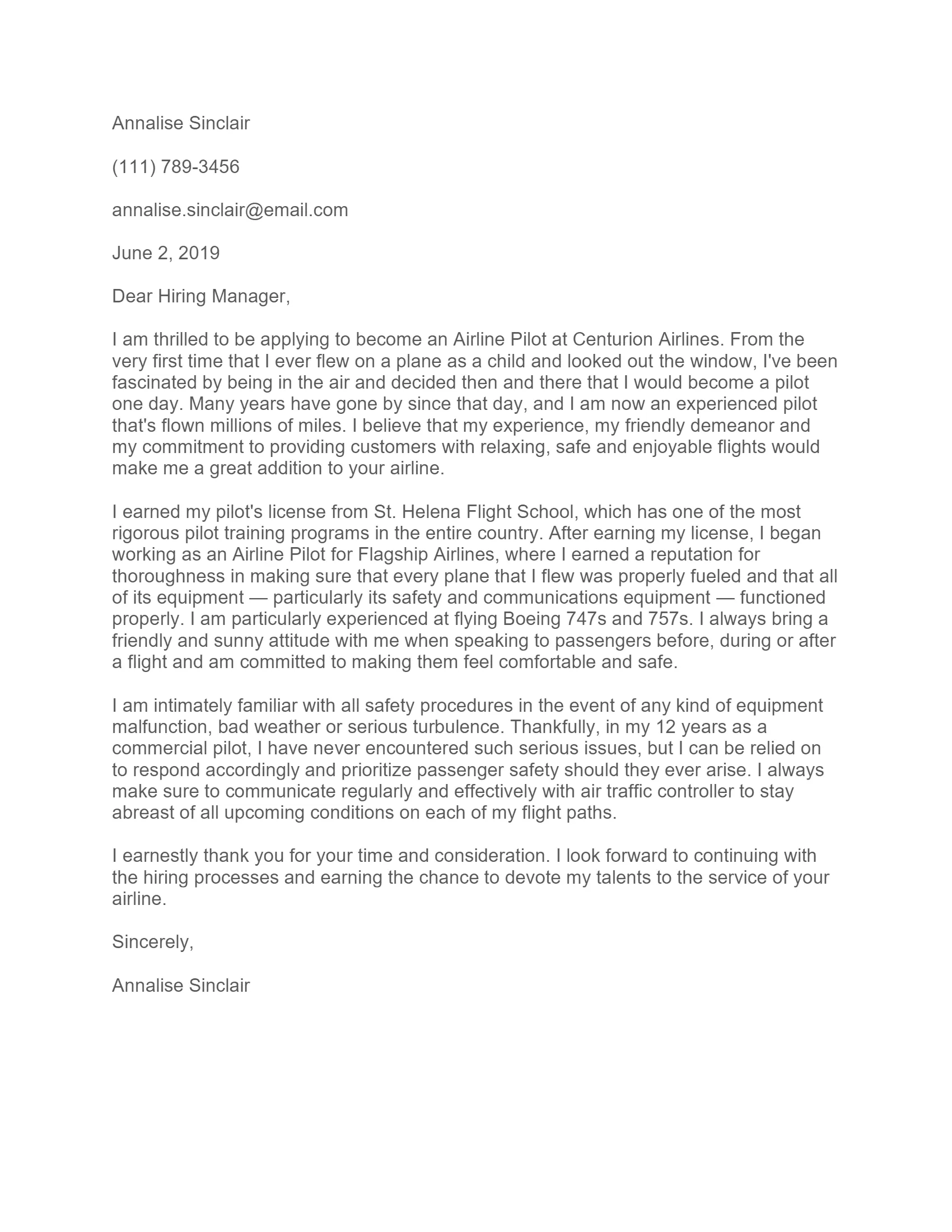
Pilot Job Cover Letter What is it and Why it Matters
A pilot job cover letter is a crucial document that accompanies your pilot resume when applying for flying positions. It serves as your first introduction to a potential employer, providing an opportunity to showcase your personality, skills, and motivations beyond what is listed in your resume. A well-crafted cover letter can significantly increase your chances of getting noticed and securing an interview, ultimately helping you land your dream job as a pilot. Many hiring managers look for a tailored cover letter, especially in the competitive aviation industry, and it can be the deciding factor in setting you apart from other candidates. Understanding the importance of a pilot job cover letter is the first step in crafting a compelling application.
Key Components of a Pilot Job Cover Letter
A successful pilot job cover letter is comprised of several key components that work together to present you as a strong candidate. Each section should be carefully considered and tailored to the specific job and company you are applying to. A generic cover letter is easily identified and often discarded, so investing the time to craft a personalized letter is essential. Let’s break down the essential elements of a great pilot job cover letter to ensure you make a great impression and increase your chances of success in the competitive aviation job market.
Contact Information and Date

Start your cover letter with your contact information, including your full name, address, phone number, and professional email address. This should be placed at the top left or right corner of the letter. Include the current date directly below your contact information. This helps the hiring manager easily identify your contact details and know when the letter was written. Ensure that all contact information is accurate and up-to-date to facilitate prompt communication.
Addressing the Hiring Manager
Always address your cover letter to the hiring manager by name, if possible. Research the company and find out who is responsible for pilot recruitment. Addressing the letter to a specific person shows that you have taken the time to learn about the company and are genuinely interested in the position. If you are unable to find the hiring manager’s name, use a professional salutation like “Dear Hiring Manager.” Avoid generic greetings such as “To Whom It May Concern” or “Dear Sir/Madam,” as these can make your application seem impersonal.
Opening Paragraph Capturing Attention
The opening paragraph of your pilot job cover letter is your chance to grab the reader’s attention. Briefly state the position you are applying for and how you learned about it. Highlight your most relevant qualifications and experience, immediately demonstrating your suitability for the role. Consider mentioning something specific about the company that interests you, showing that you have done your research and are genuinely interested in their organization. Make your opening concise, enthusiastic, and tailored to the specific job and company.
Highlighting Relevant Skills and Experience

The main body of your cover letter should detail your relevant skills and experience as a pilot. Use specific examples to illustrate your capabilities and achievements. Instead of simply listing your qualifications, describe how you have utilized those skills in previous roles and the positive outcomes you achieved. Show how your skills align with the requirements of the job. Be sure to mention any specialized training, certifications, or ratings that are relevant to the position you are seeking. Use keywords from the job description to show that you are a perfect match.
Showcasing Flight Hours and Ratings
Clearly state your total flight hours, along with a breakdown of the types of aircraft you have flown and the specific ratings and certifications you hold (e.g., ATP, commercial pilot certificate, instrument rating). This information is critical for pilot positions, so make it easily accessible. Include any endorsements or specialized training relevant to the job, such as high-altitude experience or specific aircraft type ratings. Verify all information to ensure accuracy, and present your flight hours and ratings in a clear, easy-to-read format.
Demonstrating Achievements and Accomplishments
Don’t just list your experience; quantify your achievements. For example, if you have a history of safe flying, mention the number of flight hours you have accumulated without incidents or accidents. If you have held leadership roles, such as a flight instructor, highlight any positive outcomes such as increased student success rates. Showcase how you have gone above and beyond in previous roles. Provide specific examples to demonstrate your abilities, using the STAR method (Situation, Task, Action, Result) to describe how you handled challenges and achieved positive results.
Expressing Enthusiasm for the Position

Convey your genuine interest in the specific pilot job and the company. Explain why you are excited about the opportunity and what attracts you to the organization. Demonstrate your understanding of the company’s mission, values, and culture, and how your goals align with theirs. Mention any specific aspects of the role that appeal to you and express your desire to contribute to the company’s success. Your enthusiasm will make your application more memorable and show the hiring manager that you are truly interested in the position. Show that you’re a good fit with the company’s culture.
Closing the Cover Letter
In your closing paragraph, reiterate your interest in the pilot job and thank the hiring manager for their time and consideration. Express your eagerness to discuss your qualifications further in an interview. Provide a call to action, such as stating that you are available for an interview at their earliest convenience. Include your contact information again, such as your phone number and email address. Use a professional closing, such as “Sincerely” or “Respectfully,” followed by your full name.
Formatting and Presentation Tips
The format and presentation of your pilot job cover letter are as important as the content. A well-formatted letter is easier to read and reflects your professionalism. Use a clear and readable font, such as Arial or Times New Roman, with a font size between 10 and 12 points. Maintain consistent formatting throughout the document, including margins, spacing, and headings. Keep the letter concise, ideally no more than one page. Use bullet points or numbered lists to break up long blocks of text and highlight key information. Proofread meticulously to ensure that your cover letter is free of errors and professionally presented.
Tailoring Your Cover Letter

Customize your cover letter for each pilot job you apply for. Do not send out a generic cover letter. Research the company and the specific requirements of the position. Use keywords from the job description throughout your letter. Highlight the skills and experiences most relevant to the job. Tailoring your letter shows the hiring manager that you have taken the time to understand the company and the role. This customization significantly increases your chances of getting an interview. Take the time to tailor each letter, even if it takes a bit longer.
Proofreading and Editing
Proofreading and editing are critical steps in the cover letter writing process. Before submitting your letter, carefully review it for any grammatical errors, spelling mistakes, or typos. Use spell check and grammar check tools, but do not rely on them completely. Have someone else review your letter as a fresh pair of eyes can catch mistakes that you might miss. Ensure the language and tone are appropriate for the aviation industry. A polished and error-free cover letter demonstrates attention to detail and professionalism, making a positive impression on the hiring manager.
Common Mistakes to Avoid
Certain mistakes can significantly diminish the effectiveness of your pilot job cover letter. Avoiding these common pitfalls will help you make a strong impression and increase your chances of getting hired. Poorly crafted cover letters can lead to immediate rejection. Be sure to take the time to write a compelling cover letter. Here are the most common mistakes to steer clear of.
Using Generic Templates

Using a generic cover letter template is a common mistake that can make your application look impersonal and uninspired. These templates often lack the specific details and personalization needed to grab the hiring manager’s attention. Instead, write a unique cover letter that highlights your specific skills, experiences, and enthusiasm for the job and the company. Show the hiring manager that you are taking the time to write a tailored letter that demonstrates a genuine interest in the position. Generic templates don’t show any passion for the job.
Failing to Proofread
Failing to proofread your cover letter is a major mistake that can undermine your credibility. Typos, grammatical errors, and spelling mistakes can create a negative impression and suggest a lack of attention to detail. Always proofread your cover letter carefully and have someone else review it before submitting your application. A polished and error-free cover letter demonstrates professionalism and attention to detail, which are essential qualities for a pilot.
Not Highlighting Relevant Skills
Failing to highlight the skills and experiences most relevant to the pilot job is a missed opportunity. Your cover letter should showcase how your qualifications match the specific requirements of the role. Use keywords from the job description and provide specific examples of how you have utilized your skills in previous roles. Tailor your letter to each job. Don’t assume that the hiring manager will automatically know how your experience translates into value for their company. Explicitly connect your skills and experiences to the job requirements.
In conclusion, crafting a compelling pilot job cover letter is a critical step in the job application process. By focusing on the key components and avoiding common mistakes, you can create a cover letter that effectively showcases your qualifications and increases your chances of getting hired. Always tailor your letter to the specific job and company, demonstrating your genuine interest and enthusiasm. A well-written cover letter can be the key to launching your aviation career, so invest the time and effort to make it exceptional.