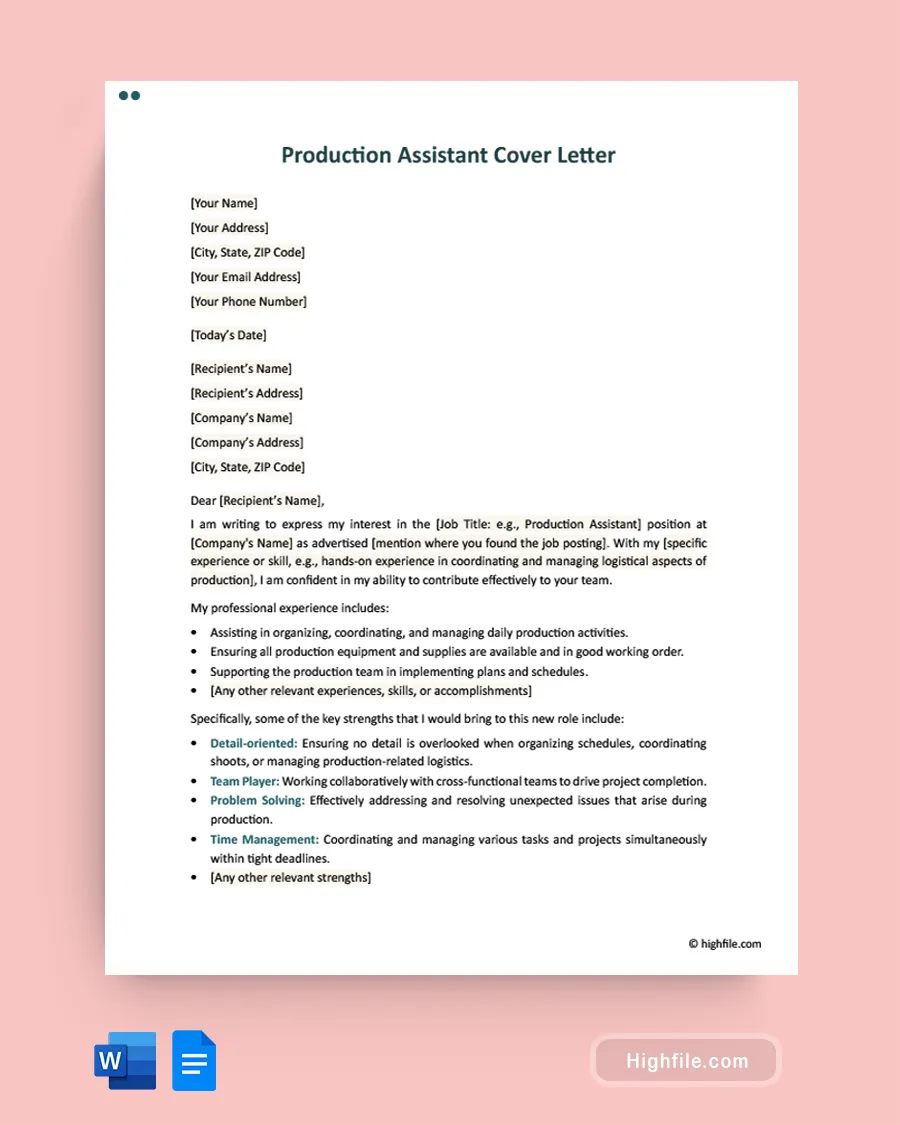
The Power of a Production Assistant Cover Letter
In the competitive world of film and television, landing a production assistant role requires more than just a strong resume. Your cover letter is often the first impression you make on a potential employer, and it can significantly impact your chances of securing an interview. A well-crafted production assistant cover letter goes beyond simply listing your qualifications it showcases your personality, enthusiasm, and understanding of the role. It’s your opportunity to differentiate yourself from the competition and demonstrate why you’re the ideal candidate for the job. This document is not just a formality it’s a powerful tool that can unlock doors in the entertainment industry. A cover letter allows you to expand on your resume, providing specific examples of your skills and experiences, and highlighting your passion for production. A good cover letter is a vital part of a job application.
Understanding the Goal of Your Cover Letter
The primary goal of your production assistant cover letter is to secure an interview. However, achieving this requires more than just stating your interest in the position. You need to convince the hiring manager that you possess the necessary skills, experience, and personality to thrive in a fast-paced production environment. Think of your cover letter as a marketing document. You’re selling yourself as the best candidate for the job. It’s where you can showcase your personality and provide a glimpse into how you’d contribute to their team. The secondary goal is to demonstrate that you have researched the company and understand the role of a production assistant. This shows initiative and a genuine interest in the opportunity, making you a more appealing candidate. A focused and targeted cover letter is the first step in the application process.
Key Components of a Successful Cover Letter

To create a cover letter that grabs attention, it’s essential to include the following components, each playing a vital role in presenting you as a capable and enthusiastic candidate. A well-structured cover letter is easy to read and provides all the information the hiring manager needs to make an informed decision.
Your Contact Information
Start with your contact information clearly displayed at the top of the letter. Include your full name, phone number, email address, and optionally, a link to your LinkedIn profile or online portfolio. This ensures the hiring manager can easily reach you for an interview. Make sure your email address sounds professional.
The Recipient’s Information
Address the letter to the hiring manager or the specific person mentioned in the job posting. If you can’t find a name, use a professional salutation such as “Dear Hiring Manager.” Researching the company and finding the right person to address can make your application stand out. Always double-check the spelling of the name and the correct title to make sure your cover letter looks professional.
Crafting a Compelling Opening

The opening paragraph is your chance to make a strong first impression. Clearly state the position you’re applying for and briefly explain where you found the job posting. Immediately capture the reader’s attention by expressing your enthusiasm for the role and the company. Consider including a brief, captivating statement about why you’re a good fit for the production assistant position. Avoid generic opening lines; show some personality and passion for the work. Make sure to be brief, but engaging, so the reader wants to read more.
Highlighting Relevant Skills and Experience
The body of your cover letter is where you demonstrate your skills and experience. Use specific examples to illustrate how your qualifications align with the job requirements. Focus on the skills and experience that are most relevant to the production assistant role.
Showcasing Technical Skills
List any technical skills you possess that are relevant to the role, such as proficiency in video editing software (e.g., Adobe Premiere Pro, Final Cut Pro), Microsoft Office Suite, or any specialized equipment operation. Highlight any experience with production-related software or tools. Providing these skills can show that you’re ready to work right away.
Demonstrating Soft Skills

Emphasize your soft skills, which are equally important as technical skills. Highlight your communication, organizational abilities, teamwork, and problem-solving skills. Use examples from your past experiences to demonstrate these skills in action. Mention your ability to work under pressure, manage your time effectively, and take initiative. These soft skills are essential for success as a production assistant.
Quantifying Achievements and Results
Whenever possible, quantify your achievements. Use numbers and data to illustrate the impact you’ve had in previous roles. For example, if you organized a set, mention how many people you coordinated, how many tasks you managed, or how you improved efficiency. Quantifying your achievements makes your cover letter more compelling and shows that you can achieve results.
Formatting Your Cover Letter
The formatting of your cover letter is crucial for readability. A well-formatted letter is easy to scan and understand, making it more likely that the hiring manager will read it thoroughly.
Choosing the Right Font and Style

Choose a professional font such as Times New Roman, Arial, or Calibri. Use a font size between 10 and 12 points for readability. Maintain a consistent font and style throughout the document to ensure a polished look. Avoid using overly fancy fonts that can be difficult to read.
Keeping it Concise and Readable
Keep your cover letter concise and to the point. Aim for one page, and use clear, concise language. Break up large blocks of text with short paragraphs, bullet points, and headings. This makes your letter easier to scan and digest, and more appealing to a busy reader. Use formatting to guide the reader through the important information.
Proofreading and Editing
Proofread your cover letter carefully for any typos, grammatical errors, or spelling mistakes. These errors can undermine your credibility and make you appear unprofessional. Read your letter aloud or have someone else review it to catch any errors you might have missed. Pay attention to sentence structure and clarity.
Tailoring Your Letter to the Specific Job

A generic cover letter is unlikely to impress a hiring manager. Customize your cover letter for each job you apply for. Tailoring your letter shows that you’ve taken the time to understand the specific requirements of the role and the needs of the company.
Researching the Company and Position
Before writing your cover letter, research the company and the specific position. Understand the company’s mission, values, and recent projects. Review the job description carefully and identify the key skills and qualifications the employer is seeking. This information will help you tailor your letter to align with their needs. Visit their website, read news articles, or look up their social media to show your interest.
Using Keywords from the Job Description
Incorporate keywords from the job description into your cover letter. This helps demonstrate that you meet the requirements of the position and makes your application more likely to be noticed by applicant tracking systems (ATS). However, don’t simply stuff your letter with keywords; use them naturally and contextually. Make sure you understand the meaning of the keywords and how they apply to your experience.
Addressing Common Mistakes

Avoiding common mistakes can significantly improve the quality of your cover letter and increase your chances of getting an interview. Being aware of these pitfalls will help you avoid them and make your application more appealing to hiring managers.
Generic Cover Letters
Using a generic cover letter that you send to multiple employers is a common mistake. These letters lack personalization and fail to demonstrate your genuine interest in the specific role and company. Tailor each cover letter to the specific job requirements and highlight how your skills and experience align with those requirements. Show that you’ve put in the effort to understand the position.
Typos and Grammatical Errors
Typos and grammatical errors can undermine your credibility and make you appear unprofessional. Always proofread your cover letter carefully before submitting it. Use a grammar checker, and have someone else review your letter to catch any errors you might have missed. A polished cover letter shows attention to detail and a commitment to quality.
Lying or Exaggerating
Lying or exaggerating your skills or experience is a serious mistake. Be honest and accurate in your cover letter. Hiring managers can usually detect false information, and if they discover it, your application will be rejected. Focus on highlighting your genuine qualifications and providing evidence of your abilities. Be truthful about your qualifications.
The Importance of a Strong Closing
The closing paragraph of your cover letter is your final opportunity to make a positive impression. A strong closing reinforces your enthusiasm and leaves the hiring manager with a clear call to action.
Expressing Enthusiasm and Availability
Reiterate your enthusiasm for the position and the company in your closing paragraph. Clearly state your availability for an interview and how the hiring manager can contact you. Express your willingness to discuss your qualifications further and provide any additional information they may need. Express your eagerness to be a part of the team.
Thanking the Reader
Always thank the reader for their time and consideration. This shows respect and professionalism. A simple “Thank you for your time and consideration” is appropriate. Consider including a sentence that indicates your excitement about the possibility of joining their team. A polite closing can leave a positive impression.