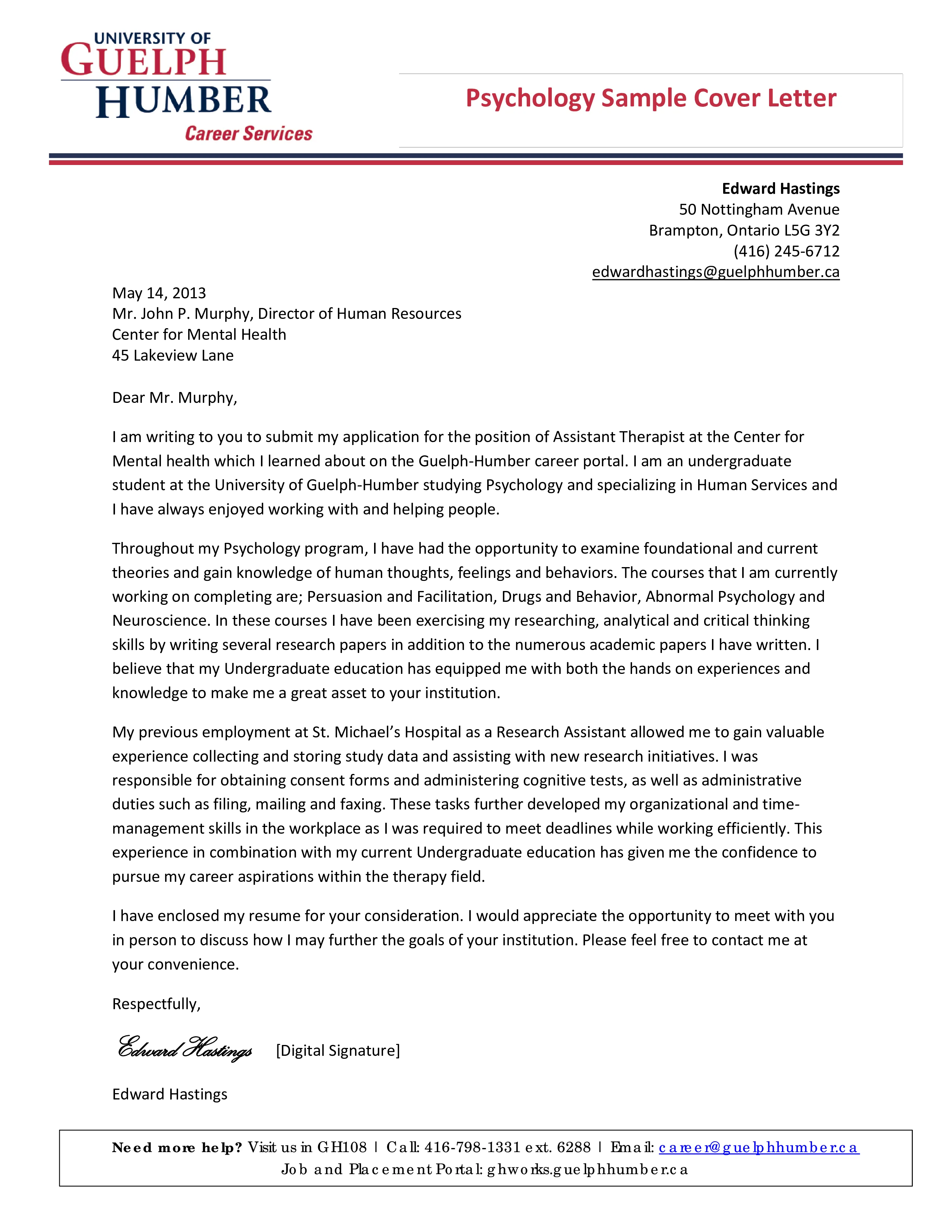
Crafting a Psychology Cover Letter
A psychology cover letter is your first chance to make a strong impression on a potential employer. It’s more than just a formality; it’s a crucial document that showcases your skills, experience, and passion for the field. Unlike a resume, which lists your qualifications, a cover letter allows you to tell your story, connecting your experiences to the specific requirements of the job and demonstrating why you are the ideal candidate. Writing a compelling cover letter can significantly increase your chances of landing an interview and ultimately, securing your desired psychology position. This guide provides comprehensive advice, examples, and tips on crafting a standout psychology cover letter.
Understanding the Purpose of a Cover Letter for Psychology Jobs
The primary purpose of a psychology cover letter is to introduce yourself and highlight your suitability for a specific job. It serves as a personalized introduction, offering an opportunity to express your enthusiasm for the role and the organization. It’s your chance to demonstrate how your skills, knowledge, and experiences align with the job’s requirements and the employer’s needs. A well-written cover letter should not merely reiterate your resume but rather elaborate on key achievements and explain why you are uniquely qualified for the position. It helps the hiring manager understand your motivations, career goals, and how you can contribute to their team and organization. Effectively, the cover letter should convince the reader to move you to the next stage of the hiring process.
Highlighting Key Skills and Experiences

When writing a cover letter for a psychology job, it’s essential to focus on the skills and experiences that directly relate to the position you are applying for. Carefully review the job description to identify the key requirements and tailor your letter accordingly. This includes both hard skills and soft skills. Hard skills might include proficiency in specific therapeutic techniques, statistical analysis, research methodologies, or software used in the field. Soft skills are equally important; these include communication, empathy, critical thinking, problem-solving, and the ability to work effectively in a team. Provide specific examples of how you have demonstrated these skills in previous roles or academic settings. Use the STAR method (Situation, Task, Action, Result) to describe your accomplishments and quantify your achievements whenever possible.
Researching the Psychology Job and the Employer
Before you start writing your cover letter, invest time in researching the job and the employer. Understanding the organization’s mission, values, and culture will allow you to tailor your letter to fit their specific needs. Visit the employer’s website, read recent news articles, and check their social media profiles to gather information. Identify the key priorities of the department or team you are applying to join. This research will help you demonstrate your genuine interest in the role and the organization. Address your letter to a specific person if possible. If you can’t find a name, use a generic title like “Hiring Manager.” By showing that you’ve done your homework, you’ll make a stronger impression.
Customizing Your Cover Letter
A generic cover letter will not impress potential employers in the competitive field of psychology. Customization is key. Every cover letter should be tailored to the specific job you are applying for. Avoid using a template without making significant adjustments. Highlight the skills and experiences most relevant to the job requirements. Show, don’t just tell, how you meet the criteria outlined in the job description. Explain why you are interested in that particular role and organization. This level of personalization demonstrates your genuine interest and increases your chances of standing out. Remember to update the company name, job title, and other details for each application.
Essential Sections to Include in Your Cover Letter

A well-structured cover letter typically includes the following sections. Proper formatting and content in each section ensures clarity, professionalism, and impact. Each section plays a vital role in conveying your qualifications and interest. By ensuring each element is clear, concise, and aligned with the job requirements, you can present a strong cover letter that will grab the attention of the hiring manager.
Header and Contact Information
The header of your cover letter should include your name, address, phone number, and email address. Follow this with the date and the employer’s contact information (name, title, company, address). Ensure that your contact information is current and professional. This section ensures that the hiring manager can easily contact you.
The Opening Statement
Your opening statement is your first opportunity to grab the reader’s attention. State the position you are applying for and briefly explain how you learned about the opportunity. Express your enthusiasm for the role and mention something specific that attracted you to the organization. Avoid generic openings like “I am writing to apply for the position…” Instead, use a strong, engaging hook that highlights your relevant skills or experiences.
Body Paragraphs Highlighting Relevant Skills

The body paragraphs are where you showcase your qualifications and experiences. Use these paragraphs to connect your skills and experiences to the specific requirements of the job. Provide concrete examples of how you have successfully applied your knowledge in previous roles or academic projects. Highlight your achievements and quantify them whenever possible. Focus on what you can bring to the organization and how you can contribute to their success. Use keywords from the job description to demonstrate your understanding of the role’s needs.
Quantifying Achievements
Quantifying your achievements is a powerful way to demonstrate your impact and value to a potential employer. Instead of saying “I improved patient outcomes,” provide concrete data, such as “Improved patient outcomes by 15% through implementation of a new therapeutic approach.” Use numbers, percentages, and specific metrics to showcase your accomplishments. This makes your claims more credible and allows the hiring manager to understand your contributions clearly. Use data and examples to show the value that you bring to the table.
Closing with a Strong Call to Action
End your cover letter with a strong call to action. Reiterate your interest in the position and express your eagerness to discuss your qualifications further in an interview. Thank the hiring manager for their time and consideration. Include a clear statement of how you will follow up, such as stating that you will call within a week or that you are looking forward to hearing from them soon. Make it easy for the hiring manager to take the next step, and reiterate your strong interest in the position.
Examples of Psychology Cover Letter Structures

The structure of your cover letter can vary depending on the type of psychology job you are applying for. Here are a few examples to help you tailor your cover letter.
Cover Letter for Clinical Psychology Positions
In a clinical psychology cover letter, emphasize your experience with patient care, assessment, diagnosis, and treatment planning. Highlight your knowledge of therapeutic techniques such as cognitive-behavioral therapy (CBT) or dialectical behavior therapy (DBT). Mention any relevant internships, practicums, or volunteer experiences. Demonstrate your understanding of ethical considerations and your ability to work with diverse populations. Include examples of successful patient outcomes and your ability to build rapport with clients. Demonstrate your passion for helping people.
Cover Letter for Research Psychologist Roles
For research psychologist positions, emphasize your research skills, including your ability to design and conduct studies, analyze data, and write reports. Highlight any experience with grant writing, publications, and presentations. Mention your knowledge of statistical software such as SPSS or R. Demonstrate your understanding of research methodologies and ethical considerations in research. Showcase your ability to work independently and as part of a research team. Provide specific examples of your research projects and the results you achieved.
Cover Letter for School Psychologist Opportunities

When applying for school psychologist positions, highlight your experience working with children and adolescents in an educational setting. Mention your knowledge of assessment tools, such as IQ tests or achievement tests. Demonstrate your ability to develop and implement interventions to support students’ academic, social, and emotional well-being. Include any experience with consultation, collaboration, and IEP development. Show your ability to work effectively with teachers, parents, and administrators. Show your commitment to children’s mental health.
Common Mistakes to Avoid
Avoiding common mistakes is essential for creating a strong cover letter. Here are several mistakes to avoid to improve your chances of getting noticed.
Using Generic Language
Avoid using generic language that could apply to any job. Your cover letter should be specific to the position and organization you are applying for. Do not use phrases that lack personality or focus on the requirements. Show that you have done your homework.
Focusing Too Much on Yourself
While it’s important to highlight your skills and experiences, avoid focusing too much on yourself. Frame your accomplishments in terms of how they benefit the employer and contribute to the organization’s goals. Focus on what you can bring to the table, not just what you want from the job. The aim is to show how your skills and experience align with the company’s needs and how you can help solve their problems.
Ignoring the Job Description
Failing to address the specific requirements outlined in the job description is a critical error. Carefully review the job description and tailor your cover letter to match the required skills, experiences, and qualifications. Ignoring the job description will make it difficult for the recruiter to see you as the best fit. Use the same keywords and phrases as the job description to signal that you understand the role’s needs.
Proofreading and Editing Your Cover Letter
Proofreading and editing your cover letter is a critical step in the writing process. Errors in grammar, spelling, and punctuation can damage your credibility and make you look unprofessional. Read your cover letter multiple times and ask a friend or colleague to review it as well. Ensure that the formatting is consistent and easy to read. Pay close attention to clarity and conciseness. A well-written and error-free cover letter demonstrates your attention to detail and professionalism, making a positive impression on the hiring manager.
Ensuring Clarity and Professionalism
Clarity and professionalism are paramount when writing a psychology cover letter. Use clear and concise language. Avoid jargon or overly complex sentences. Maintain a professional tone throughout. Make sure the content of the cover letter is easy to understand and that you are not using phrases that can be perceived as rude or unprofessional. The use of positive language is also very helpful when writing a cover letter. Use a professional font such as Times New Roman or Arial. Ensure your cover letter is well-formatted and visually appealing. Present a well-crafted document that reflects your skills and enthusiasm for the role and the organization.