Why a Strong Cover Letter Matters for Assistant Managers
In the competitive world of restaurant management, a well-crafted cover letter is your first opportunity to make a positive impression on a potential employer. It’s more than just a formality; it’s a crucial tool that highlights your qualifications, enthusiasm, and suitability for the Assistant Manager role. A compelling cover letter acts as a personal introduction, allowing you to elaborate on your resume, showcase your personality, and demonstrate your genuine interest in the specific restaurant and its values. By taking the time to create a targeted cover letter, you significantly increase your chances of securing an interview and ultimately, landing the job. A generic cover letter will likely be overlooked, so personalize each one to stand out from the crowd and impress the hiring manager.
Highlighting Your Relevant Experience
Your cover letter is the ideal space to delve into your previous restaurant experience. Instead of simply listing your job titles, use this section to tell a story about your career. Focus on the positions that are most relevant to the Assistant Manager role. Briefly describe the restaurants you’ve worked for, their concepts (e.g., fine dining, casual, fast food), and the types of responsibilities you held. Be specific about your roles in managing staff, handling customer complaints, or overseeing daily operations. Highlight any experience with inventory management, scheduling, or training new employees. This will help the hiring manager to see that you have the required knowledge and experience and are ready to lead a team.
Quantify Your Achievements

To truly impress the hiring manager, move beyond simply describing your duties; quantify your achievements whenever possible. Instead of saying you ‘improved customer service,’ state that you ‘increased customer satisfaction scores by 15% within six months’ by implementing a new training program. If you were involved in cost-saving measures, mention the specific percentage reduction or the dollar amount saved. For example, ‘Reduced food waste by 10% through effective inventory management and staff training, resulting in $X savings annually.’ Quantifiable results provide concrete evidence of your abilities and demonstrate your value to the restaurant. This also provides a clear understanding of the value you bring to the table.
Showcasing Leadership Skills
Assistant managers are leaders, so your cover letter should highlight your leadership qualities. Provide specific examples of how you’ve motivated and managed teams. Do you have experience in leading, mentoring, and training team members? Describe situations where you had to resolve conflicts, make tough decisions, or delegate tasks. Demonstrate your ability to inspire and guide others to achieve common goals. This section is crucial for showing the hiring manager that you can effectively manage a team. Talk about your ability to motivate and manage staff effectively while also keeping a positive working environment. Your leadership skills are what will set you apart from other applicants.
Team Management
Discuss your experience in team management, including hiring, training, and performance evaluations. Explain how you’ve built cohesive and productive teams by fostering a positive work environment and encouraging collaboration. Detail your approach to scheduling, ensuring adequate staffing levels during peak hours, and managing employee time-off requests. Highlighting your expertise in team management will assure the employer of your capacity to ensure smooth operations.
Conflict Resolution

Every restaurant experiences conflict. Describe your approach to resolving disputes between employees, or addressing customer complaints. Explain how you remain calm under pressure, listen attentively, and seek mutually agreeable solutions. Provide examples of how you’ve successfully mediated disagreements and maintained a positive atmosphere. Showcase your communication skills and ability to de-escalate tense situations. Address the importance of maintaining a professional demeanor in dealing with both customers and employees to ensure a positive and efficient work environment.
Demonstrating Restaurant Industry Knowledge
Showcase your deep understanding of the restaurant industry by highlighting your knowledge of key operational aspects. Discuss your familiarity with food safety regulations, hygiene standards, and health codes. Emphasize your experience in managing inventory, controlling costs, and ensuring the smooth flow of service. Mention any specialized knowledge or certifications you possess, such as certifications in food handling or alcohol service. Your knowledge of these areas shows that you can handle your responsibilities efficiently.
Understanding of POS Systems
In today’s tech-driven world, familiarity with Point of Sale (POS) systems is a must. Mention which POS systems you have experience with (e.g., Micros, Aloha, Toast). Highlight your skills in processing transactions, managing sales data, and training staff on system usage. Talk about your ability to troubleshoot common technical issues. Knowing POS systems allows for efficiency and accuracy in any restaurant environment. This will also demonstrate that you’re current on restaurant technology.
Menu Management and Cost Control

Mention any experience with menu planning, menu costing, and cost control. Describe how you’ve helped optimize menu pricing, reduce food costs, and increase profitability. Mention any techniques you’ve used to monitor inventory levels, reduce waste, and negotiate with suppliers. Show your understanding of the importance of both menu creativity and fiscal responsibility. Providing specific data to support your cost control expertise is extremely valuable.
Tailoring Your Cover Letter
The most effective cover letters are tailored to the specific restaurant and position. Avoid sending a generic letter; instead, customize each one to match the requirements of the job description and the restaurant’s brand. Tailoring means researching the company, understanding its values, and demonstrating how your skills align with its needs. It also involves highlighting relevant experience and using keywords from the job posting to demonstrate your understanding of the role.
Researching the Restaurant
Before writing your cover letter, thoroughly research the restaurant. Visit their website, social media pages, and any online reviews to learn about their menu, atmosphere, and target audience. If possible, dine at the restaurant to experience it firsthand. Understanding the restaurant’s brand and values allows you to align your cover letter with their needs and culture. This research shows that you care enough to be knowledgeable about the company.
Matching Skills to Requirements

Carefully review the job description and identify the key skills and qualifications the restaurant is seeking. Use these keywords and phrases throughout your cover letter, highlighting relevant experience and achievements that demonstrate your ability to meet those requirements. For example, if the job description emphasizes customer service, provide specific examples of how you have excelled in this area. By matching your skills and experiences to their specific needs, you increase your chances of being selected for an interview. Be sure to also showcase your personality and your understanding of the position.
Formatting and Structure
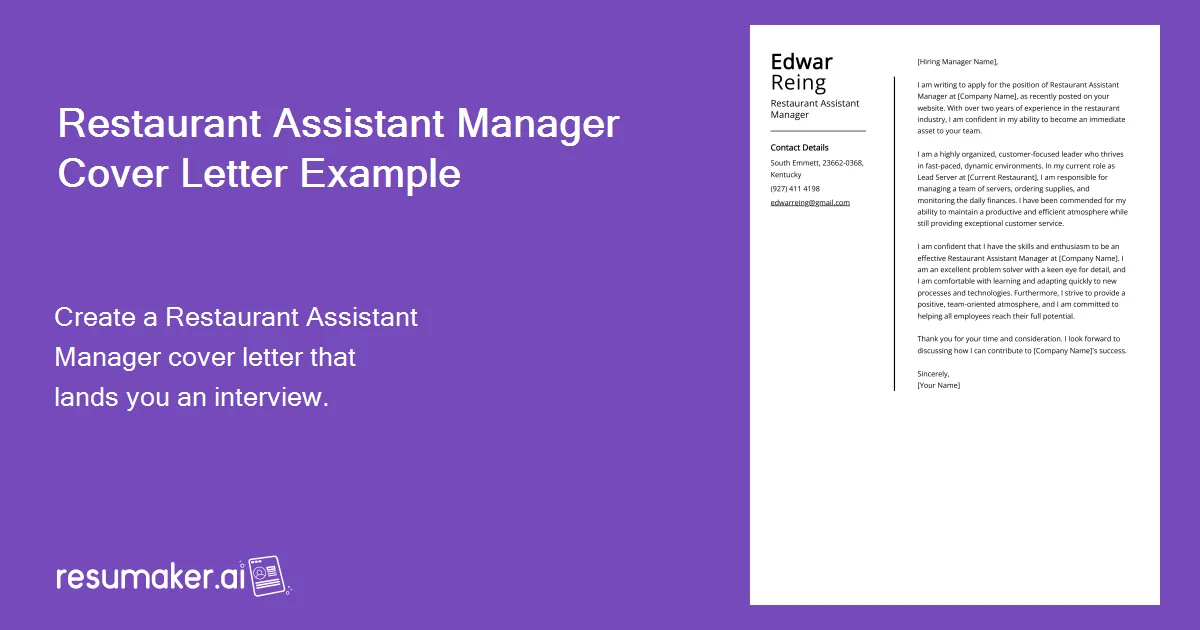
A well-formatted and structured cover letter is easy to read and visually appealing. Use a professional font, such as Times New Roman or Arial, and maintain a consistent font size. Keep your letter concise, aiming for one page maximum. Start with a clear heading that includes your contact information, followed by the date and the hiring manager’s name and title (if known). Use clear paragraphs and headings to break up the text and make it easy to scan. Use a formal and professional tone throughout the letter. Keep paragraphs brief, use bullet points where appropriate, and always maintain a neat and clean presentation.
Professional Tone and Language
Use a professional tone and language throughout your cover letter. Avoid slang, jargon, and informal language. Use correct grammar, spelling, and punctuation. Be positive, enthusiastic, and confident in your writing. Focus on what you can offer the restaurant and how you can contribute to their success. Your writing reflects you, so accuracy and a positive outlook are very important in showcasing your professionalism.
Proofreading and Editing

Before submitting your cover letter, carefully proofread and edit it. Check for any grammatical errors, spelling mistakes, and typos. Ensure that your sentences are clear, concise, and easy to understand. Ask a friend or family member to review your cover letter for a second opinion. A polished cover letter shows attention to detail and demonstrates your professionalism, which is always appreciated. Remember, it only takes a few errors to eliminate you from consideration.
Call to Action
End your cover letter with a strong call to action. Express your interest in the position and the restaurant, and reiterate your enthusiasm for the opportunity. State your availability for an interview and provide your contact information. If you are confident, you can suggest a specific date and time for a follow-up. A clear call to action encourages the hiring manager to take the next step and contact you for an interview.