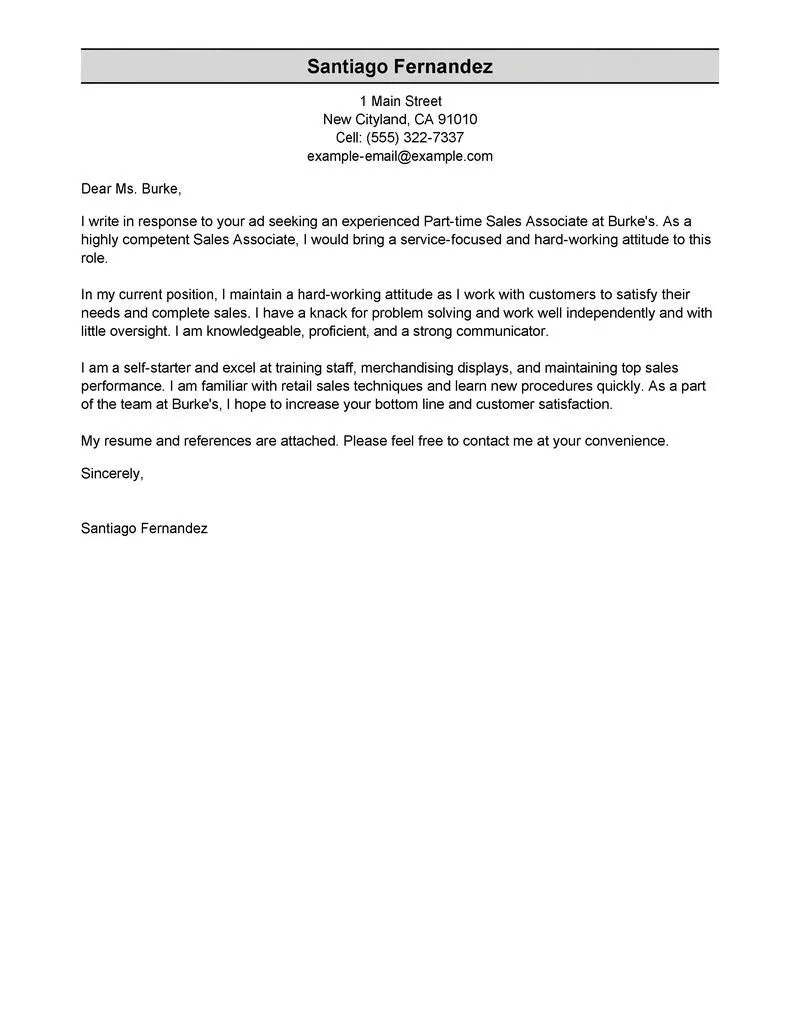
What is a Sales Associate Cover Letter?
A sales associate cover letter is a document you submit with your resume when applying for a sales associate position. It serves as a personal introduction, allowing you to highlight your qualifications, skills, and enthusiasm for the role. Unlike a resume, which provides a summary of your experience, a cover letter gives you the opportunity to elaborate on why you’re the perfect fit for the job and the company. It is your chance to make a strong first impression and persuade the hiring manager to read your resume and consider you for an interview. It is a very important tool to show the recruiter the value you bring to the table.
Why is a Cover Letter Important?
In today’s competitive job market, a well-crafted cover letter can make all the difference. It provides context to your resume, explaining how your skills and experience align with the specific requirements of the sales associate position. The cover letter allows you to showcase your personality, communication skills, and genuine interest in the company. Many hiring managers use cover letters to assess a candidate’s writing ability, attention to detail, and overall professionalism. A cover letter also helps you personalize your application, demonstrating that you’ve taken the time to understand the company’s values and the role’s specific needs. Many companies use software to screen for specific words and phrases, so the cover letter allows you to target what the company is looking for directly.
Key Components of a Sales Associate Cover Letter
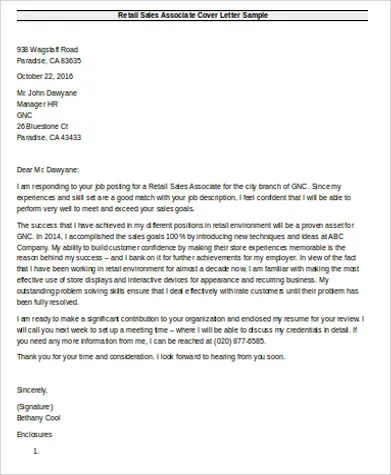
A strong sales associate cover letter typically includes several key components. These elements work together to present a comprehensive and compelling case for your candidacy. Each section should be carefully crafted to convey your skills, experience, and enthusiasm for the role. It is also important to avoid some common pitfalls. By addressing these elements, you ensure that your cover letter is not only informative but also engaging and tailored to the specific job. Each component has its own specific purpose, so let’s dive in and see how we can make sure each component helps your cover letter.
Contact Information
At the top of your cover letter, include your contact information, such as your name, phone number, email address, and LinkedIn profile URL (if you have one). This information should be easily accessible, so the hiring manager can quickly reach you. Make sure your contact information is accurate and up-to-date. This will ensure that the recruiter knows how to contact you. Keeping your contact information at the top is a good way to make sure the recruiter can see this as soon as they look at your cover letter, making it easy to reach you as soon as possible. You should also include the date and the hiring manager’s name and title, if available.
Greeting
Start your cover letter with a professional greeting. If you know the hiring manager’s name, address the letter to them directly (e.g., “Dear Mr. Smith”). If you don’t know the name, use a general greeting like “Dear Hiring Manager” or “Dear [Company Name] Team.” It’s important to tailor your greeting to the specific situation, and avoid generic greetings that could make it seem like a template letter. Researching the company can help you personalize your greeting. A personalized greeting shows that you are attentive to detail and have taken the time to customize your application, helping you stand out from other applicants.
Introduction

In the introduction, state the position you’re applying for and briefly mention where you saw the job posting. Immediately highlight your key qualifications or skills that make you a strong candidate for the role. This section is crucial for grabbing the hiring manager’s attention from the start. It sets the tone for the rest of your letter and encourages the reader to continue. Be concise and enthusiastic, showcasing your interest in the company and the specific sales associate position. Consider including a brief statement about your career goals and how they align with the opportunity at hand. This demonstrates your commitment to the company and the role.
Body Paragraphs
The body paragraphs are the core of your cover letter, where you elaborate on your qualifications and demonstrate how your skills and experience align with the job requirements. Focus on highlighting relevant skills, experiences, and achievements that showcase your ability to excel in a sales associate role. Use specific examples to illustrate your capabilities and back up your claims with quantifiable results whenever possible. Keep the paragraphs concise and easy to read, using clear and compelling language. This is also where you tailor your letter to the specific job description, addressing the requirements and keywords mentioned by the company.
Highlighting Relevant Skills and Experience
Emphasize the skills and experiences most relevant to the sales associate position. This includes communication, customer service, sales techniques, product knowledge, and any experience working with point-of-sale (POS) systems. Provide specific examples of how you’ve used these skills to achieve positive results. For example, if you have strong communication skills, describe a situation where you successfully persuaded a customer to make a purchase or resolved a customer complaint. If the job description requires specific skills, make sure to highlight them and explain how you’ve used them effectively in the past. Providing specific examples will help the recruiter see how your skills and experiences fit the job.
Quantifying Achievements

Whenever possible, quantify your achievements with numbers and metrics. Instead of simply stating that you increased sales, provide specific figures, such as “Increased sales by 15% in six months” or “Exceeded sales targets by 20% consistently.” Quantifiable achievements provide concrete evidence of your abilities and make your accomplishments more impactful. Use data to showcase your success in previous sales roles or customer service positions. This demonstrates your ability to achieve results and your value to the company. Quantifying your accomplishments makes your cover letter more persuasive and allows hiring managers to understand the impact you can have on their organization.
Demonstrating Enthusiasm for the Role
Show genuine enthusiasm for the role and the company. Explain why you’re interested in this specific opportunity and what attracts you to the company. This can include mentioning the company’s mission, values, products, or services that resonate with you. Your enthusiasm should come across naturally and sincerely. It’s important to personalize your letter to reflect your interest in the company and role. Researching the company can help you align your interests with their goals. Let the hiring manager know why you want the job and why you’re interested in working for that company in particular. This can make a big difference in whether the hiring manager chooses to hire you.
Tailoring to the Specific Job
Carefully review the job description and tailor your cover letter to match the specific requirements and keywords. Highlight the skills and experiences that align with the job’s needs and use the same language as the job description. This shows that you understand the role and are a good fit for the company. If the job description emphasizes customer service, make sure your cover letter highlights your customer service skills. If the job mentions specific software or skills, make sure you demonstrate those skills. Tailoring your letter to each job is crucial because it demonstrates that you understand the job’s requirements and have taken the time to show you’re the best fit.
Closing and Call to Action

In the closing paragraph, restate your interest in the position and thank the hiring manager for their time and consideration. Include a call to action, such as expressing your eagerness to discuss your qualifications further and inviting them to contact you for an interview. Keep the closing professional and concise. Your call to action should be clear and direct, encouraging the hiring manager to take the next step. This will increase your chances of getting an interview. Reiterate your enthusiasm and confidence in your ability to contribute to the company. This is the last thing the recruiter will read, so make sure it is memorable!
Common Mistakes to Avoid
Several common mistakes can hurt your chances of getting hired. One of the most frequent is sending a generic cover letter that isn’t tailored to the specific job. Other mistakes include grammatical errors, typos, and a lack of personalization. Avoid simply repeating your resume or using overly formal language. Always proofread your cover letter carefully before submitting it. Make sure you are using correct grammar and spelling and that the information is easy to understand. Also, avoid exaggerating your skills or experience, and focus on your most relevant qualifications. Take the time to write a personalized letter; this will make your application stand out and improve your chances of getting hired.
Formatting and Presentation Tips
The format and presentation of your cover letter are important. Use a professional font, such as Times New Roman or Arial, and maintain a consistent font size. Keep the letter concise, ideally within one page. Use clear and concise language, avoiding jargon or overly complex sentences. Use headings, bullet points, and white space to make the letter easy to read. A well-formatted cover letter is easier to read and conveys a sense of professionalism. Formatting tips also include using the correct business letter format, which helps create a professional first impression. Make sure your cover letter is visually appealing, with a clean layout that’s easy on the eyes. This makes it easier for the hiring manager to read and understand your letter.
Reviewing and Proofreading Your Cover Letter

Before submitting your cover letter, carefully review and proofread it. Check for any grammatical errors, spelling mistakes, or typos. Ensure that your contact information is accurate and that the letter is well-organized and easy to read. Reading your cover letter aloud can help you catch any awkward phrasing or sentence structure issues. It is also a good idea to have a friend or career advisor review your cover letter and provide feedback. Proofreading is essential to ensure your cover letter is error-free and professional. A mistake-free cover letter will increase your chances of getting hired and help you leave a good impression.
Using Sales Associate Cover Letter Templates
Cover letter templates can be helpful when writing your sales associate cover letter. They provide a basic structure and format, and you can customize them to match your skills and experiences. However, avoid using a generic template without making significant modifications. You should always personalize the template to make sure it aligns with your qualifications and the specific job. Choose a template that suits your style and the job requirements. Adapt the content to highlight your unique skills, achievements, and enthusiasm for the role. Using templates can save time and ensure a professional format, but personalization is key to making your letter stand out. Make sure to tailor the template to reflect your unique skills, experience, and the specific job requirements.