What is a Scholarship Cover Letter
A scholarship cover letter is a crucial document that accompanies your scholarship application. It serves as your introduction to the scholarship committee, providing them with a snapshot of who you are, what you’ve achieved, and why you deserve the scholarship. Unlike a resume, which lists your accomplishments, a cover letter allows you to connect with the committee on a more personal level, showcasing your personality, motivations, and aspirations. A well-crafted cover letter significantly increases your chances of being selected, as it can set you apart from other applicants and highlight the unique value you bring.
Purpose of a Scholarship Cover Letter
The primary purpose of a scholarship cover letter is to persuade the scholarship committee to award you the scholarship. It’s an opportunity to articulate your goals, showcase your achievements, and demonstrate how the scholarship will help you achieve your academic and personal objectives. Moreover, the cover letter allows you to highlight any unique circumstances or challenges you’ve overcome, providing context to your application and helping the committee understand your story. It also offers a chance to express your genuine interest in the scholarship and the organization offering it, showing that you’ve done your research and are genuinely interested in their support.
Key Elements of a Scholarship Cover Letter

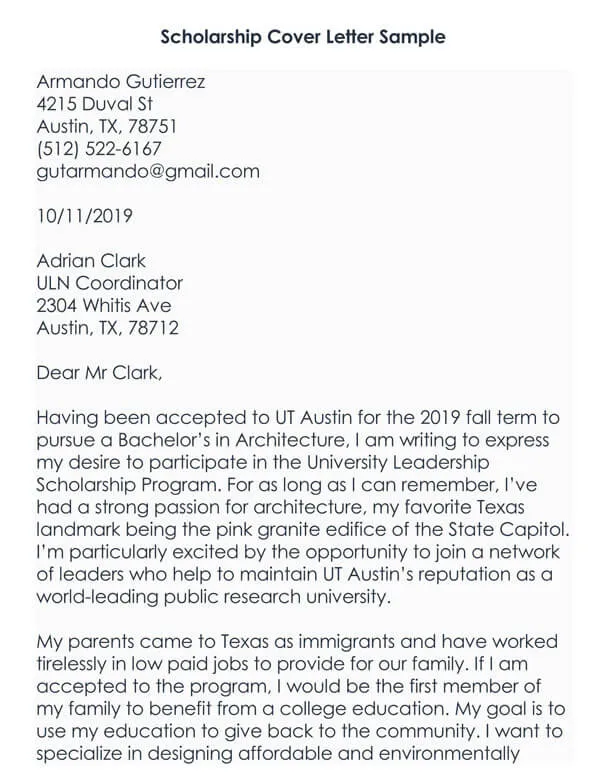
A successful scholarship cover letter is well-structured and contains key elements that effectively communicate your qualifications and aspirations. Each section plays a vital role in convincing the committee to select your application. The following components are essential for making a strong impression. When written properly, it can be the deciding factor in whether or not you receive the scholarship.
Your Contact Information
Start with your full name, address, phone number, and email address at the top of the letter. This allows the committee to easily contact you if needed. Ensure your email address is professional and appropriate; avoid using nicknames or informal language.
Date and Scholarship Provider’s Details
Include the date you are writing the letter. Below your contact information, add the name of the scholarship provider, the scholarship committee, and the address. This demonstrates that you have researched the organization and are addressing the letter to the correct recipients.
Salutation

Use a professional salutation, such as Dear Scholarship Committee, or Dear Mr./Ms. [Last Name], if you know the name of the committee chair. Avoid generic greetings like To Whom It May Concern. If the name is unavailable, opt for a general, professional salutation.
Body Paragraph 1 Introduce Yourself
Begin with a clear and concise introduction. State the scholarship you are applying for and briefly mention why you are interested in it. Include your academic level and the name of your educational institution. This immediately informs the reader of your purpose.
Body Paragraph 2 Highlight Your Achievements
Showcase your relevant achievements, such as academic accomplishments, extracurricular activities, volunteer work, or any special skills or talents. Use specific examples and quantify your achievements whenever possible. For instance, instead of saying “I was involved in community service,” say “I volunteered 50 hours at the local homeless shelter.” Emphasize accomplishments that align with the scholarship’s criteria and values.
Body Paragraph 3 Explain Why You Need the Scholarship

Clearly explain your financial need and how the scholarship will impact your ability to pursue your education. Be honest and transparent about your financial situation. You can also mention other scholarships you’ve applied for or received. If you have overcome significant challenges or hardships, feel free to share them here, as these demonstrate your resilience and determination.
Body Paragraph 4 Demonstrate Your Goals
Describe your academic and career goals, and how the scholarship will help you achieve them. Explain your aspirations and how they align with the scholarship’s mission or the values of the organization. Show that you have a clear vision for your future and that you are committed to your field of study. Be specific about your plans and the impact you want to make.
Body Paragraph 5 Show Gratitude
Express your sincere gratitude for the opportunity to apply for the scholarship. Reiterate your interest in the scholarship and the organization. Thank the committee for considering your application and the time they have invested. Show your enthusiasm and appreciation.
Closing and Signature

End your letter with a professional closing, such as Sincerely or Best regards. Type your full name below the closing. If submitting a physical copy, leave space for your signature above your typed name.
Formatting Your Scholarship Cover Letter
Proper formatting is essential for ensuring your cover letter is easy to read and visually appealing. It demonstrates professionalism and attention to detail. The formatting can significantly affect the reader’s first impression and the overall effectiveness of your letter. Here’s how to format your cover letter effectively.
Font and Size
Use a standard, easy-to-read font, such as Times New Roman, Arial, or Calibri. The font size should be between 10 and 12 points. Avoid using overly decorative fonts or unusual sizes that may be difficult to read. Stick to a font that is both readable and professional to ensure the committee can easily follow your writing and focus on your content.
Margins and Spacing

Set your margins to one inch on all sides. Use single-line spacing for the body of the letter and double-line spacing between paragraphs. This creates a clean and organized appearance. Proper spacing and margins allow your cover letter to breathe, making it more comfortable for the reader to scan and absorb the information. Consistent formatting throughout the letter contributes to a professional presentation.
Proofreading Your Cover Letter
Proofreading is a non-negotiable step in the writing process. Ensure your cover letter is free of grammatical errors, spelling mistakes, and typos. These errors can undermine your credibility and detract from the content. Always proofread your letter multiple times, and consider having someone else review it as well. A fresh pair of eyes can often catch mistakes you might miss. Thorough proofreading demonstrates your attention to detail and commitment to excellence, which are qualities scholarship committees value.
Tips for Writing a Compelling Cover Letter
Writing a compelling cover letter requires thoughtful planning and execution. By following the tips below, you can increase your chances of success. Remember, the goal is to make a memorable impression and persuade the committee to support your education.
Tailor Your Letter
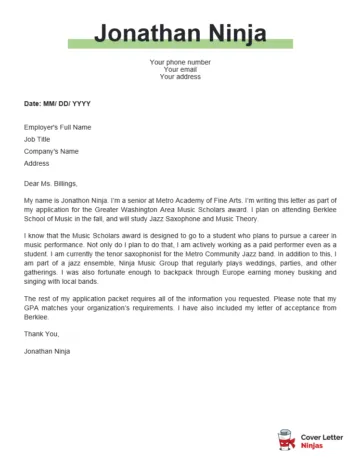
Customize your cover letter for each scholarship you apply for. Research the scholarship’s specific requirements, values, and mission. Address the committee’s unique criteria and highlight the experiences and qualities that align with their goals. Generic cover letters do not impress. Tailoring your letter shows that you understand the scholarship and are genuinely interested in it.
Be Specific
Use specific examples and provide concrete details to support your claims. Avoid vague statements; instead, offer evidence of your achievements, skills, and experiences. Instead of stating, “I am a good leader,” describe a specific situation where you demonstrated leadership. Specific examples make your letter more compelling and easier to understand.
Use Action Verbs
Incorporate strong action verbs to make your writing more dynamic and engaging. Instead of saying “I was responsible for,” use verbs like “managed,” “led,” “created,” or “achieved.” Action verbs will show your active role in the activities that are part of your accomplishments. This approach will make your achievements more powerful and show your accomplishments in an exciting way.
Proofread Carefully
Proofread the cover letter multiple times. Check for grammatical errors, spelling mistakes, and typos. Have a friend, family member, or career advisor review your letter as well. Errors can undermine your credibility and professionalism. Ensure your cover letter is polished and error-free to make a positive impression.