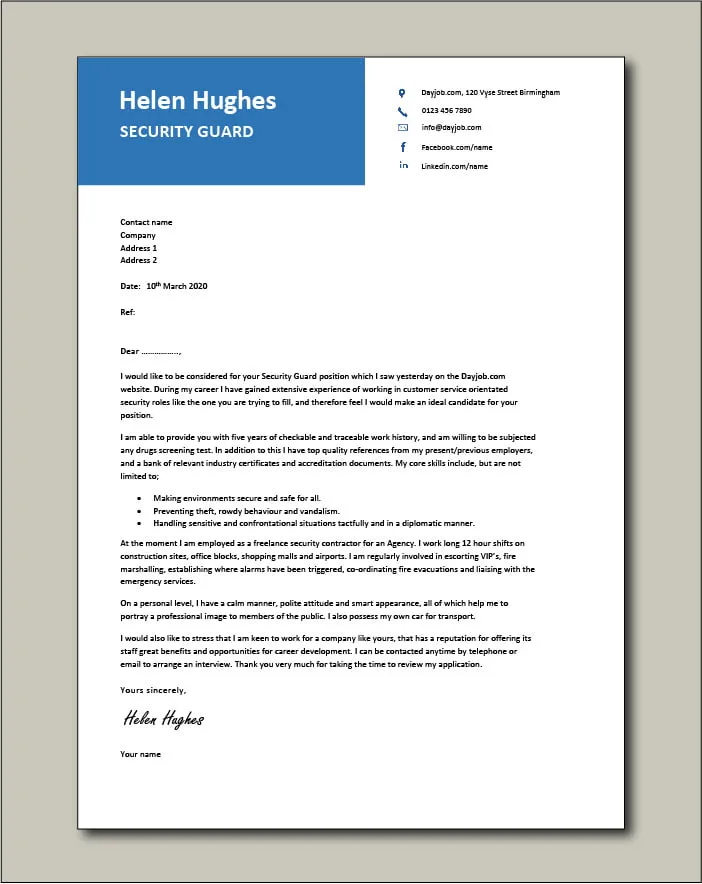
What is a Security Officer Cover Letter?
A security officer cover letter is a crucial document that accompanies your resume when applying for a security officer position. It serves as your introduction to the hiring manager, providing an opportunity to showcase your qualifications, skills, and enthusiasm for the role. Unlike your resume, which presents a factual overview of your experience, the cover letter allows you to explain why you are the best candidate and how your specific abilities align with the job requirements. A well-written cover letter can significantly increase your chances of getting an interview by capturing the hiring manager’s attention and demonstrating your genuine interest in the position and the company. This personalized approach can set you apart from other applicants and make a positive first impression, highlighting your communication skills and professionalism.
Key Components of a Security Officer Cover Letter
A compelling security officer cover letter should contain several essential components to effectively communicate your qualifications and interest in the position. Begin with your contact information, followed by the hiring manager’s details, which helps personalize the letter and shows attention to detail. The greeting should be formal and directed to the hiring manager by name if possible. The body of the letter should highlight your relevant skills and experience, focusing on how you meet the specific requirements outlined in the job description. It should also mention any relevant certifications or training you possess, such as those related to security procedures, first aid, or conflict resolution. Demonstrate your understanding of the role by explaining your approach to maintaining a safe and secure environment. Express your enthusiasm and interest in the position and the company, and conclude with a clear call to action, such as requesting an interview. Finally, end with a professional closing and your signature.
Your Contact Information

At the top of your cover letter, you must include your contact information. This should be the first element the hiring manager sees, making it easy to reach you if they wish to proceed with your application. Include your full name, address, phone number, and email address. Ensure that the phone number and email address are professional and up-to-date. Double-check for any typos or errors to prevent miscommunication. Make sure your contact information is easy to read and clearly formatted to ensure that the hiring manager can quickly find and use the information. Providing accurate and accessible contact details is vital in the initial screening process, showing that you are attentive to detail and ready for the next steps of the application process. This simple step can facilitate communication and improve your chances of getting noticed.
Hiring Manager’s Contact Information
Directing your cover letter to a specific person can significantly increase your chances of making a positive impression. If possible, find the name and title of the hiring manager or the person in charge of recruitment for the security officer position. This information can often be found in the job posting or on the company’s website. If you cannot find a specific name, use a general title such as “Hiring Manager.” Addressing your letter to a named individual demonstrates that you’ve done your research and are genuinely interested in the position. It shows that you’ve gone the extra mile, and it adds a personal touch that can set you apart from other applicants. By knowing the hiring manager’s name, you can tailor your cover letter to specifically address their needs and interests. This demonstrates a higher level of engagement and a proactive approach to securing the job.
Greeting the Hiring Manager
The greeting is your first opportunity to make a positive impression. Use a formal and professional greeting, such as “Dear Mr./Ms./Mx. [Last Name],” if you know the hiring manager’s name. If you don’t have a specific name, use “Dear Hiring Manager” or “Dear Security Department.” Avoid informal greetings like “Hello” or “Hi.” Ensure you correctly spell and punctuate the greeting. This initial step sets the tone for your entire letter. It shows that you are professional, detail-oriented, and respectful of the person reviewing your application. A well-crafted greeting builds a positive impression right from the start. The goal is to communicate respect and sincerity, which can make the hiring manager more receptive to your application and increase your chances of further consideration.
How to Start Your Cover Letter

The opening paragraph is critical as it captures the hiring manager’s attention. Start by stating the specific position you are applying for and where you saw the job posting. Immediately express your interest in the role and the company, and briefly mention why you are a good fit. You can refer to a specific skill, experience, or accomplishment that aligns with the job requirements. Consider starting with a strong statement that shows your enthusiasm for the position. An effective opening should grab their attention and encourage them to read on. Make sure your opening is tailored to the specific job and highlights your understanding of the company’s needs. Starting strong can create a positive first impression and encourage the hiring manager to read the rest of your cover letter with interest.
Highlight Your Relevant Skills and Experience
The body of your cover letter is where you elaborate on your qualifications. Focus on the skills and experiences most relevant to the security officer position. Review the job description carefully and identify the key requirements. Then, provide specific examples of how your past roles and achievements align with these requirements. Quantify your accomplishments whenever possible. For example, instead of stating “Managed security operations,” mention “Managed security operations for a team of 10 officers, resulting in a 20% reduction in incident reports.” Highlight relevant experience such as patrol duties, access control, surveillance, incident response, and emergency management. Tailor your examples to the specific needs of the employer, demonstrating a clear understanding of their requirements. Showing how you’ve successfully handled similar situations in the past strengthens your application and shows you can perform the job effectively.
Mention Relevant Certifications and Training
Security officer positions often require specific certifications and training. List any relevant certifications you possess, such as those in security, first aid, CPR, or defensive tactics. Include the name of the certification, the issuing organization, and the date of completion. If you have undergone specialized training, such as in surveillance techniques, access control systems, or emergency response, mention this as well. Emphasize any certifications that are specifically mentioned in the job description, as this demonstrates your attention to detail and your ability to meet the employer’s requirements. Providing this information proves your commitment to security and highlights your readiness to perform the duties of a security officer. This adds credibility to your application and shows your preparedness to handle the responsibilities of the job.
Demonstrate Your Understanding of the Role

A strong cover letter demonstrates that you understand the responsibilities and challenges of a security officer position. Briefly explain your approach to maintaining a safe and secure environment. Mention your awareness of security protocols, procedures, and legal requirements. Show your understanding of the need for vigilance, observation skills, and communication. Tailor your explanation to the specifics of the job and the employer’s industry. For instance, if the position involves protecting a commercial property, emphasize your knowledge of access control, surveillance systems, and emergency response protocols. Demonstrate how you would prevent and respond to security threats. Show that you are proactive and capable of handling the various aspects of the role by detailing your understanding of the day-to-day activities and your commitment to providing excellent security services.
Express Your Enthusiasm and Interest
Show genuine enthusiasm for the position and the company. Explain why you are interested in working as a security officer and what specifically attracts you to this opportunity. Discuss your interest in the company’s mission, values, or reputation, if applicable. Explain what motivates you to be a security officer, such as a commitment to safety, helping others, or upholding security protocols. Showing enthusiasm and a genuine interest makes you a more appealing candidate, as it demonstrates your passion for the job. Showing your passion will make the hiring manager more inclined to consider you. Showing you understand and align with the company’s values will prove you are more likely to be a great fit.
Call to Action
End your cover letter with a clear call to action. State that you are eager for an interview to discuss your qualifications in more detail. Express your availability for an interview and provide your contact information again, just in case the hiring manager has missed it earlier. Make it easy for the hiring manager to contact you. Thank them for their time and consideration, and express your interest in hearing from them soon. A well-crafted call to action reinforces your enthusiasm and makes it clear that you are ready and willing to take the next step in the application process. This shows your proactive approach and demonstrates a commitment to the role and the company.
Closing Your Cover Letter

Conclude your cover letter with a professional closing. Use a standard closing, such as “Sincerely,” “Regards,” or “Best regards.” Avoid casual closings like “Thanks” or “Best.” After the closing, leave space for your handwritten signature if you are submitting a physical copy. If submitting electronically, you can simply type your name below the closing. Make sure the closing reflects the tone and formality of your letter. Double-check that the closing is correctly spelled and formatted. A proper closing reflects your professionalism and attention to detail. This is the last impression you make on the hiring manager, so it is essential to end on a positive and professional note. A well-crafted closing can add the final touch of professionalism, leaving a lasting positive impression.
Proofreading and Editing Your Cover Letter
Before submitting your cover letter, carefully proofread and edit it. Check for any grammatical errors, spelling mistakes, or typos. Ensure that the formatting is consistent and easy to read. Ask a friend or family member to review your letter for clarity, accuracy, and overall impact. Pay close attention to the tone and make sure it is professional and appropriate for the position. Proofreading helps ensure you present yourself as a detail-oriented and qualified candidate. Errors can detract from your application and may give the impression that you are not as serious about the role. Thorough proofreading is essential to convey your professionalism and increase the likelihood of securing an interview. Taking the time to polish your cover letter demonstrates your commitment to the application process and strengthens your chances of being selected.