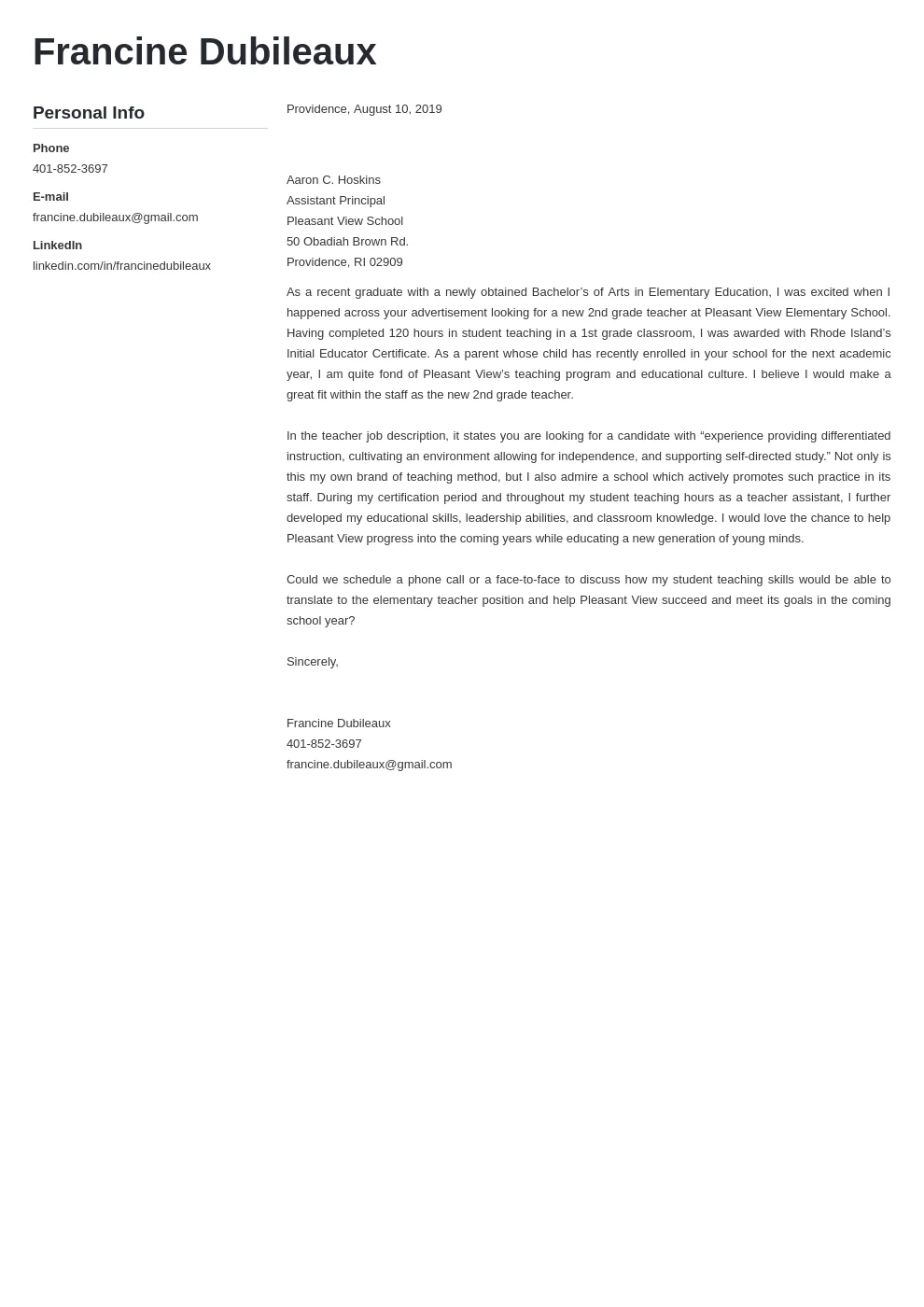
Crafting Your Teacher Cover Letter
A well-crafted teacher cover letter is your first opportunity to make a lasting impression on a hiring committee. It’s not merely a formality; it’s a crucial marketing tool that showcases your skills, experience, and passion for teaching. This guide provides comprehensive tips to help you write a compelling cover letter that grabs attention and increases your chances of landing your dream teaching job. We will break down the essential elements, format guidelines, and common pitfalls to avoid, ensuring your application stands out from the competition. Preparing a cover letter demands careful consideration and thoughtful presentation. Your goal is to create a document that is both informative and inspiring, demonstrating why you are the ideal candidate for the position. The cover letter should complement your resume by highlighting your unique qualities and conveying your enthusiasm for the role and the school.
Understanding the Purpose
The primary purpose of a teacher cover letter is to introduce yourself, highlight your qualifications, and express your genuine interest in the specific teaching position. It provides context to your resume, allowing you to explain why you are a great fit for the school’s culture and the specific requirements of the job. This is also the place to convey your enthusiasm for teaching and your commitment to student success. Think of it as a chance to share your unique story, illustrating what makes you stand out from other applicants. It goes beyond simply listing your accomplishments; it shows how you will apply those accomplishments within the role. A strong cover letter will capture the hiring manager’s attention and encourage them to delve deeper into your resume and consider you for an interview.
Highlighting Your Strengths

Your cover letter is a chance to emphasize your key strengths and how they align with the job requirements. Think about what makes you a successful teacher, whether it’s your classroom management skills, your ability to differentiate instruction, or your experience working with diverse learners. Provide specific examples that illustrate your capabilities and accomplishments. For instance, instead of saying you are a good communicator, describe how you successfully collaborated with parents or presented complex concepts in an easy-to-understand manner. Quantify your achievements whenever possible, using numbers to demonstrate the impact you’ve had on student outcomes. Remember, this is your opportunity to highlight what sets you apart and makes you the ideal candidate for the specific role.
Researching the School
Before you start writing, take the time to thoroughly research the school. Visit their website, read their mission statement, and understand their values, programs, and community. This information will help you tailor your cover letter to demonstrate why you are a good fit for that particular school. Mention specific aspects of the school that resonate with you, such as their commitment to innovation, their focus on student well-being, or their approach to curriculum development. This shows that you’ve taken the time to understand their needs and that you’re genuinely interested in joining their team. Addressing the school’s specific values and initiatives shows that you’re not just sending out a generic application, but that you genuinely want to be part of their community.
Formatting Your Cover Letter
Proper formatting is essential for creating a professional and easy-to-read cover letter. The layout should be clean, organized, and visually appealing. It should be easy to scan and identify key information. Use a standard font like Times New Roman or Arial, and maintain consistent formatting throughout the document. Keep the tone professional and use concise language. A well-formatted cover letter demonstrates your attention to detail and your respect for the hiring committee’s time. A visually appealing document is more likely to be read and considered carefully. Ensure your cover letter is properly formatted before submitting it with your application.
Contact Information

Begin your cover letter with your contact information, including your full name, address, phone number, and professional email address. This should be clearly presented at the top of the document, making it easy for the hiring manager to reach you. Make sure your email address is professional; avoid using nicknames or informal language. The contact information allows the hiring manager to quickly and easily get in touch with you. Double-check that all the information is accurate before submitting your application.
Professional Salutation
Use a professional salutation to address the hiring manager. Whenever possible, find out the name of the person who will be reviewing your application and address the letter to them directly (e.g., “Dear Mr./Ms. [Last Name]”). If you cannot find a specific name, use a general greeting, such as “Dear Hiring Committee” or “Dear [School Name] Principal”. Avoid generic greetings like “To Whom It May Concern”. Addressing the letter to a specific person demonstrates that you have taken the time to research the school and personalize your application.
The Body Paragraphs
The body of your cover letter is where you showcase your skills, experience, and passion for teaching. It should be divided into three or four paragraphs, each with a specific purpose. These paragraphs are your primary opportunity to persuade the hiring committee to read your resume and consider you for an interview. The way you structure your body paragraphs will determine your success at getting noticed.
First Paragraph: Captivating Introduction

Start your cover letter with a strong introduction that immediately captures the reader’s attention. State the position you are applying for and where you found the job posting. Briefly mention something that excites you about the position or the school. This opening paragraph should set the tone for the rest of the letter and make the hiring manager want to read on. Keep the introduction concise and focused, making sure that it clearly states your purpose and shows enthusiasm for the position. A good introduction will set the stage for the rest of your cover letter.
Second Paragraph: Showcasing Your Skills and Experience
In the second paragraph, highlight your relevant skills and experience. Focus on the qualifications that align with the job description. Use specific examples to illustrate your accomplishments and how you have made a positive impact in previous teaching roles. This is where you can demonstrate your ability to create engaging lessons, manage a classroom effectively, and differentiate instruction to meet the needs of all students. Quantify your achievements whenever possible, such as the percentage increase in student test scores or the number of students who successfully completed a project under your guidance. Make your qualifications easily apparent for the reader.
Third Paragraph: Expressing Your Passion and Fit
The third paragraph is where you express your passion for teaching and explain why you are a good fit for the school. Discuss your teaching philosophy, your approach to creating a positive learning environment, and your commitment to student success. Mention any specific programs or initiatives at the school that appeal to you and explain how your values align with their mission. This is your opportunity to demonstrate that you are enthusiastic about the role and the school. It helps the hiring managers visualize you in the position. This paragraph should highlight that you are not just looking for a job but that you’re looking for a community.
Concluding Paragraph: Call to Action and Gratitude

Conclude your cover letter with a call to action and a statement of gratitude. Reiterate your interest in the position and express your enthusiasm for an interview. Thank the hiring manager for their time and consideration. Provide your contact information again, reinforcing that you are easily reachable. This paragraph should leave the reader with a positive impression and encourage them to take the next step. Make sure your tone is professional and enthusiastic, leaving a lasting, positive impression. Ending with a sincere thank you shows respect for the hiring team’s time and consideration.
Closing and Signature
Close your cover letter with a professional closing such as “Sincerely,” “Respectfully,” or “Best regards.” Leave space for your handwritten signature above your typed name. If you are submitting your application electronically, you can use a typed signature. Ensure your closing reflects the professional tone of the entire letter. A well-chosen closing adds a final touch of professionalism.
Content and Tone: What to Include
The content and tone of your teacher cover letter should be tailored to the specific job and school. Focus on highlighting your qualifications, emphasizing your relevant experience, showcasing your teaching philosophy, and demonstrating your enthusiasm for the role. The more relevant information you provide, the stronger the letter. This ensures that you make a positive and lasting impression on the hiring team, making sure you show the best version of yourself. You must provide concise, clear content.
Showcasing Your Qualifications

Clearly state your qualifications, including your educational background, certifications, and any relevant experience. Highlight any skills or training that are directly related to the job requirements. Be sure to mention your teaching certifications and any specializations, such as special education or early childhood education. Focus on the achievements and training that make you the best candidate for the role, and be specific when you do so.
Emphasizing Relevant Experience
Provide specific examples of your experience in teaching. Describe your previous roles and the responsibilities you held. Focus on what you accomplished and how you made a positive impact on students. Use action verbs to describe your contributions. Quantify your achievements whenever possible, such as the number of students you taught, test score improvements, or the successful implementation of a new curriculum. The more specifics you can provide, the easier it is for the reader to understand and see your experience.
Highlighting Your Teaching Philosophy
Your teaching philosophy should reflect your beliefs about education and your approach to teaching. Describe your commitment to student success, your strategies for creating a positive learning environment, and your approach to classroom management. Express your passion for teaching and your commitment to creating a supportive and inclusive classroom. Explain how you will address the needs of diverse learners. This part shows your personality and what teaching means to you. The hiring manager can then compare it with the values of the school to determine whether there’s a good fit.
Demonstrating Your Enthusiasm

Show your enthusiasm for the position and the school. Mention any specific aspects of the school that appeal to you, such as their commitment to innovation, their focus on student well-being, or their approach to curriculum development. Your enthusiasm is important because it shows you are motivated and dedicated. Express your genuine interest in joining the school community and contributing to its success. A high level of enthusiasm also indicates that you are likely to be a valuable and committed member of the team. Being enthusiastic helps you stand out and show your excitement for the position.
Avoiding Common Mistakes
There are some common mistakes to avoid when writing a teacher cover letter. These errors can significantly detract from your application and reduce your chances of getting an interview. Avoiding them is crucial for making a positive impression. The best way to avoid these mistakes is to be careful and ensure your work is reviewed before submission.
Generic Cover Letters
Avoid sending generic cover letters that are not tailored to the specific job or school. Hiring managers can easily spot a cover letter that is mass-produced. Customize each cover letter to match the requirements of the position and show that you have researched the school and understand its values. Refer to specific aspects of the school, the role, and explain why you’re a good fit. Taking the time to personalize your cover letter demonstrates your genuine interest in the role and increases your chances of getting noticed. Always be sure to tailor your letter specifically to the role.
Typos and Grammatical Errors
Typos and grammatical errors can damage your credibility and make you look unprofessional. Proofread your cover letter carefully before submitting your application. Use spell-check and grammar-check tools, but don’t rely on them completely. Have someone else review your letter to catch any mistakes you might have missed. Even minor errors can create a negative impression, so take the time to ensure that your letter is polished and error-free.
Ignoring the School’s Mission
Failing to address the school’s mission or values shows a lack of research and a lack of genuine interest. Reference the school’s mission statement and explain how your teaching philosophy and experience align with their goals. Demonstrate that you understand the school’s culture and what they are looking for in a teacher. Make sure that you address all the requirements of the role, and that you convey a genuine understanding of what the school is about. When you focus on the school’s values, it highlights your ability to mesh with the school’s culture.
Overusing Clichés
Avoid using clichés or generic phrases. These phrases make your cover letter sound unoriginal and can come across as insincere. Use your own words to describe your skills and experience. Provide specific examples of your accomplishments. Using authentic, specific language makes your cover letter more compelling. A cover letter that does not use clichés and generic phrases will be more effective and likely to receive favorable attention.
Proofreading and Editing
Proofreading and editing are essential steps in the cover letter writing process. They help ensure that your letter is polished, professional, and free of errors. Taking the time to proofread and edit your work can significantly enhance your chances of landing your dream teaching job. Make sure you’re prepared for the best possible outcome.
Seeking Feedback
Ask a trusted friend, mentor, or career advisor to review your cover letter. They can provide valuable feedback on your writing style, content, and formatting. A fresh pair of eyes can catch mistakes or suggest improvements that you may have missed. Getting feedback from others can help you see your cover letter in a new light and make it even stronger. Reviewers can offer advice on the overall clarity and impact of your letter. Having someone review your cover letter can make all the difference in the end.
Final Review
Before submitting your cover letter, conduct a final review. Check for any remaining typos, grammatical errors, or formatting issues. Ensure that your contact information is accurate and up-to-date. Verify that your cover letter is tailored to the specific job and school. A thorough final review can make all the difference between a successful application and a missed opportunity. After editing and having someone review your cover letter, always perform a final review before submission.
Submission and Follow-up
Once you are satisfied with your cover letter, it’s time to submit your application. Follow the instructions provided in the job posting to ensure your application is received correctly. This is the final step in the application process, and you should be sure to follow instructions. After submitting your application, take steps to follow up and remain professional.
Submitting Your Cover Letter
Follow the specific instructions provided in the job posting regarding how to submit your cover letter and resume. Some schools may require electronic submissions, while others may prefer hard copies. Make sure you submit your application by the deadline. Attach your cover letter and resume as separate documents. When submitting your cover letter, it’s important to adhere to the specific requirements outlined in the job posting. Ignoring these instructions could result in your application being overlooked. Make sure to provide all documents required by the school.
Following Up on Your Application
After submitting your application, it’s appropriate to follow up with the hiring manager to reiterate your interest and inquire about the status of your application. Send a polite email or make a phone call a week or two after the deadline. Make sure your follow-up is brief, professional, and shows your continued enthusiasm for the position. You can also use this as an opportunity to re-emphasize why you are a good fit for the school and express your interest in an interview. This shows your interest in the position and can also remind the hiring manager about you. This also gives the hiring manager another chance to review your application.