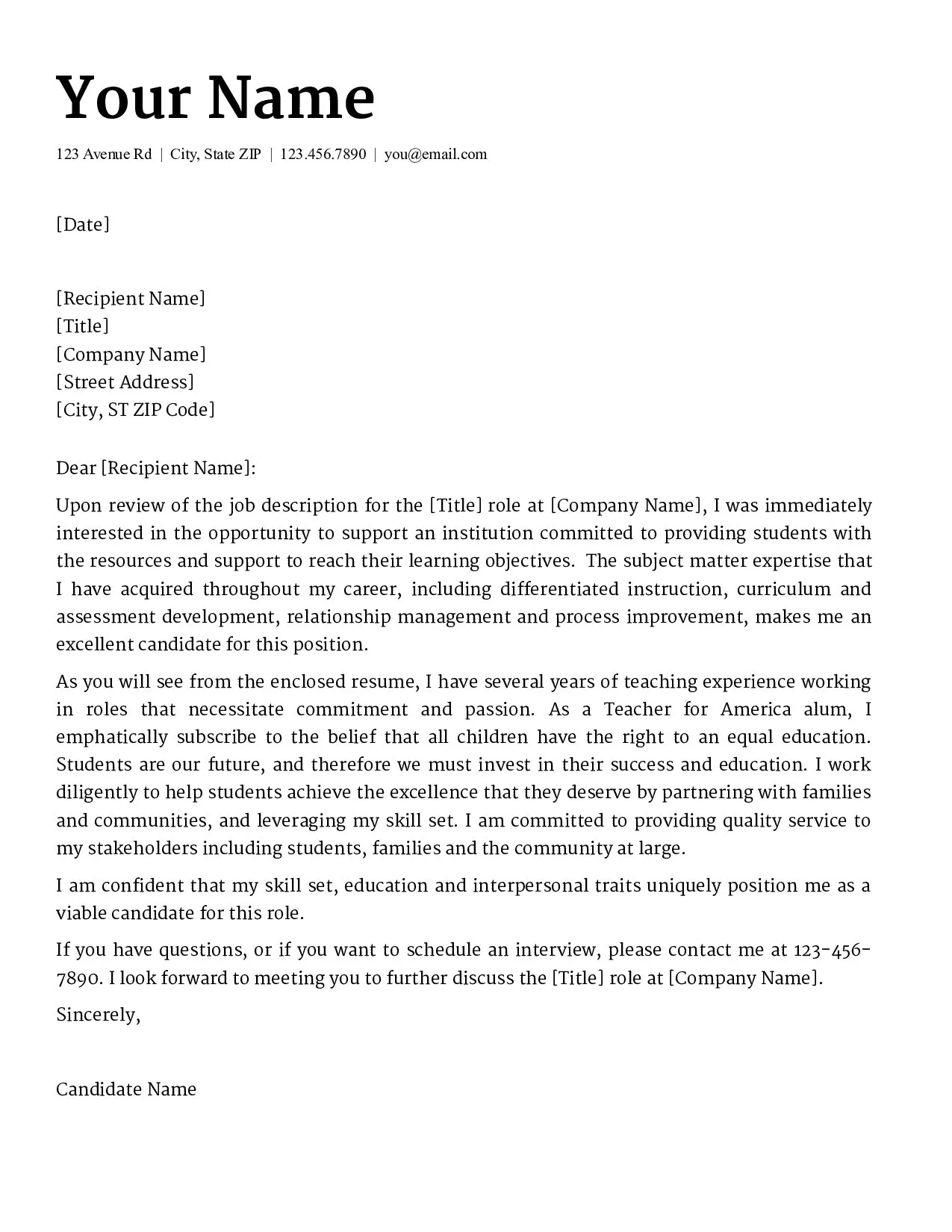
Securing a teaching position often hinges on a compelling teacher job cover letter. This crucial document serves as your initial introduction to potential employers, providing an opportunity to showcase your qualifications, experience, and passion for education. It’s more than just a formality; it’s your chance to make a strong first impression and differentiate yourself from other applicants. A well-crafted cover letter demonstrates your understanding of the role, highlights your key strengths, and expresses your genuine interest in the specific school or district. This guide will provide you with comprehensive insights and actionable strategies to create a teacher job cover letter that gets noticed and lands you an interview.
Understanding the Teacher Job Cover Letter
Before diving into the specifics of crafting a cover letter, it’s essential to grasp its purpose and significance. The teacher job cover letter is a formal document that accompanies your resume when applying for a teaching position. It allows you to elaborate on your qualifications, skills, and experiences in a way that a resume alone cannot. It provides context, demonstrates your personality, and highlights your unique value proposition as an educator. Think of it as your personal sales pitch, designed to persuade the hiring committee that you are the ideal candidate for the job. A well-written cover letter complements your resume, creating a cohesive and persuasive application package.
What is a Teacher Job Cover Letter
A teacher job cover letter is a written document that you submit along with your resume when applying for a teaching position. It acts as a personalized introduction to your potential employer, allowing you to expand upon the information presented in your resume. Unlike a resume, which provides a concise overview of your qualifications, a cover letter offers an opportunity to express your personality, passion for teaching, and specific interest in the school or district. The cover letter should be tailored to each job application, showcasing how your skills and experiences align with the specific requirements of the position and the values of the institution.
Why is a Cover Letter Important

The importance of a teacher job cover letter cannot be overstated. It serves as your first impression and can significantly influence whether or not you are invited for an interview. A well-written cover letter demonstrates your communication skills, attention to detail, and genuine interest in the position. It allows you to personalize your application and show the hiring committee why you are the perfect fit for their school. In a competitive job market, a strong cover letter can set you apart from other applicants by highlighting your unique qualities, experiences, and teaching philosophy. Moreover, it provides an opportunity to address any potential gaps in your resume and proactively explain your career goals.
Key Components of a Teacher Job Cover Letter
A well-structured teacher job cover letter consists of several key components, each serving a specific purpose in conveying your qualifications and enthusiasm. These components work together to create a compelling narrative that captures the hiring manager’s attention and encourages them to learn more about you. From the header to the closing, each section contributes to the overall effectiveness of your application. Ensuring that all components are carefully crafted and aligned with the specific job requirements is crucial for making a positive impression and increasing your chances of landing an interview.
Header and Contact Information
The header of your teacher job cover letter should include your contact information, such as your full name, address, phone number, and professional email address. It should be clearly formatted and easy to read. If you know the hiring manager’s name, you can also include their name and title along with the school’s name and address. If you are sending an electronic application, make sure your email address is professional. This section sets the tone for your letter and allows the hiring manager to easily contact you. Accuracy is paramount, so double-check all the details to ensure they are correct.
Addressing the Hiring Manager

Addressing the hiring manager by name is a crucial step in personalizing your cover letter. Whenever possible, find out the name of the person who will be reviewing your application. Research the school’s website, check LinkedIn, or call the school to inquire. If you are unable to find a specific name, use a professional salutation such as ‘Dear Hiring Committee’ or ‘Dear [School Name] Hiring Team’. Avoid generic greetings like ‘To Whom It May Concern,’ as they can make your application seem impersonal. Using the correct name shows that you have taken the time to research and demonstrates your attention to detail.
Opening Paragraph Grab Their Attention
The opening paragraph is your chance to grab the hiring manager’s attention and make a strong first impression. Start with a concise and compelling statement that immediately communicates your interest in the position and the school. You can mention the specific teaching position you are applying for and briefly highlight your key qualifications or a relevant achievement. Consider starting with a statement of enthusiasm for the school’s mission, a brief anecdote about your teaching experience, or a unique skill that makes you stand out. The goal is to pique their interest and encourage them to read the rest of your letter.
Highlighting Your Qualifications
In the body of your cover letter, highlight your key qualifications and how they align with the requirements of the teaching position. Review the job description carefully and identify the essential skills, experiences, and qualities the school is seeking. Provide specific examples from your teaching experience to demonstrate how you have successfully utilized these skills. Use action verbs to describe your accomplishments and quantify your achievements whenever possible. For instance, instead of saying ‘I taught students,’ you might say ‘I implemented differentiated instruction strategies that increased student test scores by 15%.’ Tailor your qualifications to match the specific needs of the school.
Showcasing Relevant Experience

Your cover letter should showcase your relevant teaching experience, providing details about your previous roles, the grade levels you have taught, and the subjects you have covered. Describe your responsibilities and accomplishments in each position, focusing on the impact you made on students and the school. Highlight any specific programs or initiatives you were involved in, such as curriculum development, student assessment, or extracurricular activities. If you have limited teaching experience, emphasize your student teaching experience, volunteer work, or any other relevant experiences that demonstrate your commitment to education. Be specific and provide concrete examples to illustrate your experiences.
Demonstrating Skills and Achievements
Beyond your experience, your cover letter should highlight your key skills and achievements as an educator. Emphasize skills such as classroom management, lesson planning, curriculum development, differentiated instruction, and student assessment. Provide examples of how you have used these skills to create a positive learning environment, improve student outcomes, or contribute to the school community. Quantify your achievements whenever possible. Did you implement a new teaching strategy that improved student test scores? Did you develop a successful classroom management system? Did you receive any awards or recognition for your teaching? Highlighting your skills and achievements will make your cover letter stand out.
Expressing Your Passion for Teaching
Your cover letter should convey your passion for teaching and your enthusiasm for the specific school or district. Share your teaching philosophy and explain what motivates you to work with students. Demonstrate your knowledge of the school’s mission, values, and programs. Explain why you are interested in the position and what you hope to contribute to the school community. Express your belief in the importance of education and your commitment to helping students succeed. Show your genuine interest and let your personality shine through in your writing. Your enthusiasm can make a significant impact on the hiring committee.
Closing Your Cover Letter

The closing paragraph of your cover letter should summarize your interest in the position and reiterate your key qualifications. Reiterate your enthusiasm for the opportunity and the school. Thank the hiring manager for their time and consideration. Restate your interest in the position and the school. Express your confidence in your ability to contribute to the school’s mission. Make it clear that you are eager to learn more about the position and the school.
Thanking the Hiring Manager
Always thank the hiring manager for their time and consideration. Expressing your gratitude shows respect for their efforts in reviewing your application. A simple ‘Thank you for your time and consideration’ is sufficient. This final act of courtesy leaves a positive impression and reinforces your professionalism.
Call to Action Requesting an Interview
End your cover letter with a clear call to action, requesting an interview. Express your eagerness to discuss your qualifications further and provide your contact information. State your availability for an interview and suggest a convenient time to meet. This proactive approach demonstrates your genuine interest in the position and makes it easier for the hiring manager to take the next step. A simple statement like ‘I am eager to learn more about this opportunity and would welcome the chance to discuss my qualifications in an interview. I am available for an interview at your earliest convenience’ is effective.
Formatting and Proofreading Your Cover Letter

Formatting and proofreading are critical steps in creating a professional and effective teacher job cover letter. A well-formatted and error-free letter demonstrates your attention to detail and commitment to excellence, which are important qualities for any teacher. Pay close attention to these details to ensure your cover letter makes a positive impression.
Formatting Tips
Use a professional and easy-to-read font, such as Times New Roman, Arial, or Calibri, and maintain a consistent font size (11 or 12 points). Use standard one-inch margins and single-space your letter. Use block format, with each paragraph aligned to the left and no indentation. Leave a space between each paragraph. Keep your letter to one page. Use clear headings and subheadings to organize your letter and make it easy to read. Ensure your letter is visually appealing and easy to navigate.
Proofreading and Editing
Thoroughly proofread and edit your cover letter before submitting it. Check for any grammatical errors, spelling mistakes, or typos. Read your letter aloud to identify any awkward phrasing or unclear sentences. Have a friend, colleague, or career counselor review your letter for feedback. Use a grammar checker to identify any errors you may have missed. Pay attention to the tone and style of your writing. Ensure that your letter is professional, concise, and tailored to the specific job and school. Proofreading is a crucial step in showcasing your professionalism and attention to detail.
Finalizing and Submitting Your Cover Letter

Before submitting your cover letter, make sure it is perfectly tailored to the specific job and school. Review the job description and ensure that you have addressed all the requirements. Customize your letter to match the school’s mission and values. Save your cover letter as a PDF to preserve the formatting. Name your file with your name and the job title. If submitting online, follow the instructions provided by the school or district. Ensure that your cover letter and resume are submitted together. Finally, double-check all the information before submitting your application.