Why a Strong Vet Assistant Cover Letter Matters
In the competitive field of veterinary medicine, securing your dream job as a vet assistant requires more than just a stellar resume. A well-crafted vet assistant cover letter is your opportunity to make a lasting first impression and showcase your unique qualifications. This vital document allows you to go beyond the basic facts and figures, illustrating your personality, passion for animals, and suitability for the specific role. A strong cover letter grabs the hiring manager’s attention, highlighting your skills, experiences, and enthusiasm, thus significantly increasing your chances of landing an interview. It’s your chance to distinguish yourself from other applicants and demonstrate why you’re the perfect fit for the veterinary practice.
Key Components of a Winning Cover Letter
A winning vet assistant cover letter comprises several key elements that work together to create a compelling narrative. Each component contributes to demonstrating your qualifications and enthusiasm for the position. From the initial greeting to the final call to action, every aspect of your cover letter should be carefully considered to ensure it effectively conveys your skills and suitability for the role. By paying close attention to these essential elements, you can craft a cover letter that stands out from the competition and significantly boosts your chances of securing an interview.
Your Contact Information and the Date

Begin your cover letter by clearly stating your contact information at the top. This typically includes your full name, phone number, professional email address, and optionally, your LinkedIn profile URL. Following this, include the date you are submitting the letter. This ensures that the hiring manager can easily reach you and keeps the document organized. Make sure your contact details are current and accurate to prevent any missed opportunities. Presenting this information clearly establishes a professional tone from the start and simplifies communication for the potential employer. Consider a clean and professional font style for easy readability.
The Hiring Manager’s Details
Addressing your cover letter to a specific person is crucial. If possible, find the name of the hiring manager or the veterinarian in charge of hiring. This demonstrates your initiative and attention to detail, showing you’ve taken the time to learn more about the practice. You can usually find this information on the veterinary clinic’s website, LinkedIn, or by calling the clinic. If you are unable to find a specific name, use a professional salutation such as “Dear Hiring Manager” to maintain a respectful tone. Using a personalized greeting makes your application more engaging and shows you’re genuinely interested in the role and the practice.
Crafting a Compelling Opening
Your opening paragraph should immediately grab the reader’s attention. Start by stating the position you are applying for and where you saw the job posting. Then, briefly express your enthusiasm for the role and the veterinary practice. Consider including a brief statement about what makes you a great fit. This could be your passion for animal care, a specific skill, or relevant experience. The goal is to create an immediate connection, encouraging the hiring manager to read further. A strong opening sets the tone for the entire letter and convinces the reader to learn more about your qualifications. Avoid generic openings and show genuine interest in the specific job.
Highlighting Your Relevant Skills and Experience

The body of your cover letter is where you showcase your skills and experience. Focus on the qualifications most relevant to the vet assistant position. Mention your experience with animal handling, medical procedures, and client communication. Use specific examples to illustrate your abilities and achievements, such as how you assisted in surgeries, administered medications, or managed patient records. Quantify your accomplishments whenever possible. For instance, state how many animals you’ve cared for or how efficiently you manage tasks. Use keywords from the job description to demonstrate you have what the employer is looking for. This section should provide concrete evidence of your capabilities and demonstrate your suitability for the role.
Showcasing Your Passion for Animal Care
Vet assistant roles demand a genuine love for animals. Your cover letter should clearly demonstrate your passion for animal care. Share specific anecdotes or stories that reflect your commitment to animal welfare, such as volunteering at an animal shelter, caring for your own pets, or any relevant experiences that demonstrate your empathy and dedication. Show enthusiasm for working with animals and highlight any skills or experiences related to animal health and well-being. Describe why you’re drawn to the veterinary field and why you’re eager to contribute to the health and happiness of animals. Authenticity and genuine interest are crucial in conveying your passion for the role.
Quantifying Your Achievements
Whenever possible, quantify your accomplishments to provide concrete evidence of your abilities. Instead of saying you have experience with patient care, specify the number of animals you’ve cared for or the types of procedures you’ve assisted with. Instead of saying you’re good at communication, mention any client satisfaction scores or feedback you’ve received. Quantifiable achievements add credibility to your claims and demonstrate the impact you’ve made in previous roles. Using numbers and statistics makes your achievements more compelling and helps the hiring manager understand your value. This approach gives your application a significant advantage over generic, non-specific cover letters.
Tailoring Your Letter to the Specific Job

Avoid using a generic cover letter for every job application. Tailor your cover letter to each specific position you’re applying for. Carefully review the job description and identify the key requirements, skills, and qualifications the employer is seeking. Highlight the experiences and skills that align with these requirements. Adjust your language and focus to emphasize the aspects of your background that are most relevant to the job. This shows the hiring manager that you’ve taken the time to understand the specific needs of their practice and increases the relevance of your application. Demonstrating this level of customization significantly increases your chances of getting an interview.
Researching the Veterinary Practice
Before sending your cover letter, take the time to research the veterinary practice you’re applying to. Visit their website, read client reviews, and check their social media profiles to gain insights into their values, services, and culture. Use this information to customize your cover letter. Mention specific aspects of the practice that appeal to you, such as their specialization in a particular area of veterinary medicine or their commitment to community outreach. This shows your genuine interest and initiative. Demonstrating your knowledge of the practice makes your application more compelling and shows you’re serious about joining their team. Showing that you have researched the practice gives you a considerable advantage.
Using Keywords from the Job Description
Carefully review the job description and identify the keywords the employer uses to describe the required skills and qualifications. Integrate these keywords naturally into your cover letter. This helps your application get noticed by applicant tracking systems (ATS) used by many veterinary practices to screen applications. Using relevant keywords ensures your cover letter is aligned with what the employer is looking for. However, don’t overdo it; maintain a natural and professional tone. The goal is to demonstrate that you meet the requirements while still expressing your unique skills and experience. This practice significantly increases the chances of your application passing through initial screening processes.
Expressing Your Enthusiasm and Interest

Show genuine enthusiasm and interest in the vet assistant position and the veterinary practice. Use positive language and express your eagerness to learn, grow, and contribute to the team. Mention specific aspects of the role or practice that excite you. Demonstrate your commitment to the veterinary field by highlighting your relevant experience and qualifications. This enthusiasm should be apparent throughout your cover letter, from the opening paragraph to the closing statement. Letting your excitement for the role shine through will make a strong and lasting positive impression on the hiring manager. This passion can distinguish you from candidates who may seem less invested in the opportunity.
Writing a Strong Closing
End your cover letter with a strong closing paragraph that reinforces your interest and encourages the hiring manager to contact you. Thank the hiring manager for their time and consideration. Reiterate your enthusiasm for the position and your confidence in your ability to contribute to the veterinary practice. Consider including a concise statement that summarizes your key qualifications or highlights your eagerness to discuss your application further. This final impression should leave a lasting positive impact and prompt the hiring manager to take the next step. A well-crafted closing reinforces your interest and increases your chances of securing an interview.
Reiterate Your Interest
In your closing paragraph, reiterate your interest in the vet assistant position and the veterinary practice. Briefly summarize why you are an excellent fit for the role, referencing your skills, experiences, and passion for animal care. This final reminder reinforces your key strengths and leaves a lasting impression. Making a concise statement about how your qualifications meet the requirements of the role demonstrates that you understand the needs of the practice and are dedicated to fulfilling them. Reinforcing your enthusiasm for the position emphasizes your commitment and makes you stand out from the crowd.
Call to Action Request an Interview

Include a clear call to action at the end of your cover letter. Specifically request an interview to discuss your qualifications and how you can contribute to the veterinary practice. Providing this direct request ensures the hiring manager knows that you are actively seeking the opportunity to move forward in the hiring process. Mention your availability for an interview to make the process easier for the hiring team. Providing a clear call to action makes it simple for the hiring manager to schedule the interview, increasing the likelihood of your application leading to the next stage of the hiring process. A direct invitation demonstrates your proactive approach and interest in the position.
Proofreading and Editing Your Cover Letter
Before submitting your cover letter, thoroughly proofread and edit it. Errors in grammar, spelling, and punctuation can damage your credibility and make you appear unprofessional. Read your cover letter multiple times, preferably aloud, to catch any mistakes. Check for clarity, conciseness, and overall flow. It’s also a good idea to have someone else review your cover letter. A fresh pair of eyes can often spot errors you may have missed. A well-edited cover letter demonstrates your attention to detail and commitment to excellence. This ensures that your cover letter makes the best possible impression and reflects your professionalism.
Common Mistakes to Avoid
Avoid common mistakes that can negatively impact your cover letter. These errors can detract from your qualifications and decrease your chances of getting an interview. Being aware of these common pitfalls can help you create a cover letter that accurately portrays your professionalism and makes a positive impact on the hiring manager. Paying attention to details and ensuring that your cover letter is error-free shows that you are a careful and dedicated candidate.
Generic Salutations

Avoid using generic salutations like “Dear Sir or Madam” or “To Whom It May Concern.” These greetings are impersonal and show a lack of effort. Always try to find the hiring manager’s name and address your letter to them directly. If you are unable to find a name, use a more professional and thoughtful salutation, like “Dear Hiring Manager” or “Dear Veterinary Team.” Personalizing your greetings shows that you’ve taken the time to research the practice and demonstrates your attention to detail.
Focusing Solely on Your Needs
Your cover letter should focus on how you can contribute to the veterinary practice, not just on what you want from the job. While it’s essential to express your interest in the role, the main emphasis should be on your skills, experience, and how you can meet the practice’s needs. Frame your accomplishments in terms of the benefits they provide to the employer. Tailor your language to highlight how your qualifications align with the job requirements and the practice’s goals. Demonstrating a focus on the practice’s needs makes your application more compelling and illustrates you understand what the job entails.
Typos and Grammatical Errors
Typos and grammatical errors can make you appear careless and unprofessional. Thoroughly proofread your cover letter to ensure it is free of mistakes. Use spell-check and grammar-check tools, but also read the letter carefully yourself, as these tools may not catch all errors. Consider having a friend or family member review your cover letter for any mistakes. A clean, error-free cover letter demonstrates your attention to detail and shows that you value the opportunity. Attention to detail goes a long way in the veterinary field.
Excessive Length

Keep your cover letter concise and to the point. Hiring managers often have many applications to review, so avoid writing a lengthy document. Aim for a cover letter that is no more than one page long. Ensure you clearly and concisely express your key qualifications and enthusiasm. Focus on the most relevant skills and experiences. A well-written, concise cover letter is more likely to keep the hiring manager engaged and focused on your strengths. Being clear and concise demonstrates that you value the hiring manager’s time and can communicate effectively.
Formatting Issues
Ensure your cover letter is easy to read and visually appealing. Use a professional font, such as Times New Roman, Arial, or Calibri, and maintain a consistent font size. Use appropriate margins and spacing to make your letter look clean and organized. Use bullet points or short paragraphs to break up text and make it more scannable. Properly formatted cover letters are easier to read and demonstrate your attention to detail. Formatting is critical for ensuring that your cover letter is easy to read and aesthetically pleasing, making a positive impression.
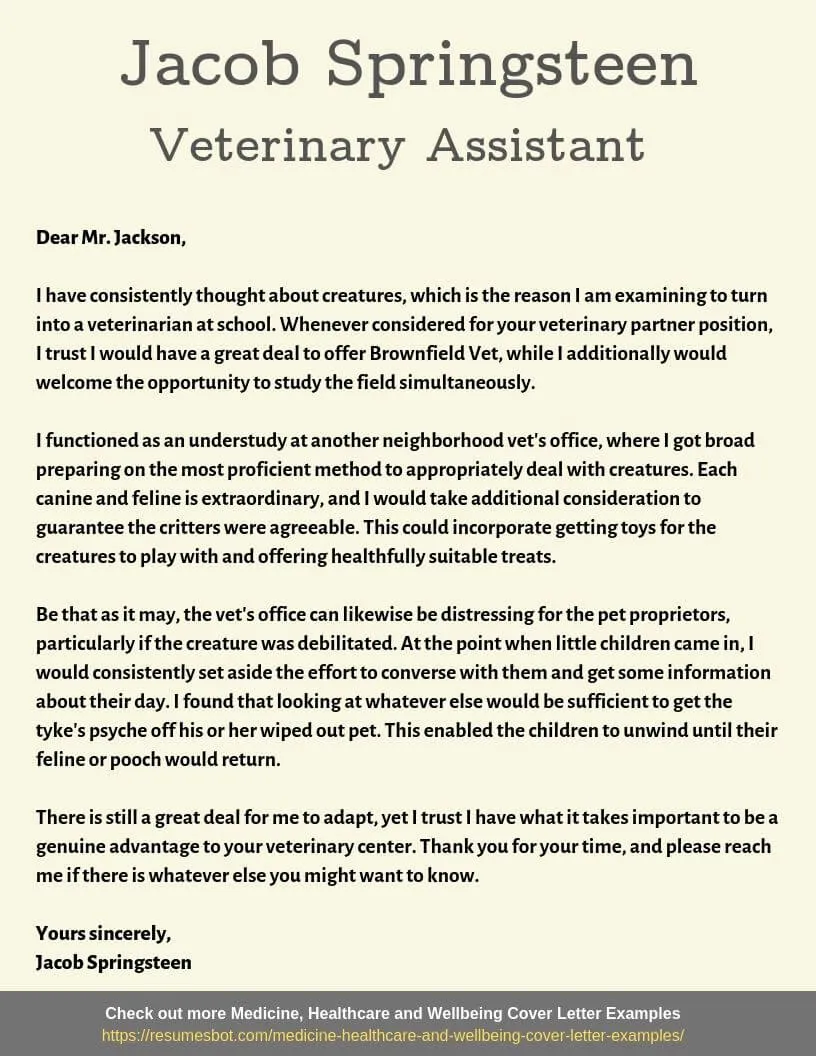
Vet Assistant Cover Letter Examples and Templates
Using examples and templates can be helpful when crafting your vet assistant cover letter. These resources provide a framework for structuring your letter and offer ideas for content and language. Remember to customize any template to reflect your unique skills, experience, and the specific requirements of the job you’re applying for. A template is a starting point. Tailor it to match your specific needs. Adapt templates to demonstrate your accomplishments and align them with the job. They are there to provide guidance and help you effectively present your qualifications.
Where to Find Examples
You can find vet assistant cover letter examples and templates online. Websites like Indeed, Resume.com, and other career-focused platforms offer numerous samples that can guide you. Search for “vet assistant cover letter example” to access a variety of templates and sample letters. These can give you an idea of how to structure your letter, highlight your key skills, and use effective language. Analyze these examples to better understand how to tailor your letter to your specific experience and the job requirements. These online resources are an excellent way to see what successful vet assistant cover letters look like.
Customizing Templates for Your Application
When using a template, always customize it to fit your profile and the job you are applying for. Don’t simply copy and paste a template; personalize it to reflect your specific skills, experiences, and the requirements of the vet assistant position. Modify the language, include your unique accomplishments, and tailor the content to match the job description. This customization ensures your cover letter stands out and showcases your suitability for the role. Personalization is crucial to demonstrate you’re a good match for the veterinary practice and increases your chances of getting an interview.