What is a Youth Cover Letter?
A youth cover letter is a crucial document that young individuals, often those with limited work experience, use to introduce themselves to potential employers. It serves as a formal introduction, allowing you to showcase your personality, skills, and enthusiasm for the position. Unlike a resume, which provides a summary of your experience, a cover letter is your opportunity to tell a story, explaining why you’re the perfect fit for the job. It’s a chance to make a strong first impression and demonstrate your communication skills, even if your work history is still developing. A well-crafted cover letter can significantly increase your chances of securing an interview, especially when you’re competing with more experienced applicants. Think of it as your personal sales pitch, designed to convince the employer that you’re worth getting to know.
Why Is a Cover Letter Important for Youth?
For youth, a cover letter is particularly important because it provides context to your application. It allows you to explain any gaps in your experience, highlight relevant skills gained through volunteer work, extracurricular activities, or even personal projects. Since young applicants often have limited professional experience, a cover letter can emphasize soft skills like communication, teamwork, and problem-solving. It demonstrates your willingness to learn and your enthusiasm for the role, making you stand out from other candidates. The cover letter helps you personalize your application, showing the employer that you’ve taken the time to understand the job and the company’s values. It also showcases your writing abilities, which is critical in many entry-level positions.
Key Components of a Youth Cover Letter

A well-structured youth cover letter typically includes several key components. Each part plays a vital role in conveying your message effectively. It’s important to pay attention to the details and ensure that the letter is clear, concise, and tailored to the specific job. From the header to the closing, every section contributes to making a positive impression on the employer. The goal is to create a compelling narrative that highlights your strengths and demonstrates your genuine interest in the opportunity. Let’s explore these essential parts in more detail.
Header Information
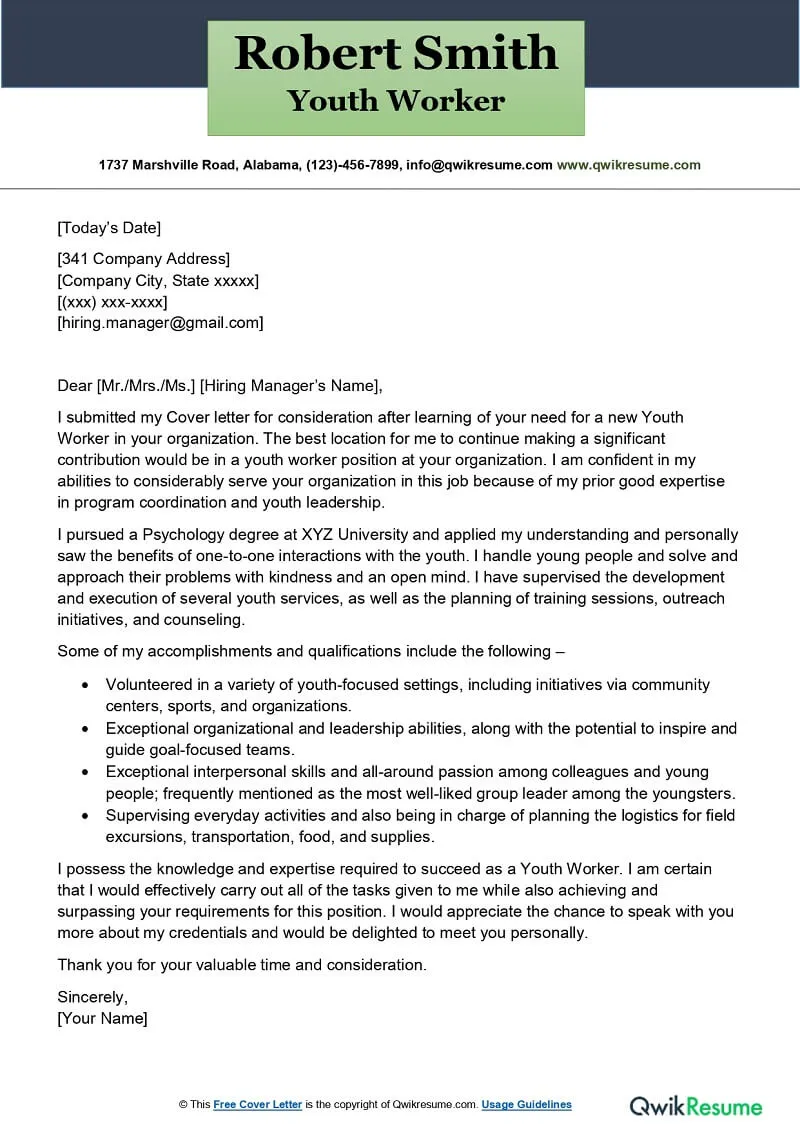
The header of your cover letter sets the professional tone. Include your full name, address, phone number, and email address at the top left of the page. This ensures the employer can easily contact you. Use a professional-looking font and maintain consistent formatting throughout the document. Make sure your contact information is up-to-date and accurate. Consider using a clean, easy-to-read font like Arial or Times New Roman. The header, as shown in the image, establishes your identity and provides the necessary contact details, ensuring the employer can easily reach you if they are interested in your application.
Your Contact Information
Your contact details must be precise and current. Always include your full legal name. Your address should be complete, including street, city, state, and zip code. Your phone number is a crucial element, so ensure you provide a reliable contact number where you can be reached. The email address should be professional; avoid using nicknames. The goal of this section is to allow employers to quickly contact you regarding the opportunity you are applying for, so verify that everything is accurate.
Date

The date is a crucial element as it specifies the date of your cover letter. It should be placed directly under your contact information, usually aligned on the left side. The format of the date should be consistent throughout your document. Ensure the date matches the day you’re sending the application. This provides a timestamp, indicating the currentness of your submission.
Employer’s Contact Information
Below the date, you should include the employer’s contact information. Start with the hiring manager’s name (if you know it), their title, the company name, and the company’s address. If you can’t find a specific name, use a general greeting like ‘Dear Hiring Manager.’ Ensure that all information is correct to show your attention to detail. If possible, address the letter to a specific person. This personalized touch can make a significant difference. If a name isn’t available, simply address the letter to the hiring team or department to maintain professionalism.
The Opening Paragraph
The opening paragraph is your first chance to grab the reader’s attention. It should be concise, enthusiastic, and clearly state the purpose of your letter – to apply for a specific position. Avoid generic openings; instead, show genuine interest in the role and the company. This first paragraph sets the tone for the entire letter and encourages the employer to continue reading. Making a strong first impression can significantly increase your chances of getting noticed. Show the employer that you’re keen on the role and that you’ve done your research.
Grab Their Attention

Start with a compelling hook that grabs the reader’s interest immediately. Mentioning something specific about the company or the job can be highly effective. Demonstrate your understanding of the company’s mission or a recent achievement. Instead of a bland opening, consider highlighting a unique skill or experience. Show them you’ve done your homework. Your opening paragraph should showcase your writing ability and convey your enthusiasm for the opportunity. Consider a sentence that shows your excitement about the company, aligning it with your career objectives, or highlighting an outstanding accomplishment that fits the job description.
Express Your Enthusiasm
Express genuine enthusiasm for the position and the company. State clearly why you’re interested in the role and what excites you about the opportunity. Briefly mention how your goals align with the company’s. Show the employer that you’re not just applying for any job, but that you genuinely want this one. Expressing your enthusiasm helps convey your interest and willingness to learn. Highlight your appreciation for the company’s values and what makes them stand out. Make sure to research the company to show that your interest is authentic.
Highlighting Your Skills and Experience
This is where you connect your skills and experiences to the job requirements. Even if your experience is limited, focus on transferable skills that are relevant to the role. Use specific examples to illustrate how you’ve demonstrated those skills in the past. This section is crucial because it provides evidence that you are capable of succeeding in the role. By showcasing your abilities and how they align with the job description, you demonstrate to the employer that you are the ideal candidate, even if your experience is limited. This is a great place to showcase your personality and enthusiasm for the opportunity.
Transferable Skills

Transferable skills are abilities that you can apply in any job, regardless of your previous experience. These include communication, teamwork, problem-solving, time management, and leadership. Identify which of these skills are most relevant to the job you’re applying for and provide examples of how you’ve demonstrated them. Showcase your transferable skills in action. For example, if you’re applying for a customer service role, highlight your ability to communicate effectively and resolve conflicts, perhaps based on your experience in school projects. This helps bridge the gap between your current skill set and the requirements of the role. It’s about demonstrating your ability to learn and apply these transferable skills.
Relevant Experience
Even if you have limited work experience, highlight any relevant experiences like volunteer work, extracurricular activities, or part-time jobs. Describe what you did in these roles and what you learned. Focus on achievements rather than just listing responsibilities. Use the STAR method (Situation, Task, Action, Result) to provide context and show the impact of your actions. This method is great for highlighting accomplishments. For example, if you organized a school event, describe the situation, your task, your actions, and the results you achieved. This helps the employer understand your potential and the impact you can have.
Showcase Your Personality
Your cover letter is an excellent opportunity to let your personality shine. While maintaining professionalism, inject your unique voice and style into the letter. This helps the employer get a sense of who you are beyond your resume. Showing your personality can make you more memorable. Your personality makes your application more memorable. Use a conversational tone and avoid overly formal language. Express your enthusiasm through your writing, and let your genuine interest in the role come across. Show how your personality aligns with the company culture to make a stronger impression.
Demonstrate Your Understanding

Show the employer that you understand the job requirements and the company’s values. Research the company and the specific role to demonstrate your knowledge. Tailor your letter to show that you’ve done your homework and are genuinely interested in the position. This attention to detail indicates your interest. Mention specific projects, values, or goals that resonate with you. Demonstrate your understanding of the industry and the skills needed to be successful in the role. Show your familiarity with the company’s work by referencing their recent projects or achievements. This shows that you’re well-informed about the position and the company.
The Closing Paragraph
The closing paragraph should summarize your interest and reiterate your enthusiasm for the position. Express your gratitude for the employer’s time and consideration. Make sure to include a call to action, such as stating your availability for an interview. This is a crucial element to encourage them to reach out to you. Ending with a strong closing paragraph ensures a lasting positive impression. Avoid generic statements and maintain a professional tone. The closing should wrap up the essential details, leaving the employer with a clear understanding of your interest and availability.
Reiterate Your Interest
Reiterate your interest in the position by summarizing why you are a suitable candidate. Briefly mention key skills and experiences, reinforcing your suitability for the role. Your goal is to reinforce the main points of your application. Emphasize your enthusiasm for the opportunity and express your excitement about the possibility of joining the team. Reinforce why you are the perfect fit for the job by linking your qualifications to the job description. This shows confidence and reiterates your eagerness to contribute to the company’s success.
Call to Action

End with a clear call to action. State your availability for an interview and provide your contact information again. This encourages the employer to take the next step. Express your eagerness to discuss your qualifications further. Show that you are accessible and easy to reach. This call to action is your way of showing them that you are eager to move forward with the application process. Offer your contact information again, ensuring it is accurate and easy to find. The call to action can be a simple invitation to schedule an interview.
Proofreading and Formatting
Thorough proofreading and proper formatting are essential for a professional cover letter. Errors can damage your credibility and make a negative impression. Always take the time to ensure your letter is error-free and well-formatted. It’s a critical step that shows your attention to detail. This helps boost your chances of getting selected. A well-formatted document and a letter free of errors show the employer that you care about the job application.
Formatting Tips
Use a professional-looking font like Arial or Times New Roman. Maintain consistent formatting throughout your letter. Use single spacing and left-aligned text, with a one-inch margin on all sides. Keep the letter concise, ideally no more than one page. Break up large blocks of text with paragraphs. Your formatting choices can impact how the letter reads. Make sure the cover letter is clean, easy to read, and visually appealing. Ensure that the document is properly formatted, and use clear and professional language throughout the application. This increases the overall readability and professionalism of the application. Always use a professional-looking font.
Proofreading Checklist
Proofread your cover letter multiple times. Check for grammar, spelling, and punctuation errors. Ensure all names, titles, and dates are accurate. Have someone else review your letter to catch errors you may have missed. Use a spell checker and grammar checker, but don’t rely on them entirely. Proofreading is essential to ensure your cover letter is free of errors. Errors can undermine your credibility. Correct any typos and grammatical mistakes. Ensure that you provide complete and accurate information. Proofreading is your final step to ensure your letter is polished and professional.
Example Youth Cover Letter
Here’s an example of a youth cover letter: [Include a brief, well-formatted example, showing a clear structure, professional tone, and the essential elements discussed in the previous sections]. This example should provide a practical guide to help them create their own cover letter. The goal of this is to assist the job seeker in writing a great cover letter and make it easier to understand. Take the example and modify it to suit the job you are applying for. This example will help you understand how to construct a cover letter.
Adapt Your Letter to the Role
Each cover letter should be tailored to the specific job you’re applying for. Do not use a generic cover letter; customize it to highlight the skills and experiences most relevant to the position. The more personalized you are, the better. Adapt your letter to show how your skills match their specific needs. Take the time to research the company and the role. Avoid a one-size-fits-all approach; instead, customize your letter to suit the job. Make sure your cover letter is customized for the job to make a solid impression.
Tailor Your Skills
Carefully review the job description and identify the required skills and qualifications. Then, highlight the skills you possess that align with those requirements. Use keywords from the job description to show that you understand the employer’s needs. Make sure to emphasize relevant skills in the cover letter. This is a critical step because it ensures you are addressing their needs. Modify your cover letter by highlighting the skills that apply. Customize your cover letter based on the job requirements. Emphasize your skills, and you will be set for success.
Research the Organization
Before applying, research the company to understand its mission, values, and recent projects. Tailor your cover letter to demonstrate that you understand the company’s goals and culture. This shows your genuine interest in the opportunity. Researching the company will show your level of commitment. Mention the company’s values and what makes them unique. This demonstrates to the employer that you have prepared for the job. Your goal should be to show your interest and that you have the desire to be part of their team.