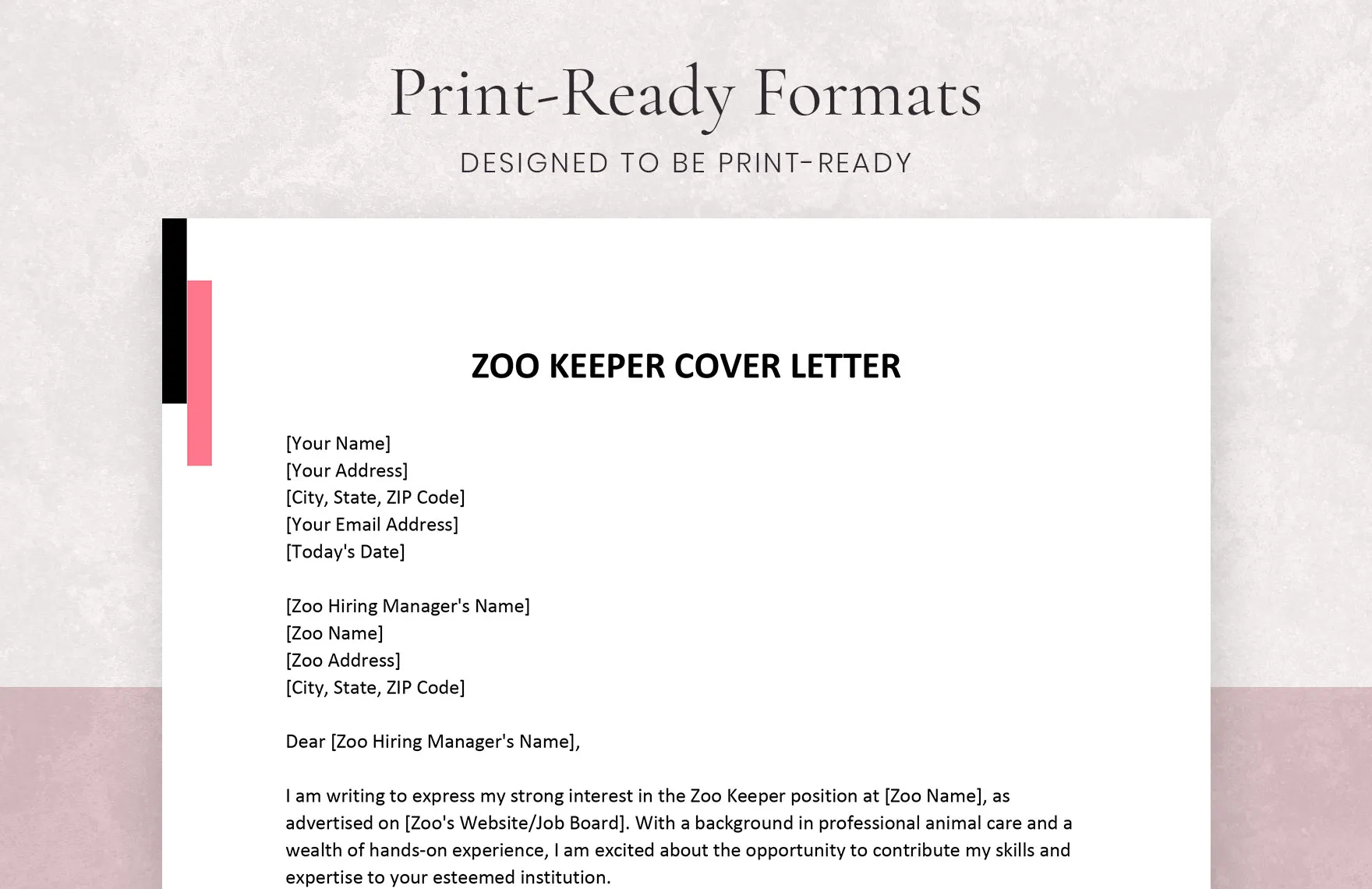
Zoo Keeper Cover Letter Secrets Revealed!
Landing your dream job as a Zoo Keeper starts long before the interview. A well-crafted cover letter is your first chance to impress potential employers and showcase your passion for animals and your relevant skills. Many applicants underestimate the power of a strong cover letter, viewing it as a mere formality. However, a compelling cover letter can set you apart from other candidates, demonstrating your genuine interest and qualifications. This guide unveils the secrets to writing a winning Zoo Keeper cover letter that grabs the attention of hiring managers and increases your chances of getting hired. We’ll explore key elements like highlighting relevant experience, quantifying achievements, and tailoring your letter to the specific zoo, all while showcasing your knowledge, skills, and passion.
Highlighting Relevant Experience
Your cover letter is the perfect place to shine a light on your hands-on experience in animal care. Focus on the skills and experiences that align with the requirements of the Zoo Keeper position. Instead of just listing your previous roles, provide brief descriptions of your responsibilities, specifically highlighting tasks like animal feeding, enclosure maintenance, and behavioral observation. If you have experience with a variety of animal species, be sure to mention those, tailoring your letter to fit the specific animals at the zoo you’re applying to. If you’ve volunteered at a shelter or worked with animals in other settings, include this information and explain how it aligns with the role. Always emphasize skills that demonstrate your ability to handle animals safely and effectively, along with your knowledge of animal welfare principles and regulations.
Quantifying Achievements in Previous Roles

One of the most effective ways to make your cover letter stand out is to quantify your achievements in previous roles. Instead of just stating that you improved animal care, use specific metrics to demonstrate the impact of your work. For example, you could mention a decrease in animal illness or injury rates, a successful implementation of a new feeding program, or an improvement in enclosure cleanliness scores. Providing these concrete examples will make your cover letter more persuasive and demonstrate your ability to deliver results. You can also highlight any awards or recognition you received for your work, or any positive feedback from supervisors or colleagues. Remember to focus on results that are relevant to the Zoo Keeper position and showcase your commitment to animal welfare.
Tailoring the Letter to the Specific Zoo
Generic cover letters often end up in the rejection pile. To increase your chances of success, tailor your cover letter to each specific zoo you’re applying to. Research the zoo’s mission, values, and the animals in its care. Mention specific programs, initiatives, or exhibits that resonate with your interests and skills. If the zoo emphasizes conservation efforts, highlight your experience with conservation projects. If the zoo has a focus on education, mention your experience with public speaking or educational outreach. Addressing the specific needs of the zoo and demonstrating that you’ve taken the time to understand their goals will show your genuine interest and make your application more compelling. You can even mention a particular animal that you’re excited to work with, if appropriate.
Keywords and Phrases to Include
To ensure your cover letter gets noticed, include relevant keywords and phrases related to the Zoo Keeper position. Review the job description carefully and identify the key skills, responsibilities, and qualifications the employer is seeking. Integrate these keywords naturally into your letter. Common keywords include animal handling, feeding, enclosure maintenance, behavioral observation, species-specific knowledge, animal health, and safety protocols. Also, include words that describe your personality such as passionate, dedicated, reliable, and detail-oriented. These keywords will help your cover letter get past applicant tracking systems (ATS) and make it easier for hiring managers to quickly assess your qualifications. Remember to use these keywords in a natural and authentic way, avoiding keyword stuffing which can harm your letter’s readability and impact.
Demonstrating Passion for Animal Care

A Zoo Keeper position requires more than just skills; it demands a genuine passion for animals and a commitment to their well-being. Your cover letter should reflect this passion. Share personal anecdotes that illustrate your love for animals, such as a memorable experience at a zoo or a time when you went above and beyond to care for an animal. Express your enthusiasm for working with animals, and be clear about why you’re drawn to this profession. Demonstrating your passion will not only make your cover letter more engaging but also showcase your commitment to the zoo’s mission. Let your personality shine through and show the hiring manager that you’re not just looking for a job, but you’re eager to make a difference in the lives of animals.
Showcasing Knowledge of Animal Husbandry
A crucial aspect of being a Zoo Keeper is the knowledge of animal husbandry. Your cover letter should showcase your understanding of animal care principles and practices. This includes knowledge of animal nutrition, enrichment activities, and habitat design. Mention any specific experience you have in creating or implementing enrichment programs. Highlight any expertise you have in understanding animal behavior and recognizing signs of illness or distress. If you’re familiar with different animal diets, housing requirements, and disease prevention protocols, be sure to mention these details. Demonstrating your knowledge of animal husbandry proves that you’re prepared to provide excellent care and contribute to the well-being of the animals at the zoo.
Highlighting Skills in Animal Handling
Animal handling skills are essential for a Zoo Keeper. Your cover letter should provide specific examples of how you have successfully handled animals in the past. If you have experience with training, restraint, or transport, be sure to mention those skills. Describe the species you’ve worked with, and emphasize your ability to handle animals safely and humanely. If you’re familiar with different handling techniques or safety protocols, include this information. You can also mention any experience you have with administering medications or providing basic medical care. Providing evidence of your animal handling skills demonstrates your readiness to work with a variety of animals and your commitment to their safety and well-being.
Emphasizing Experience with Specific Species

If you have experience working with particular animal species, make sure to highlight that experience. This is especially important if the zoo you’re applying to houses those species. Mention the species you’ve worked with and the specific tasks you performed, such as feeding, enclosure maintenance, or behavioral observation. Describe any specialized knowledge you have related to those species. If you have experience with conservation efforts related to specific animals, be sure to emphasize that. Tailoring your experience to the specific species at the zoo demonstrates your ability to contribute directly to their care and management. This targeted approach can significantly increase your chances of getting the job.
Showcasing your Education and Certifications
While experience is crucial, education and certifications can also strengthen your application. Your cover letter should include any relevant degrees, certifications, or training programs you’ve completed. This could include degrees in zoology, animal science, or veterinary technology. Certificates in animal handling, CPR/first aid for animals, or other specialized training programs are also valuable. If you’re pursuing additional education or certifications, be sure to mention that. Highlighting your educational background and certifications demonstrates your commitment to professional development and your knowledge of animal care principles and practices.
Mentioning Relevant Degrees or Certifications
When listing your degrees and certifications, provide specific details that are relevant to the Zoo Keeper position. Include the name of the institution, the degree or certification earned, and the dates of completion. If your degree included a thesis or project related to animal care, briefly mention the topic. Highlighting any specific coursework or training that aligns with the job requirements is also helpful. You can also include any professional memberships or affiliations related to animal care. Providing this information in a clear and concise manner will help the hiring manager quickly assess your qualifications and ensure that you meet the minimum requirements for the position.
Including Any Specialized Training

Specialized training can set you apart from other candidates and is worth highlighting in your cover letter. This includes any training in animal handling techniques, safety protocols, or specific species care. If you’ve completed training in areas such as animal first aid, behavior modification, or enrichment program design, be sure to mention these details. Specialized training demonstrates your commitment to continuous learning and your ability to adapt to the specific needs of the animals at the zoo. It can also show that you’re willing to take on additional responsibilities and contribute to the zoo’s overall success.
Proofreading and Formatting for Success
A well-written and polished cover letter is essential for making a positive first impression. Before submitting your application, make sure to proofread your letter carefully for any grammatical errors, typos, or inconsistencies. Double-check your spelling and punctuation, and ensure that your sentences are clear, concise, and easy to read. Having a second pair of eyes to review your letter can be extremely helpful. Ask a friend, family member, or career counselor to proofread your letter for you. Taking the time to proofread your cover letter demonstrates your attention to detail and professionalism, which are important qualities for a Zoo Keeper.
Ensuring a Professional Tone
Your cover letter should be written in a professional tone that reflects your qualifications and experience. Avoid using casual language, slang, or jargon that might be unfamiliar to the hiring manager. Instead, use clear, concise, and respectful language throughout your letter. Maintain a positive and enthusiastic tone, and express your genuine interest in the position. Remember to address the hiring manager by name if possible. End your letter with a professional closing, such as “Sincerely” or “Respectfully”, and thank the hiring manager for their time and consideration. Maintaining a professional tone will show that you’re a serious candidate and that you’re committed to representing yourself and the zoo in a positive light.
Checking for Grammatical Errors and Typos

Grammatical errors and typos can undermine your credibility and leave a negative impression on the hiring manager. Before submitting your cover letter, carefully check for any errors in grammar, spelling, punctuation, and sentence structure. Use a grammar checker, but don’t rely on it entirely. Proofread your letter multiple times, and read it out loud to catch any errors that you might miss when reading silently. Ensure that your sentences are clear and concise and that your paragraphs are well-organized. Pay attention to details such as capitalization, subject-verb agreement, and the correct use of commas. A well-proofread cover letter demonstrates your attention to detail, professionalism, and commitment to producing quality work.
Formatting the Letter for Easy Readability
The formatting of your cover letter should enhance its readability. Use a professional font, such as Times New Roman, Arial, or Calibri, in a size that’s easy to read (usually 11 or 12 points). Use single-spaced lines within paragraphs, and double-space between paragraphs to create visual separation. Use left-aligned text, and avoid justifying your text. Use headings and subheadings to break up large blocks of text and make your letter easier to scan. Keep your paragraphs relatively short, and focus on conveying your message clearly and concisely. Your cover letter should be visually appealing and easy to navigate. Ensure that the letter is well-organized, and that the key information is easy to find. This will make your cover letter more engaging and increase the likelihood that the hiring manager will read it carefully.